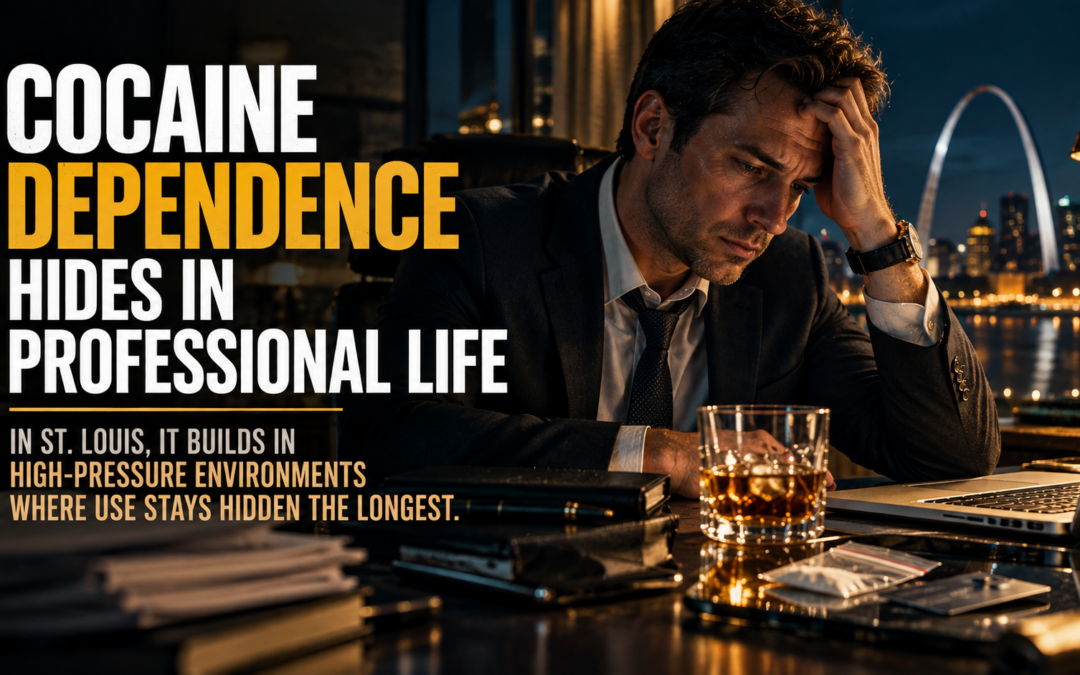
Cocaine dependence in St. Louis often grows quietly inside offices, hospitals, law firms and sales floors, where long hours and high expectations make stimulant use easy to explain away. From the outside, a person may look sharp, driven and successful. On the inside, they may feel worn down and unsure how to stop.
If you see yourself or a loved one in that picture, you may feel a mix of fear and exhaustion. You may also worry about what asking for help could cost you. Concerns about your career, your license or your reputation are real, and they deserve a thoughtful, private response.
You are not weak for struggling, and you are not alone. Many capable professionals reach a point where the thing that once seemed to help them keep up starts running the show. Recovery is possible, and it can begin with a confidential conversation that respects both your health and your life’s work.
Why Does Cocaine Dependence in St. Louis Stay Hidden in Professional Settings?
Cocaine dependence in St. Louis stays hidden in professional settings because the early signs look a lot like ambition. Extra energy, late nights and intense focus are often praised at work rather than questioned.
Many professional cultures reward people who never seem to slow down. When someone uses cocaine to stretch a workday or keep up at client dinners, the behavior can blend right in.
How Do Workplace Norms Make Use Easier to Conceal?
Workplace norms make use easier to conceal by treating exhaustion, irritability and erratic schedules as part of the job. A colleague who seems wired at 10 p.m. rarely draws attention in a demanding field.
Social drinking at networking events can also open the door. Some people start using cocaine to stay alert while drinking, and that pattern can feel normal within certain circles.
Why Does Privacy Become a Barrier to Help?
Privacy becomes a barrier because professionals often feel they have the most to lose if their struggle becomes known. Fear of losing a job, a client base or a professional license can keep someone silent for years.
That silence protects the secret but not the person. Cocaine dependence in St. Louis can deepen during this time, long before anyone notices a problem.
What Makes High-Functioning Use So Hard to Recognize?
High-functioning use is hard to recognize because the person keeps meeting obligations while their health and relationships slowly wear down. Deadlines are met and bills are paid. The cost shows up in places others rarely see.
The term “high-functioning” can be misleading. It describes outward performance, not inner well-being.
Why Do People Believe They Have It Under Control?
People believe they have it under control because their life still looks stable. A strong work record can feel like proof that nothing is wrong.
Over time, many people find they need cocaine to feel normal, focused or confident. That shift from choice to need is often where cocaine dependence in St. Louis takes root.
How Does the Crash and Recovery Cycle Hide the Pattern?
The crash and recovery cycle hides the pattern because a person may use on certain nights, crash the next day and then bounce back enough to perform again. Weekends and work travel can absorb the hardest days.
From the outside, it looks like a busy person catching up on rest. Inside the cycle, cravings, low mood and anxiety may build with each round.
What Are the Warning Signs of Cocaine Dependence in St. Louis Professionals?
The warning signs of cocaine dependence in St. Louis professionals include changes in mood, money, sleep and relationships that become harder to explain over time. No single sign confirms a problem, but a pattern is worth paying attention to.
Signs to watch for include:
- Needing cocaine to get through demanding workdays or social events
- Spending more money than planned or hiding expenses
- Sleeping very little, then crashing for long stretches
- Feeling anxious, irritable or low when not using
- Frequent nosebleeds or sinus problems
- Pulling away from family or missing important moments
- Trying to cut back and finding it harder than expected
How Can Family Members Tell Something Is Wrong?
Family members can often tell something is wrong when a loved one seems more distant, secretive or unpredictable at home than at work. Partners may notice mood swings, unexplained absences or tension around money.
Trust those observations. Starting the conversation with care rather than blame makes it easier for your loved one to open up, and family therapy can help everyone heal together.
When Does Cocaine Use Become a Safety Concern?
Cocaine use becomes a safety concern when it involves heart symptoms, mixing with alcohol or other substances or using drugs from an unknown source. Chest pain, a racing heart or trouble breathing need immediate medical attention.
Fentanyl has also been found in parts of the illicit drug supply, which adds risk even for occasional use. Reaching out for support sooner is one of the most protective steps you can take.
How Does Dual-Diagnosis Care Address What Drives the Use?
Dual-diagnosis care addresses what drives the use by treating substance use and any co-occurring mental health condition together through one coordinated plan. Many professionals use stimulants to manage anxiety, depression, burnout, attention struggles or past trauma.
When only the cocaine use is treated, those drivers stay in place. That is why lasting care for cocaine dependence in St. Louis often looks beyond the substance itself.
At Grand Falls Center for Recovery, dual-diagnosis treatment brings addiction care and mental health treatment together. You work with one team that sees the full picture.
What Might Treatment Include?
Treatment often includes a blend of therapy, medical support and practical tools for returning to work and home life. Your plan is shaped around your history and goals.
A plan may include:
- Individual therapy to explore stress, pressure and the roots of use
- Cognitive behavioral therapy (CBT) to change unhelpful thought patterns
- Group therapy with peers who understand high-pressure careers
- Relapse prevention planning for work events, travel and deadlines
- GeneSight genetic testing to help personalize medication for anxiety or depression when appropriate
Can Treatment Respect My Privacy and Career?
Yes, treatment can be built with privacy in mind. Your health information is protected by federal privacy laws, and Grand Falls offers professional tracks that support privacy and allow continued technology use.
This means you can focus on healing while staying connected to essential responsibilities. Your care team will help you plan for those needs from the start.
Which Levels of Care Fit Cocaine Dependence in St. Louis?
The right level of care for cocaine dependence in St. Louis depends on how often you use, any co-occurring conditions and how much structure your daily life can support. A thorough assessment helps you and your care team choose the best starting point.
Grand Falls offers a full continuum of care on its Joplin campus:
- Medical detox provides 24/7 support as you move through the fatigue, low mood and cravings that often follow stopping cocaine.
- Residential inpatient treatment offers structured care in a calm, secluded setting away from workplace triggers.
- Partial hospitalization delivers intensive daytime treatment with evenings at home.
- Intensive outpatient care offers therapy several days a week as you return to work.
- Aftercare and alumni support help you stay connected long after formal treatment ends.
Many people treating cocaine dependence in St. Louis choose to travel for care. Stepping away from familiar routines and social circles can make early recovery feel more focused and private.
How Do You Know It Is Time to Reach Out?
The clearest sign it is time to reach out is when cocaine use has started to feel necessary rather than optional. You do not need to lose your job or reach a crisis before asking for help.
Consider these prompts as you think about your next step:
- If you rely on cocaine to get through workdays or social events, a confidential assessment can help you understand what is happening.
- If you have tried to cut back and found it harder than expected, professional support can make that process safer and steadier.
- If anxiety, depression or burnout sit underneath your use, integrated care can treat both at once.
- If fear of career consequences has kept you silent, a private conversation can help you explore options without pressure.
- If a partner or family member has voiced concern, that observation is worth exploring together.
Taking the first step can feel overwhelming. A caring admissions team can walk you through your choices at your own pace.
Common Questions Before Starting Treatment
Will my employer find out if I seek treatment? Your health information is protected by federal privacy laws, and treatment providers cannot share it without your consent in most situations. Our team can also help you think through how to request leave if you need it.
Is cocaine withdrawal dangerous? Cocaine withdrawal is usually less physically risky than alcohol or benzodiazepine withdrawal. It can still bring deep fatigue, intense cravings and low mood, so medical and emotional support help keep you safe and steady.
Can I keep working during treatment? Possibly, depending on your needs. Intensive outpatient care lets many people keep working, while residential care offers more structure for those who need distance from daily pressures.
What if my use connects to stress, anxiety or depression? That is very common among people facing cocaine dependence in St. Louis. Dual-diagnosis care treats those conditions alongside substance use for more complete healing.
Moving Forward With Hope
Cocaine dependence in St. Louis can stay hidden for a long time in professional settings, but it does not have to stay hidden forever. Recognizing the pattern is a brave first step, and it opens the door to care that respects both your health and your goals.
With whole-person treatment that addresses what drives the use, many people find steadier footing at work and at home. Your career matters, and so do you.
You do not have to carry this alone. If you or someone you love is ready to explore confidential support, reach out to Grand Falls Center for Recovery today. Our compassionate team is here to listen, answer your questions and help you take the next step toward lasting recovery.