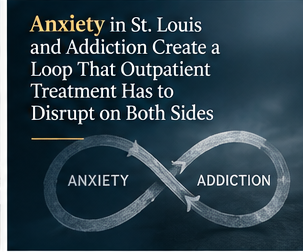
Anxiety in St. Louis and addiction often move together in a quiet circle, where each one keeps the other going. A drink after a tense commute, a pill before a big presentation downtown or a joint to finally fall asleep can each feel like a sensible way to cope. Over time, the calm wears off sooner and the worry comes back louder.
If you see yourself or someone you love in that pattern, you may feel caught between two problems that never seem to separate. Maybe you tried weekly counseling for anxiety while still drinking. Maybe you finished a program for substance use and found your nerves were worse than ever. Neither experience means you failed.
It usually means only one side of the loop received care. Outpatient treatment can fit around work and family in St. Louis, but it works best when it treats both conditions at the same time. With the right plan, the circle can loosen, and you do not have to break it alone.
How Do Anxiety in St. Louis and Addiction Create a Loop?
Anxiety in St. Louis and addiction create a loop because substances bring fast relief from anxious feelings, then leave behind rebound symptoms that feel like even stronger anxiety. That rebound pushes a person to use again, and each round pulls the loop a little tighter.
The National Institute on Drug Abuse (NIDA) notes that mental health conditions and substance use disorders often occur together. Anxiety is one of the most common of these pairings.
What Happens Inside the Loop?
Inside the loop, relief and rebound trade places until the substance feels like the only reliable way to calm down. A common pattern looks like this:
- Worry builds from work deadlines, money stress, conflict or past trauma.
- A substance quiets the worry within minutes.
- As it wears off, the nervous system swings the other way, bringing restlessness, a racing heart and poor sleep.
- The brain reads that rebound as anxiety and reaches for the same fix.
- Tolerance grows, so the relief shrinks while the anxiety keeps climbing.
Think of a thermostat that keeps getting overridden. Each time you force the temperature down, the system works harder to push it back up.
Which Substances Tighten the Loop?
Alcohol, benzodiazepines, cannabis and stimulants most often tighten the loop between anxiety and substance use. Alcohol calms at first but often brings next-day jitters. Benzodiazepines such as alprazolam (Xanax) can cause anxiety between doses and physical dependence over time.
Cannabis can trigger panic in some people, and stimulants can spark nervousness and sleeplessness. Many people living with anxiety in St. Louis and addiction use more than one of these, which makes the cycle harder to see and harder to stop safely.
Why Does Standard Outpatient Treatment Miss Both Sides of the Loop?
Standard outpatient treatment often misses the loop because it treats anxiety and substance use as separate problems, handled by separate providers on separate schedules. For anxiety in St. Louis and addiction, that means each side gets partial attention and neither gets the full picture.
A person might see a therapist for anxiety once a week while a different counselor focuses on drinking. If the two never compare notes, the connection between them can go unspoken for months.
What Goes Wrong When Only One Side Is Treated?
When only one side is treated, the untreated side tends to restart the cycle. Calming anxiety while drinking continues leaves the rebound effect in place. Stopping substances without anxiety care removes a person’s main coping tool and offers nothing to replace it.
This is one of the most common reasons people facing anxiety in St. Louis and addiction feel stuck after outpatient care. The effort was real. The plan simply covered half the problem.
Why Does Early Sobriety Often Feel More Anxious?
Early sobriety often feels more anxious because withdrawal and rebound symptoms peak just as the substance is removed. Shaking, sweating, irritability and trouble sleeping can look exactly like an anxiety disorder.
Without guidance, many people take this as proof that they need the substance to function. A care team that expects these symptoms can explain what is happening and help you move through them safely.
Why Does Assessment Timing Matter?
Assessment timing matters because symptoms measured during intoxication or withdrawal can blur which condition is which. A brief screening captures one moment, not a timeline.
An integrated team revisits the picture once the body settles. That second look helps separate short-term rebound from an anxiety disorder that needs ongoing care, giving people with anxiety in St. Louis and addiction a more accurate plan.
What Are the Warning Signs of Anxiety in St. Louis and Addiction?
The clearest warning sign of anxiety in St. Louis and addiction is using alcohol or drugs specifically to calm worry, panic or tension rather than for enjoyment. When a substance becomes your main way to feel settled, the loop may already be running.
Other signs may include:
- Feeling more anxious the morning after drinking
- Needing a drink or pill before meetings, social events or travel
- Panic attacks that seem to come from nowhere
- Running out of an anxiety prescription early
- Trouble sleeping without a substance
- Avoiding people or places because anxiety feels unmanageable without using
- Relapse after a program that never addressed anxiety
Noticing a few of these is not a diagnosis. It is a good reason to ask for an assessment that looks at both conditions together.
What Can Family Members Notice?
Family members often notice a loved one who seems tense and irritable before using and briefly relaxed afterward. Partners may also see growing avoidance, like canceled plans or sick days, alongside heavier use.
Sharing those observations with care rather than blame can open the door to help. Family therapy gives loved ones a guided space to understand how anxiety in St. Louis and addiction feed each other at home.
How Does Outpatient Treatment Disrupt Both Sides at Once?
Outpatient treatment disrupts both sides at once when one coordinated team treats anxiety and substance use through a single plan, with sessions frequent enough to practice new skills in between. That combination is what separates integrated care from a weekly check-in.
At Grand Falls Center for Recovery, dual-diagnosis treatment and mental health treatment work together under one team. For people facing anxiety in St. Louis and addiction, this means no one has to carry messages between providers.
What Does Disrupting the Anxiety Side Look Like?
Disrupting the anxiety side means learning practical ways to calm anxious thoughts and physical tension without reaching for a substance. A plan may include:
- Cognitive behavioral therapy (CBT) to notice and reshape anxious thought patterns
- Grounding and breathing skills for moments of panic
- Gradual practice facing situations you have been avoiding
- Steady sleep routines that ease nighttime worry
What Does Disrupting the Substance Side Look Like?
Disrupting the substance side means building a relapse prevention plan that maps your personal triggers, including the anxious ones. Group therapy with peers who understand both struggles adds connection and accountability.
You learn to spot the moment worry turns into a craving. Then you practice a different response until it starts to feel natural.
How Does Personalized Medication Fit?
Personalized medication fits by matching anxiety treatment to how your body is likely to respond, often favoring options with lower misuse risk. Grand Falls uses GeneSight genetic testing, which starts with a simple cheek swab. Results typically return within two days.
This can reduce frustrating trial and error for people whose anxiety in St. Louis and addiction have already involved several prescriptions.
Which Levels of Care Fit Anxiety in St. Louis and Addiction?
The right level of care for anxiety in St. Louis and addiction depends on withdrawal risk, symptom severity and how stable your home life feels. A thorough assessment helps you and your care team choose the best starting point.
Grand Falls offers a full continuum of care, centered on a calm, secluded campus in Joplin, Missouri:
- Medical detox provides about a week of supervised care with 24/7 on-site medical and support staff. This matters most when alcohol or benzodiazepines are involved.
- Residential inpatient treatment offers 30 to 90 days or more of structured care away from daily stressors.
- Partial hospitalization (PHP) delivers intensive daytime treatment with evenings at home.
- Intensive outpatient care (IOP) offers therapy several days a week, often around a work schedule.
- Aftercare and alumni support help you stay connected after formal treatment ends.
When Is Outpatient Care Enough?
Outpatient care is often enough when withdrawal is not medically risky and home offers a stable, substance-free place to return each night. IOP generally involves at least nine hours of treatment per week for adults. For many people facing anxiety in St. Louis and addiction, that schedule leaves room for work and family.
When Is a Higher Level of Care Safer?
A higher level of care is safer when daily alcohol or benzodiazepine use makes withdrawal risky or when anxiety feels too intense to manage between sessions. Some St. Louis residents begin with residential care, then step down to PHP or IOP. The admissions team can help build a plan that keeps you supported as you return home.
Is Outpatient Care the Right Next Step for You?
Outpatient care may be the right next step if you want to treat both sides of the loop while keeping your job and daily routine. You do not need every answer before reaching out.
- If you drink or use to calm your nerves, an integrated assessment can show how anxiety in St. Louis and addiction connect in your life.
- If weekly counseling helped your anxiety but not your substance use, IOP can treat both together.
- If you feel shaky or panicked when you skip a drink or a dose, starting with medical detox is the safer choice.
- If someone at home still uses, residential care can give you distance before outpatient work begins.
- If a loved one has noticed you seem constantly on edge, that concern is worth exploring together.
Grand Falls offers a free consultation, so you can ask questions and explore your options at your own pace.
Common Questions Before Starting Treatment
Can I keep working during outpatient treatment? Most people in IOP can. Sessions are often scheduled in the morning or evening, and many people managing anxiety in St. Louis and addiction keep working throughout care.
Will my anxiety get worse when I stop using? It may feel worse for a short time while your body adjusts. Your care team will help you manage those feelings safely, and many people notice gradual improvement as recovery continues.
Should I stop my anxiety medication before treatment? No, not without medical guidance. Stopping a benzodiazepine suddenly can be dangerous, so your team will review your medications and plan any changes carefully.
Will my insurance cover outpatient care? Many insurance plans cover dual-diagnosis and outpatient treatment. Grand Falls can help verify your benefits during a free consultation.
Moving Forward With Hope
Anxiety in St. Louis and addiction can feel like a loop with no exit, but it loosens when both sides receive care together. Recognizing the pattern is a hopeful first step.
With integrated outpatient care, practical calming skills and steady support, many people find a calmer way through each day. Your worry is real, and so is your ability to heal.
You don’t have to untangle this alone. If you or someone you love is ready, reach out to Grand Falls Center for Recovery today. Our compassionate team will listen, answer your questions and help you take the next step toward lasting recovery.