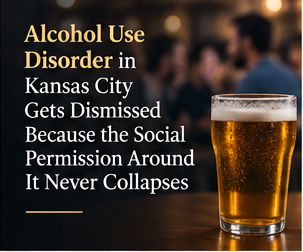
Alcohol use disorder in Kansas City often goes unnoticed because drinking stays socially accepted long after it has stopped being healthy. A beer at the tailgate, a round after work in the Power and Light District or a few drinks at a Sunday barbecue all feel normal here. When a habit grows, the same easy acceptance usually grows right along with it.
If you’re worried about your own drinking or someone you love, you may feel unsure whether the concern is even real. Everyone around you seems to drink the same way. Speaking up can feel like overreacting or judging people who simply enjoy themselves.
That uncertainty is understandable, and it doesn’t mean you’re in denial. It means the usual signals that something is wrong have been muffled by a culture that keeps saying “this is fine.” With clear information and the right support, you can see your situation more honestly and choose a next step that fits your life.
Why Does Alcohol Use Disorder in Kansas City Get Dismissed?
Alcohol use disorder in Kansas City gets dismissed because the social approval around drinking stays in place even as a person’s use becomes harder to control. With many other substances, a growing problem eventually draws attention or concern. With alcohol, friends keep raising a glass and the warning signs stay hidden.
Alcohol use disorder (AUD) is a medical condition in which a person has trouble stopping or controlling alcohol use despite harm to their health, work or relationships. Clinicians describe it as mild, moderate or severe based on how many symptoms are present. Many people with mild or moderate AUD look completely ordinary to the people around them.
What Does “Social Permission” Mean?
Social permission means the unspoken agreement that a behavior is acceptable, expected or even encouraged. In many Kansas City circles, drinking comes with near-total permission at games, weddings, holidays and work events.
That permission isn’t harmful by itself. The problem starts when it covers patterns that deserve a closer look.
Why Doesn’t That Permission Collapse?
The permission doesn’t collapse because alcohol is legal, widely available and tied to celebration. A person can drink more each year without crossing any visible line that makes others step in.
Compare that with illegal drug use, where a single discovery often changes how family and friends respond. With alcohol use disorder in Kansas City, there is rarely a moment like that. The drinking simply continues, and so does the approval.
What Does Normalized Drinking Look Like in Kansas City?
Normalized drinking in Kansas City looks like alcohol showing up at nearly every gathering, from Chiefs game days at Arrowhead to First Fridays in the Crossroads. When drinks are part of the routine everywhere, heavy use rarely stands out.
The city’s food and sports culture is something to be proud of. It also creates many settings where alcohol use disorder in Kansas City can blend into the crowd.
How Do Game Days and Celebrations Blur the Line?
Game days and celebrations blur the line by making long stretches of heavy drinking feel like part of the fun. A tailgate can start in the morning and run well past the final whistle, with plenty of people drinking right alongside you.
During football season, that pattern can repeat every week. Playoff runs, holidays and backyard barbecues fill in the gaps, so there’s always a reason to drink.
How Does Work Culture Play a Role?
Work culture plays a role when happy hours, client dinners and brewery outings become part of building relationships. Turning down a drink can feel awkward or even risky for your career.
Over time, a person may rely on these events to unwind. The drinking looks professional and social, which makes it easy to explain away.
What Are the Warning Signs of Alcohol Use Disorder in Kansas City?
The clearest warning sign of alcohol use disorder in Kansas City is drinking that feels hard to control, even when you planned to cut back. Signs like this matter more than how your drinking compares to the people around you.
Common signs include:
- Drinking more or longer than you intended
- Trying to cut back and finding it harder than expected
- Needing more drinks to feel the same effect
- Drinking to relax, sleep or cope with stress most days
- Feeling shaky, sweaty, anxious or irritable when you don’t drink
- Missing work, family time or responsibilities because of drinking or recovering from it
- Continuing to drink despite tension at home or concerns about your health
Noticing a few of these signs is not a diagnosis. It is useful information and a reason to talk with a professional.
When Does Stopping Become a Medical Concern?
Stopping becomes a medical concern when your body has grown dependent on alcohol and reacts with withdrawal. Alcohol withdrawal can cause tremors, nausea, sweating and anxiety. In more serious cases, it can lead to seizures or delirium tremens, a dangerous state of severe confusion.
If you drink heavily every day, talk with a medical provider before quitting on your own. Supervised detox treatment keeps the process safer and more comfortable.
How Does Cultural Camouflage Delay Help?
Cultural camouflage delays help by convincing people their drinking is normal, so they wait for a dramatic crisis before seeking care. Many people with alcohol use disorder in Kansas City assume treatment is only for someone who has lost everything.
That belief keeps people stuck. You don’t need a DUI, a job loss or a health scare to deserve support.
Why Do Friends and Families Wait to Speak Up?
Friends and families often wait to speak up because they don’t want to seem judgmental, especially when they drink too. Raising a concern can feel like questioning the whole social circle.
Loved ones may also notice changes at home that never show up at parties. Trusting those observations and sharing them with care can open an important conversation.
Why Does Waiting Make Recovery Harder?
Waiting can make recovery harder because alcohol use disorder in Kansas City often progresses over time. Tolerance grows, withdrawal risk increases and drinking can take a deeper toll on health and relationships.
Reaching out earlier usually means more options and a gentler path forward. It’s never too early to ask questions.
How Does Dual-Diagnosis Care Treat Alcohol Use Disorder in Kansas City?
Dual-diagnosis care treats alcohol use disorder in Kansas City by addressing the drinking and any co-occurring mental health condition together through one coordinated plan. Many people drink to manage anxiety, depression, trauma or grief that has never been treated.
When only the drinking is addressed, those deeper struggles can pull a person back toward alcohol. At Grand Falls Center for Recovery, dual-diagnosis treatment brings addiction care and mental health care together under one team.
Which Therapies Help?
The most helpful therapies teach new ways to handle stress, social pressure and difficult emotions without alcohol. A personalized plan may include:
- Cognitive behavioral therapy (CBT) to recognize and change unhelpful thought patterns
- Group therapy with peers who understand the pull of a drinking culture
- Relapse prevention planning for game days, holidays and work events
- Family therapy to help loved ones rebuild trust and support recovery
- GeneSight genetic testing, which uses a simple cheek swab to help personalize medication for anxiety or depression when appropriate
Which Levels of Care Fit Alcohol Use Disorder in Kansas City?
The right level of care for alcohol use disorder in Kansas City depends on how much you drink, your withdrawal risk and how supportive your home environment feels. A thorough assessment helps you and your care team choose the best starting point.
Grand Falls offers a full continuum of care on a calm, secluded campus in Joplin, Missouri:
- Medical detox provides about a week of supervised care with 24/7 on-site medical and support staff.
- Residential inpatient treatment offers 30 to 90 days or more of structured care away from familiar drinking triggers.
- Partial hospitalization (PHP) delivers intensive daytime treatment with evenings at home.
- Intensive outpatient care (IOP) offers therapy several days a week as you return to work and family.
- Aftercare and alumni support helps you stay connected after formal treatment ends.
Many people facing alcohol use disorder in Kansas City choose to travel for residential care. Stepping away from the bars, tailgates and routines tied to drinking can make early recovery feel steadier.
Is It Time to Reach Out for Support?
It may be time to reach out if drinking feels harder to control than it used to, even if everyone around you drinks the same way. You don’t need every answer before making a call.
- If you’ve tried to cut back and kept drinking more than planned, an assessment can help you understand whether alcohol use disorder in Kansas City is part of your story.
- If you feel shaky, anxious or unable to sleep without a drink, medical detox can help you stop safely.
- If you drink to manage stress, sadness or old pain, dual-diagnosis care can treat both together.
- If your social life revolves around drinking, residential care can give you space to build new routines.
- If a partner or family member has voiced concern, that observation is worth exploring together.
Grand Falls offers a free consultation, so you can ask questions and explore your options without pressure.
Common Questions Before Starting Treatment
Can I have a drinking problem if my friends drink the same amount? Yes. What matters is whether drinking feels hard to control or is causing harm in your life. Your friends’ habits don’t change what your body and mind are telling you.
Will I have to give up my social life? No. Treatment helps you build new ways to enjoy games, gatherings and celebrations. Many people find their friendships grow stronger and more honest in recovery.
Is it safe to quit drinking on my own? For some people, stopping suddenly can be dangerous. If you drink heavily or daily, talk with a medical provider first, because supervised detox lowers the risk of serious withdrawal.
Will my insurance cover treatment? Many insurance plans cover addiction treatment. Grand Falls can help verify your benefits during a free consultation.
Moving Forward With Hope
Alcohol use disorder in Kansas City stays hidden because the social permission around drinking never falls away on its own. Seeing past that permission is a brave and hopeful step, and it opens the door to care that truly fits your life.
You can still enjoy the people, food and traditions you love while building a healthier relationship with yourself. Recovery is possible, and you don’t have to figure it out alone.
If you or someone you love is ready, reach out to Grand Falls Center for Recovery today. Our compassionate team is here to listen, answer your questions and help you take the next step toward lasting recovery.