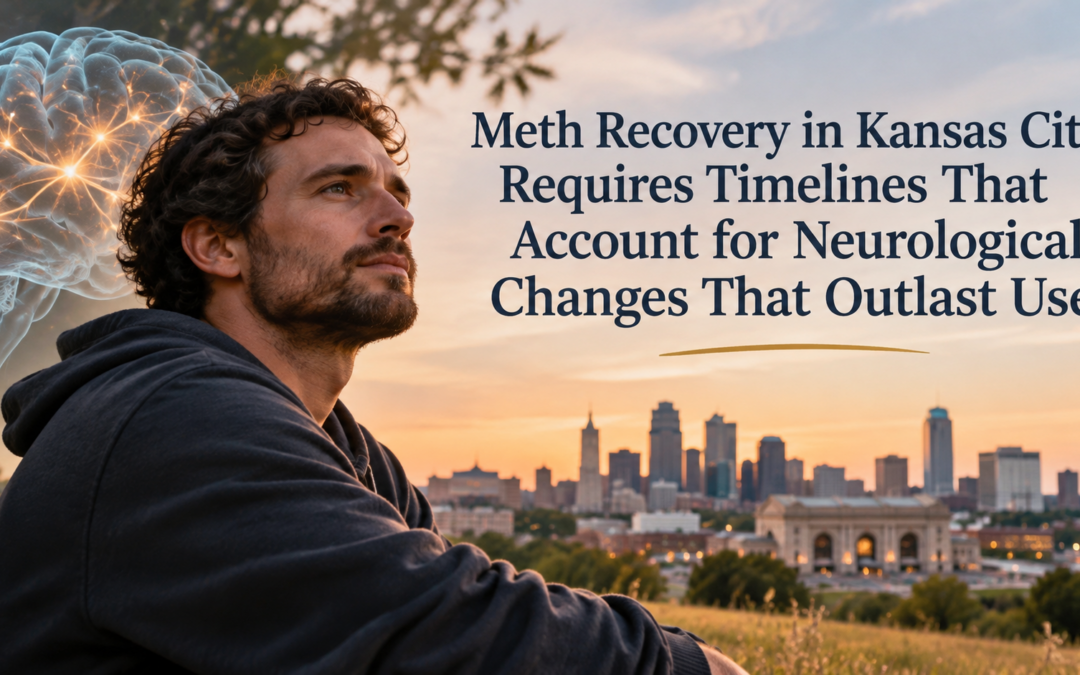
Meth addiction recovery in Kansas City often moves more slowly than people expect, and that slower pace is a normal part of healing. Methamphetamine changes the brain in ways that can last for months after the last use. Many people feel physically better within a couple of weeks, then wonder why their energy, focus and mood still feel out of reach.
If you are going through this, or watching someone you love go through it, you may feel frustrated or even hopeless. Family members may ask why things aren’t back to normal yet. You may quietly wonder whether something is permanently broken.
That struggle does not mean you are failing. It means your brain is doing slow, steady repair work that needs time and support. A treatment plan built around that real timeline gives recovery room to take hold, and you don’t have to wait it out alone.
Why Does Meth Recovery in Kansas City Take Longer Than Most People Expect?
Meth addiction recovery in Kansas City takes longer than most people expect because the brain changes caused by methamphetamine heal over months, not days. Detox can clear the drug from the body in about a week. The systems that control motivation, pleasure and decision-making need much longer to rebalance.
Many people measure progress by how they feel physically, and so do many programs. With meth, the physical crash usually passes well before the brain catches up.
Why Do Short Programs Often Miss the Mark?
Short programs often miss the mark because they end just as the hardest emotional stretch begins. A person may leave after detox or a brief stay feeling steady. Then weeks of low energy and flat mood arrive with little support in place.
That gap is where meth recovery in Kansas City often stalls. The problem isn’t a lack of commitment. The plan simply stopped too soon.
What Neurological Changes Outlast Meth Use?
The main changes that outlast meth use affect the brain’s dopamine system and the thinking skills that depend on it. The National Institute on Drug Abuse (NIDA) explains that methamphetamine releases very large amounts of dopamine, a chemical messenger linked to pleasure, motivation and movement. With repeated use, the brain adjusts in ways that take time to undo.
How Does Meth Change the Dopamine System?
Meth changes the dopamine system by flooding it so heavily that the brain turns down its own natural signals to protect itself. Once the drug is gone, everyday rewards can feel muted.
Picture a dimmer switch that was cranked to full brightness for months, then turned far down to make up for it. The light takes time to return to a normal glow. Clinicians call this flat, joyless feeling anhedonia, which means trouble feeling pleasure. It is one of the most common challenges in meth recovery in Kansas City.
How Long Does Cognitive Recovery Take?
Cognitive recovery after meth use often takes many months, and some people notice continued gains for a year or longer. NIDA reports that brain imaging studies have shown partial recovery of dopamine function after prolonged abstinence, though some other changes may last longer.
Thinking challenges people often notice include:
- Trouble concentrating on conversations, reading or work tasks
- Forgetting appointments or recent details
- Slower problem-solving
- Acting on impulse before thinking things through
- Mental fatigue after simple tasks
These struggles are signs of healing in progress. They are not proof that meth recovery in Kansas City isn’t working.
What Should You Expect in Early Versus Extended Recovery?
Early recovery usually brings exhaustion, heavy sleep, strong cravings and low mood. Extended recovery brings slow, steady gains in energy, focus and enjoyment. Knowing what each stage looks like helps you and your family set realistic expectations.
What Happens in the First Two Weeks?
The first two weeks often bring a crash marked by long sleep, increased appetite, irritability and depression. Some people also feel anxious, restless or strongly drawn back to using.
Safety comes first during this stretch. If you or someone you love feels hopeless or thinks about suicide, call or text 988 to reach the 988 Suicide and Crisis Lifeline right away.
What Changes Over the Following Months?
Over the following months, sleep, appetite and mood often begin to steady, though low motivation and cravings can still come in waves. Many people describe this as a gray stretch where nothing feels terrible but nothing feels quite right either.
This middle season is when meth recovery in Kansas City needs the most patience. Staying connected to therapy and peer support keeps progress moving while the brain continues to heal.
What Does Progress Look Like Later On?
Later progress often shows up as small wins that add up over time. You might laugh at a joke, finish a task, enjoy a meal or wake up feeling rested. These moments may seem minor, but they are real signs of healing.
How Does the Kansas City Area Affect Meth Recovery?
The Kansas City area affects meth addiction recovery because familiar neighborhoods, social circles and work routines can trigger cravings long after detox ends. Federal law enforcement has long described the region as a drug distribution hub because several major interstates meet here. That can make access feel close at hand.
For anyone pursuing meth recovery in Kansas City, a strong plan for life at home matters as much as the treatment itself.
Which Local Triggers Come Up Most Often?
The triggers that come up most often are the people, places and pressures tied to past use. These may include:
- Friends or partners who still use
- Specific apartments, streets or parking lots on either side of the state line
- Long overnight shifts in warehouses, kitchens or trucking
- Money stress, boredom or isolation
- Payday weekends or social settings where stimulants feel common
Gaining some distance early, then returning home with a clear plan, can make meth recovery in Kansas City feel more manageable.
Why Does Fentanyl Raise the Stakes?
Fentanyl raises the stakes because the Drug Enforcement Administration (DEA) has warned that it has been found mixed into other illicit drugs, including methamphetamine. A person without opioid tolerance faces serious overdose risk from even a small amount. Keeping naloxone, an overdose reversal medication, on hand is a simple protective step.
How Does Integrated Care Support Meth Recovery in Kansas City?
Integrated care supports meth addiction recovery in Kansas City by treating substance use and any co-occurring mental health condition together through one coordinated plan. Depression, anxiety, trauma and attention-deficit/hyperactivity disorder (ADHD) often appear alongside meth use. Left untreated, they can keep pulling a person back.
At Grand Falls Center for Recovery, dual-diagnosis treatment and mental health treatment work side by side under one team. Your care stays connected instead of being split between providers.
Which Therapies Help Most?
Behavioral therapies help most. NIDA identifies approaches such as cognitive behavioral therapy (CBT) and contingency management, which offers small rewards for meeting recovery goals, as the most effective treatments for meth use right now. No medication is currently approved by the U.S. Food and Drug Administration (FDA) specifically for methamphetamine use disorder.
A personalized plan may include:
- CBT to recognize and change thought patterns tied to cravings
- Group therapy with peers who understand the slow pace of healing
- Relapse prevention planning built around your personal triggers
- Daily routines for sleep, nutrition and movement that support brain health
- GeneSight genetic testing, which uses a simple cheek swab to help personalize medication for depression or anxiety when appropriate
Because focus may still be recovering, repetition and written plans help new skills stick.
How Can Families Help?
Families can help by learning why progress is slow and responding to setbacks with patience instead of pressure. Family therapy gives loved ones a guided space to understand meth recovery in Kansas City and set expectations everyone can live with.
Which Levels of Care Fit Meth Recovery in Kansas City?
The right level of care depends on your health, your home environment and how far along you are in healing. Grand Falls offers a full continuum of care on a calm, secluded campus in Joplin, Missouri, about a two-and-a-half-hour drive south of Kansas City.
- Medical detox provides about a week of supervised care with 24/7 on-site medical and support staff through the initial crash.
- Residential inpatient treatment offers 30 to 90 days or more of structured care while the brain begins to heal.
- Partial hospitalization (PHP) delivers intensive daytime treatment with evenings at home.
- Intensive outpatient care (IOP) offers therapy several days a week as you return to work and family.
- Aftercare and alumni support keeps you connected through the months when cravings can still surface.
Stepping down gradually lets the brain keep healing while support stays close. Many families choose travel for meth recovery in Kansas City because distance from familiar triggers gives the first months a steadier start.
Is a Longer Recovery Plan the Right Next Step for You?
A longer recovery plan may fit if you’ve stopped using but still feel stuck, flat or unable to focus. You don’t need every answer before reaching out.
- If you returned to use within weeks of a short program, a plan built around the real timeline can cover the months that were missed.
- If you feel exhausted or joyless since stopping, those symptoms are common and respond to steady support.
- If depression, anxiety or trauma sits beneath your use, dual-diagnosis care can treat both at once.
- If people or places tied to past use surround you at home, residential care can create needed distance.
- If loved ones keep asking why you haven’t bounced back, family therapy can help everyone understand what healing really looks like.
Grand Falls offers a free consultation, so you can ask questions and explore options with no pressure.
Common Questions Before Starting Treatment
How long does meth recovery take? There is no single timeline. Many people notice meaningful improvement over several months, and some brain changes can take a year or longer. Staying connected to care through that period gives meth recovery in Kansas City its strongest footing.
Is it normal to feel nothing after quitting meth? Yes. Low mood and trouble feeling pleasure are very common and often improve gradually. If those feelings turn into hopelessness, tell your care team right away.
Will my memory and focus come back? Many people see real improvement with time and continued abstinence. Research has shown partial recovery of some brain functions, though the pace varies from person to person.
Can someone from Kansas City get care at Grand Falls? Yes. Many people travel to the Joplin campus for detox and residential care. Before you leave, the team helps build an aftercare plan that keeps you supported once you return home.
Will my insurance cover treatment? Many insurance plans cover addiction treatment. Grand Falls can help verify your benefits during a free consultation.
Moving Forward With Hope
Meth addiction recovery in Kansas City asks for patience because the brain heals on a longer timeline than the body. That isn’t a reason to lose hope. It is a guide for building a plan that fits what you are truly facing.
With integrated care, a gradual step-down and people who understand, many individuals in recovery rediscover energy, focus and joy over time. Every month of healing counts.
If you or someone you love is ready, reach out to Grand Falls Center for Recovery today. Our compassionate team will listen, answer your questions and help you take the next step.