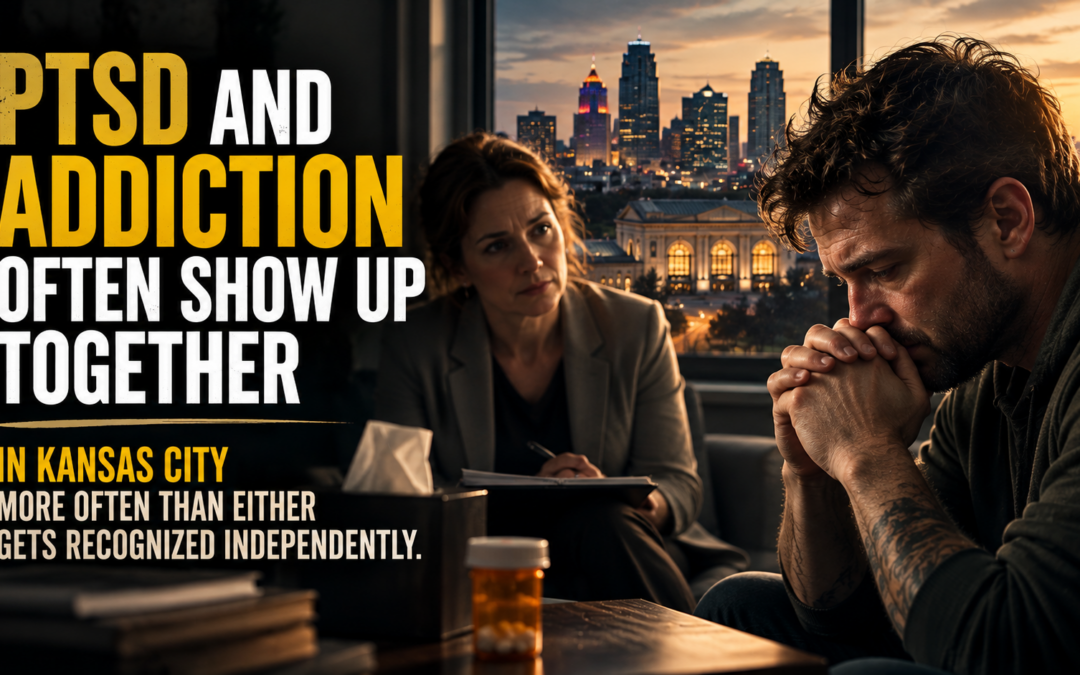
PTSD and addiction in Kansas City often appear side by side, but many people get help for only one of them. If you or someone you love has finished treatment for substance use and still feels haunted by the past, that can leave you tired, confused and quietly discouraged.
You are not failing, and this is not a lack of willpower. Trauma and substance use tend to feed each other in ways that are easy to miss, even for caring providers.
Post-traumatic stress disorder (PTSD) can develop after a frightening, painful or life-threatening experience. When alcohol or drugs become a way to quiet nightmares, panic or constant tension, the two conditions start to tangle together. Over time, it can be hard to tell where one ends and the other begins.
This pattern responds well to the right kind of care. When a team sees both conditions clearly and treats them together, recovery can rest on a much steadier foundation. You deserve care that looks at everything you have been carrying.
What Do PTSD and Addiction in Kansas City Look Like When They Occur Together?
PTSD and addiction in Kansas City often form a cycle: trauma symptoms drive substance use, and substance use deepens trauma symptoms. Each condition makes the other harder to manage alone.
For many people living with PTSD and addiction in Kansas City, the cycle starts quietly. A person might drink to fall asleep without nightmares. Another might use opioids or sedatives to calm a body that always feels braced for danger.
Why Do People With PTSD Turn to Substances?
People with PTSD often turn to substances because alcohol and drugs bring fast, short-term relief from symptoms that feel unbearable. This pattern is sometimes called self-medication.
It is a deeply human response to pain, not a character flaw. Over time, though, substances can increase anxiety, disrupt sleep and make trauma memories feel even sharper.
What Signs Suggest Both Conditions Are Present?
The signs that both conditions are present usually show up in mood, sleep, relationships and patterns of use. They often continue even during periods of sobriety.
Common signs include:
- Using alcohol or drugs to sleep, calm down or stop intrusive memories
- Nightmares, flashbacks or feeling constantly on guard
- Using more around anniversaries, reminders or stressful events
- Pulling away from loved ones or feeling emotionally numb
- Relapsing when painful memories return after a stretch of sobriety
Why Are PTSD and Addiction in Kansas City So Often Recognized Separately?
PTSD and addiction in Kansas City are often recognized separately because each condition can hide the other’s symptoms. Providers tend to treat whatever is most visible when someone first asks for help.
This is not anyone’s fault. The two conditions can look very different from the outside, and few people describe their trauma in a first conversation.
How Does Substance Use Hide Trauma?
Substance use hides trauma by numbing the very symptoms a clinician would need to see. When alcohol or drugs quiet the panic and nightmares, PTSD can look like substance use alone.
Many people also carry shame about what happened to them. They may talk openly about drinking long before they feel safe enough to mention trauma.
How Does Trauma Hide Substance Use?
Trauma hides substance use when a person seeks care for anxiety, poor sleep or depression without mentioning how much they drink or use. The mental health concern gets attention while the substance use stays in the background.
Therapy may make progress for a while in these cases. Then substance use quietly undoes it, and no one is sure why.
What Happens When Only One Condition Is Treated?
When only one condition is treated, the untreated one often pulls a person back toward old patterns. Someone may finish detox and residential care, then relapse when trauma symptoms flare.
This is one reason PTSD and addiction in Kansas City can go years without a complete picture. A relapse does not mean you failed. It can point care toward what has been driving the pattern all along.
How Does Integrated Dual-Diagnosis Care Treat Both Conditions?
Integrated dual-diagnosis care treats PTSD and substance use at the same time, with one coordinated team and one connected plan. You are not passed between separate programs that rarely talk to each other.
At Grand Falls Center for Recovery, dual-diagnosis treatment brings therapy, medical support and daily structure together. For people seeking help with PTSD and addiction in Kansas City, this approach treats the root cause and the behavior side by side.
What Might a Treatment Plan Include?
A treatment plan for co-occurring PTSD and substance use usually combines trauma-focused therapy, medical care and practical skills. Each piece supports the others.
A plan might include:
- Trauma-focused therapy that helps you work through painful experiences at a safe pace
- Cognitive behavioral therapy (CBT), which helps you notice and change unhelpful thought patterns
- Grounding skills that calm the body during flashbacks or panic
- Relapse prevention planning that accounts for your trauma triggers
- Family therapy to help loved ones understand and support your healing
You can learn more about PTSD treatment and trauma treatment at Grand Falls.
How Does Personalized Medication Support Fit In?
Personalized medication support helps clinicians choose medications that match how your body is likely to respond. Grand Falls uses GeneSight testing, which analyzes a simple cheek swab to show how your genes may affect your response to certain medications.
Results usually reach your provider within two days. This can cut down on frustrating trial and error when treating anxiety, depression or sleep problems tied to trauma.
What Levels of Care Are Available for PTSD and Addiction in Kansas City?
Care for PTSD and addiction in Kansas City can range from medical detox to flexible outpatient support, depending on your needs. Grand Falls Center for Recovery is located in Joplin, Missouri, and welcomes people from Kansas City and across the region.
Many people step down through levels of care as they grow steadier. A thorough assessment helps you and your team choose the right starting point.
Options include:
- Medical detox offers 24/7 supervised support, typically for about seven days, while your body safely clears substances.
- Residential inpatient treatment provides structured care, often for 30 to 90 days or longer, in a calm setting away from daily triggers.
- Partial hospitalization program (PHP) delivers intensive daytime care, and you return home each evening.
- Intensive outpatient program (IOP) offers therapy several days a week while you keep your routine.
- Aftercare and alumni support keeps you connected through group therapy and personal counseling.
Why Does a Calm Setting Matter for Trauma Recovery?
A calm setting matters because a nervous system shaped by trauma needs to feel safe before it can heal. Stepping away from familiar triggers gives you room to rest and do the deeper work.
For some people facing PTSD and addiction in Kansas City, that distance helps on its own. It puts space between old reminders and a new beginning.
How Do You Know Which Next Step Fits Your Situation?
Choosing care for PTSD and addiction in Kansas City starts with an honest look at your safety, your symptoms and how much structure you need right now. You do not need every answer before reaching out.
Consider these prompts:
- If you keep relapsing when memories return, integrated care for PTSD and addiction in Kansas City may reach what past treatment missed.
- If you drink or use to sleep or to stop flashbacks, a dual-diagnosis assessment can show what is driving that pattern.
- If you are still physically dependent on alcohol, opioids or sedatives, medical detox is often the safest place to begin.
- If home is full of reminders or ongoing stress, residential care can offer distance and round-the-clock support.
- If you need to keep working or caring for family, PHP or IOP may let you heal without stepping away completely.
- If a loved one has noticed changes in you, their concern is worth exploring together.
Common Questions Before Starting Treatment
Is it common to have PTSD and substance use at the same time? Yes. PTSD and addiction in Kansas City often occur together, as they do across the country. You are far from alone, and treatment is built with this overlap in mind.
Do I need a PTSD diagnosis before getting help? No. Many people first learn that trauma is part of their story during an assessment. Your care team can help identify what is happening, even if no one has named it before.
Will I have to talk about my trauma right away? No. Good trauma care moves at your pace and puts your safety first. You will build coping skills and trust before working through difficult memories.
What if I relapsed after past treatment? A past relapse does not mean recovery is out of reach. It often shows that an underlying condition, such as PTSD, still needs attention.
Can my family be involved? Yes. Family therapy can help loved ones understand how trauma and substance use connect, so everyone can support healing together.
Moving Forward With Hope
PTSD and addiction in Kansas City present together far more often than either gets recognized alone, and seeing that connection is a meaningful first step. Your symptoms make sense, and they are not a sign of weakness.
Recovery takes time, and every path looks different. With care that treats both conditions together, many people find steadier days and a renewed sense of safety.
You do not have to sort this out by yourself. If you or someone you love is ready for support, reach out to Grand Falls Center for Recovery today. Our caring team will listen, answer your questions and help you take the next step toward healing.