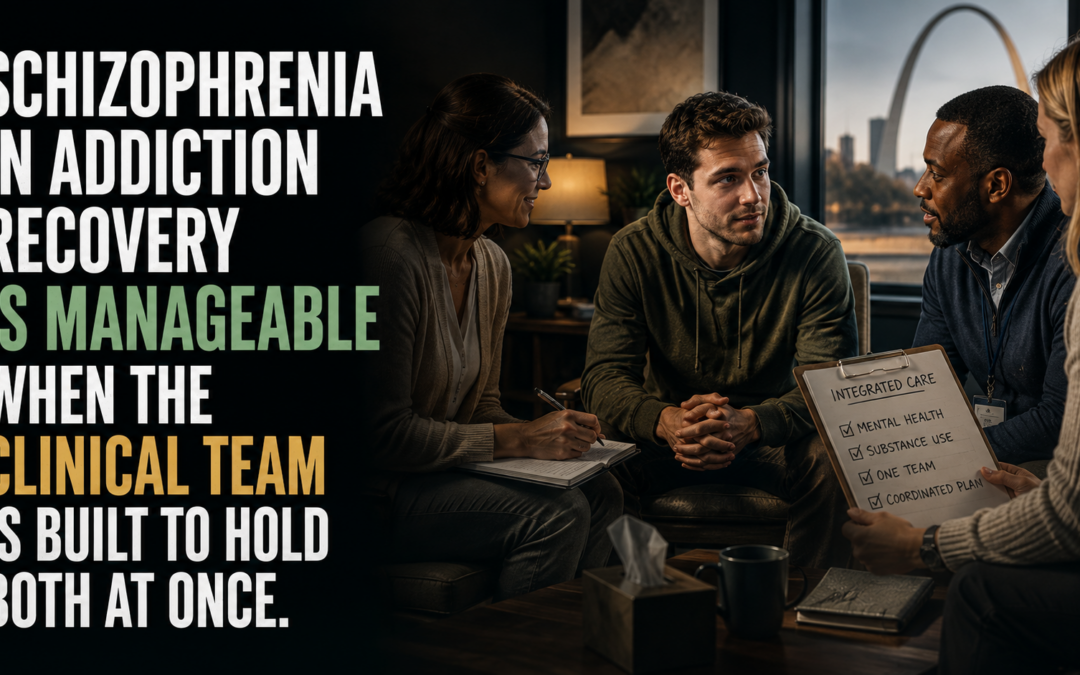
Schizophrenia in addiction recovery is manageable when one clinical team is built to hold both conditions together, rather than treating them as two separate problems in two separate places. If you or someone you love is facing this, the worry about being bounced between providers is real, and it deserves an honest answer.
For a long time, care was fragmented. A person might receive mental health support in one place and substance use treatment somewhere else, with neither team fully aware of the other. That gap often left people feeling unseen and stuck in a cycle that never quite broke.
Care has changed. The strongest programs now recognize that these conditions shape each other, and they build treatment around that reality. Understanding how this works can help you feel more confident about the next step toward support.
What Does Schizophrenia in Addiction Recovery Actually Mean?
Schizophrenia in addiction recovery means a person is working through a substance use disorder while also living with schizophrenia, and both conditions receive care at the same time. It describes one whole person, not two disconnected diagnoses.
Schizophrenia is a mental health condition that affects thinking, perception, and daily functioning. Addiction recovery is the ongoing process of healing from substance use. When these overlap, they influence each other in ways that make treating just one incomplete.
The goal is not perfection. It is steady progress, supported by a team that understands how these experiences connect.
How Common Is This Combination?
This combination is common enough that quality treatment programs now expect it and screen for it. Many people living with schizophrenia also face a substance use disorder at some point.
Because this overlap happens so often, treating it as a rare exception no longer makes sense. Care teams plan for both from the very first assessment, so fewer people slip through the cracks.
Why Does This Feel So Overwhelming?
It feels overwhelming because managing two conditions can seem like twice the work, especially when past care felt scattered. That exhaustion is understandable, and it is not a sign of weakness.
The reassuring truth is that integrated care is designed to lighten that load. One coordinated plan replaces the strain of juggling separate providers.
Why Does Integrated Care Matter for Schizophrenia in Addiction Recovery?
Integrated care matters for schizophrenia in addiction recovery because both conditions influence each other, and treating them together produces steadier results than treating them apart. When care is split, progress in one area can be undone by the other.
Separate treatment often forces a person to manage two disconnected plans that may even work against each other. One provider might not know what the other is recommending, which creates confusion and added stress.
Integrated care closes that gap. A single team addresses your mental health and substance use through one connected plan, so nothing important gets lost between providers.
What Happens When the Two Are Treated Separately?
When the two are treated separately, care can become a frustrating cycle of trial and error. A person might make gains in one program while the untreated condition quietly pulls them backward.
Imagine following two maps that point in different directions. You end up worn down and unsure which way to go. A unified plan removes that strain and points everyone the same way.
How Do Schizophrenia and Substance Use Interact?
Schizophrenia and substance use often interact in a reinforcing loop, where each can intensify the other over time. One does not simply cause the other. Instead, they tend to tangle together.
A person might use a substance to quiet distressing symptoms, and that substance can then make symptoms harder to manage once it wears off. The pattern can repeat and strengthen itself if only one condition receives attention.
Understanding this loop helps explain why recovery feels harder alone. Breaking the cycle usually requires support that addresses both sides at the same time.
Which One Comes First?
Either condition can come first, and the order varies from person to person. Sometimes schizophrenia appears first and substance use develops as a way to cope. Other times, substance use affects the brain and mood, complicating the picture.
What matters most is not untangling which arrived first. What matters is treating both together so the loop can finally slow down.
Why Does This Loop Make Recovery Harder Alone?
This loop makes recovery harder because gains in one area can be undone by the other when it goes untreated. You might feel steadier for a while, then face a setback that pulls you back down.
Care that holds both conditions at once helps interrupt that pattern. When symptoms ease and substance use is addressed together, steadier days become more reachable.
What Does Treatment for Schizophrenia in Addiction Recovery Look Like at Grand Falls Recovery?
Treatment at Grand Falls Recovery means one coordinated team addresses your mental health and substance use through a single, connected plan. You are not sent between programs that never communicate.
This model brings medical care, therapy, and daily support under one roof. The people helping you share information and adjust your plan as you progress, so your care stays consistent and personal.
That coordination matters most when more than one condition is present. When your team sees the whole picture, they can respond with real precision and warmth.
What Might a Treatment Plan Include?
A treatment plan usually combines several supports that work together over time. No single element carries the whole load.
Common elements of integrated care include:
- Medication support guided by a clinical team
- Individual therapy that helps you understand and respond to symptoms
- Support for the substance use disorder alongside mental health care
- Skill-building for coping, communication, and daily self-care
- Group sessions that build connection and reduce isolation
- Support for building consistent daily structure
Why Does Daily Structure Matter So Much?
Daily structure matters because a predictable routine helps steady the mind and reduce the stress that can worsen symptoms. Consistent sleep, meals, and medication timing all support stability.
At Grand Falls Recovery, care teams weave gentle structure into the treatment day. That steady rhythm makes symptoms easier to manage and helps recovery feel more grounded.
What Levels of Care Are Available?
The levels of care available range from immersive residential support to flexible outpatient options, depending on your needs. Many people move between levels as their stability grows.
The right fit reflects your health history, home environment, and current needs. A thorough assessment helps guide that decision with you, not for you.
Which Level of Care Might Fit Best?
The level of care that fits best depends on how much daily support and structure your situation requires. There is no single right answer for everyone.
Common options include:
- Residential treatment offers structured, round-the-clock support in a stable setting.
- Partial hospitalization provides intensive daytime care with evenings spent at home.
- Intensive outpatient care delivers therapy several days a week while you keep your routine.
- Outpatient care offers ongoing support as you return to everyday life.
How Do People Move Between Levels?
People move between levels as they build stability, often stepping down to lighter support over time. Someone might begin with more structured care and gradually shift toward outpatient support.
This flexibility means care can grow with you. You stay connected to a consistent approach, even as your needs change from one season to the next.
How Do You Know When to Seek Help?
The clearest sign it is time to seek help is when symptoms, daily functioning, or substance use become harder to manage on your own. You do not need to wait for a crisis to reach out.
Consider connecting with a care team if any of these feel familiar:
- Symptoms have grown more frequent, intense, or harder to ignore.
- Substance use has increased alongside changes in mood or thinking.
- Sleep, meals, or medication routines have become difficult to maintain.
- Daily tasks feel more overwhelming than they used to.
- You or a loved one has stopped taking medication as prescribed.
- Past treatment focused on only one condition and results did not last.
If several of these resonate, a conversation with a care team can bring clarity and relief. Reaching out early is a caring, proactive step for yourself or someone you love.
What Families Often Ask
Families frequently want to understand how to support a loved one facing both conditions without adding pressure. These are a few common questions.
Can schizophrenia and substance use really be treated at the same time? Yes. Integrated programs are built to address both conditions together, and this combined approach tends to produce steadier progress than treating them separately. One team holds both at once.
Is it too late if past treatment only focused on one condition? No. It is not too late for a different approach. Integrated care can address what earlier treatment may have missed, treating the full picture rather than one piece of it.
How can we support a loved one at home? You can encourage consistent routines, gentle connection, and steady engagement with the care team. Describing changes you notice, in both mood and substance use, gives clinicians information that is easy to miss.
How do we get started? You start with an assessment. A conversation with a care team helps identify the conditions present and the right level of care, so your family can move forward with a clear plan.
Moving Toward Support With Hope
Schizophrenia in addiction recovery is manageable when the clinical team is built to hold both conditions together, without separating them into disconnected programs. Seeing your situation clearly is a meaningful and hopeful step, not a sign that something is wrong with you.
Recovery and stability become far more reachable when every part of your care works from the same plan. With coordinated, compassionate support, symptoms can ease and steadier days can follow.
You do not have to navigate this alone, and you do not have to piece together care from separate places. The right team can walk beside you through all of it.
If you or someone you love is living with schizophrenia and a substance use disorder, reach out to Grand Falls Recovery today. Our compassionate team is here to listen and guide you toward integrated care that supports every part of your recovery.