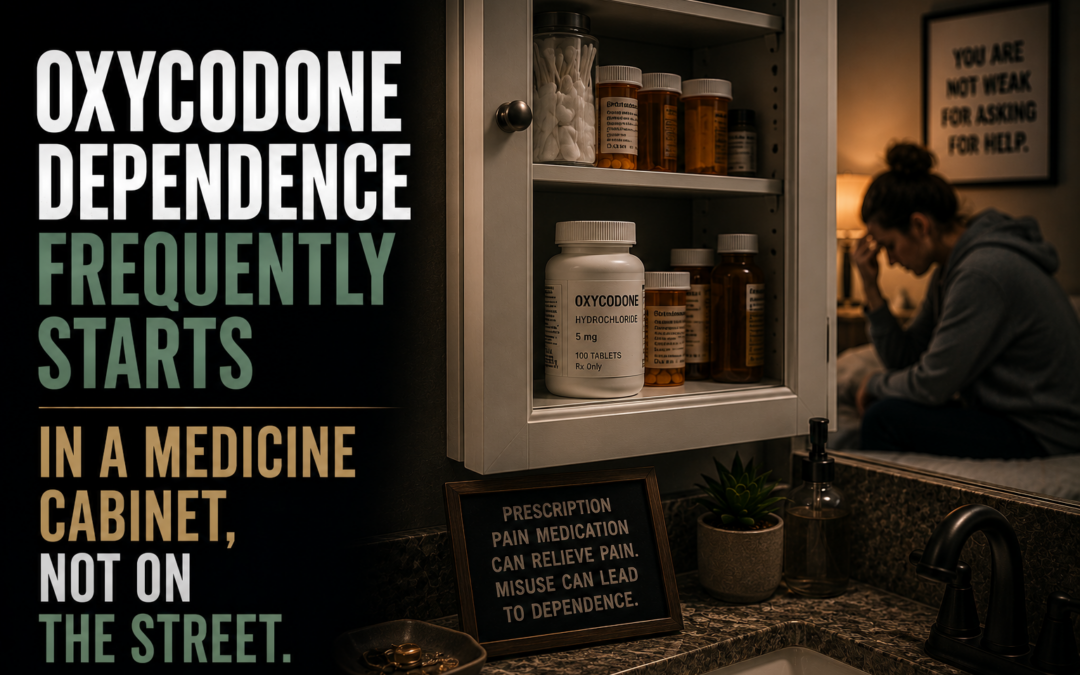
Oxycodone dependence frequently starts with a legitimate prescription for real pain, not with a decision to misuse a drug. If you or someone you love began taking oxycodone after surgery, an injury, or a chronic condition, you may feel confused about how things reached this point.
That confusion is understandable, and it does not mean you did anything wrong. Oxycodone is a powerful medication, and the body can grow dependent on it even when you take it exactly as directed.
The reassuring truth is that this is common, treatable, and nothing to be ashamed of. With the right support, you can move toward steadier days and a healthier relationship with your health and your body.
What Is Oxycodone Dependence and How Does It Develop?
Oxycodone dependence develops when the body adapts to the medication over time and begins to need it to feel normal. This can happen gradually, often without any intention to misuse the drug.
Oxycodone is an opioid pain reliever prescribed for moderate to severe pain. It works by changing how your brain and body respond to pain signals.
When you take it regularly, your body adjusts to its presence. Over weeks, that adjustment can turn into physical dependence, where stopping suddenly causes withdrawal.
How Is Dependence Different From Misuse?
Dependence is a physical response, while misuse involves taking a medication in a way it was not prescribed. You can become dependent even while following your doctor’s instructions carefully.
This distinction matters because it removes blame. Dependence is your body reacting to a strong medication, not a sign of weak willpower or poor character.
Why Does the Medicine Cabinet Play Such a Big Role?
The medicine cabinet plays a big role because most people first encounter oxycodone through a doctor, not a dealer. A prescription after surgery or an injury is often where the story begins.
Leftover pills also linger in many homes. That easy access, paired with real pain or stress, can quietly turn a short-term prescription into a longer struggle.
Why Is Oxycodone Dependence So Hard to Recognize?
Oxycodone dependence is hard to recognize because it often hides behind a legitimate medical reason for taking the medication. When there is a real prescription and real pain, the warning signs blend into everyday life.
You may tell yourself you still need it for pain, and part of that may be true. That gray area makes it easy to overlook the shift from treatment to dependence.
Families often miss it too. A loved one taking prescribed medication rarely raises alarm the way street drug use might.
What Makes the Signs Easy to Miss?
The signs are easy to miss because they can look like normal responses to pain or stress. Taking medication on schedule seems responsible, not concerning.
Common overlooked patterns include:
- Needing higher doses to get the same relief
- Feeling anxious as the next dose approaches
- Running out of a prescription earlier than expected
- Taking oxycodone for stress or sleep rather than pain alone
- Feeling unwell, achy, or restless between doses
How Does Tolerance Complicate Things?
Tolerance complicates things because the body slowly needs more medication to feel the same effect. This can happen naturally over time, even with careful use.
As tolerance grows, a person may take more than prescribed to manage pain. That small step can deepen dependence without any intention to misuse the drug.
What Are the Warning Signs of Oxycodone Dependence?
The clearest warning sign of oxycodone dependence is needing the medication to feel normal, not just to manage pain. When your body reacts strongly to missing a dose, that reaction offers important information.
Warning signs show up in the body, the mind, and daily behavior. Noticing them early can make the path forward far gentler.
What Physical Signs Should You Notice?
Physical signs often include withdrawal-like feelings when a dose is delayed or missed. These reactions reflect a body that has adapted to the medication.
Physical signs may include:
- Sweating, chills, or body aches between doses
- Nausea or stomach discomfort when the medication wears off
- Trouble sleeping or feeling restless without it
- Needing more of the medication to feel relief
What Emotional and Behavioral Signs Appear?
Emotional and behavioral signs often include worry about running out and changes in how you use the medication. These shifts can happen quietly over time.
You might notice yourself thinking about the next dose often, visiting more than one doctor for prescriptions, or feeling anxious when supply runs low. These patterns are worth taking seriously, gently and without judgment.
Who Is at Risk for Oxycodone Dependence?
Anyone prescribed oxycodone can develop dependence, because the risk comes from the medication itself, not from a person’s character. Dependence does not discriminate by age, background, or willpower.
Certain factors can raise the risk, though. Understanding them helps you stay aware without living in fear.
Which Factors Increase the Risk?
Factors that increase risk include longer use, higher doses, and a personal or family history of substance use. Chronic pain conditions that require ongoing treatment can also play a part.
Risk may be higher if you:
- Take oxycodone for an extended period
- Use higher doses to manage significant pain
- Have a personal or family history of substance use
- Live with anxiety, depression, or unresolved trauma
- Have limited support while managing a painful condition
Does Being at Risk Mean Dependence Is Certain?
No, being at risk does not mean dependence is certain or unavoidable. Many people take oxycodone safely with careful medical guidance.
Awareness is your ally here. Working closely with a prescriber, asking questions, and watching for early signs can help you use the medication more safely.
What Levels of Care Help With Oxycodone Dependence?
The levels of care that help with oxycodone dependence range from medically supervised detox to flexible outpatient support, depending on your needs. There is a fitting path for nearly every situation.
Because opioid withdrawal can feel intense, medical support often matters. A trained team helps you move through it more safely and comfortably.
Why Does Medically Supervised Detox Matter?
Medically supervised detox matters because opioid withdrawal can be uncomfortable and difficult to manage alone. A care team monitors your symptoms and helps ease them.
Detox clears the medication from your body while keeping you as comfortable as possible. It creates a steadier foundation for the healing work that follows.
Which Level of Care Might Fit Best?
The level of care that fits best depends on how much daily support and structure your situation requires. A thorough assessment helps guide that decision with you.
Common options include:
- Medical detox offers supervised support as your body clears the medication.
- Residential treatment provides structured, round-the-clock care in a stable setting.
- Partial hospitalization delivers intensive daytime care with evenings spent at home.
- Intensive outpatient care offers therapy several days a week while you keep your routine.
- Outpatient care provides ongoing support as you return to everyday life.
At Grand Falls® Recovery, care teams help match each person with the right level. Many people move between levels as their stability grows.
How Does Treatment Address the Whole Person?
Treatment addresses the whole person by caring for the pain, the emotions, and the patterns beneath oxycodone dependence, not just the medication itself. This matters because dependence rarely exists on its own.
Chronic pain, anxiety, and past experiences often intertwine with opioid use. Treating only one piece can leave the others unaddressed.
At Grand Falls Recovery, care can support pain management, mental health, and substance use together. This coordinated approach helps recovery feel steadier and more complete.
How Do You Know When to Reach Out for Help?
The clearest sign it is time to reach out is when oxycodone feels necessary to get through the day, beyond managing pain. You do not need to reach a crisis point before asking for support.
Consider these prompts as you think about your next step:
- If you feel anxious or unwell between doses, medical support can help you manage that safely.
- If you have needed higher doses to feel the same relief, an assessment can bring clarity.
- If you are taking oxycodone for stress or sleep rather than pain, a caring team can help you explore why.
- If you have tried to stop but withdrawal made it too hard, medically supervised detox may be the right first step.
- If a loved one has expressed concern, that observation is worth exploring together.
Reaching out for that first conversation is often the hardest and most meaningful step. A compassionate team can help you sort through your options at your own pace.
Common Questions Before Starting Treatment
People often have honest questions before seeking help, and clear answers can ease the way forward. These are a few of the most common.
Does dependence mean I did something wrong? No. Dependence is a physical response to a powerful medication, and it can develop even when you follow your prescription exactly. It is not a moral failing or a sign of weakness.
Can I stop taking oxycodone on my own? It is safest to stop with medical guidance. Opioid withdrawal can be uncomfortable, and a care team helps manage symptoms while keeping you safer and steadier throughout.
What if I still have real pain? That is a common and valid concern. A good treatment team addresses both your pain and your dependence together, helping you find safer ways to manage discomfort.
Will treatment take me away from my life completely? Not always. Care ranges from residential support to flexible outpatient options. The right fit depends on your needs, and many people receive care while staying connected to their routine.
Moving Toward Healing With Hope
Oxycodone dependence frequently starts in a medicine cabinet, not on the street, and understanding that truth can lift a heavy weight of shame. Your struggle makes sense, and it is far more common than you may realize.
Dependence is a physical response, not a character flaw, and it responds well to compassionate care. With the right support, you can address the pain, the patterns, and the path forward together.
You do not have to figure this out alone, and you do not have to feel completely ready to begin. Reaching out is a brave and hopeful first step toward steadier days.
If you or someone you love is struggling with oxycodone, reach out to Grand Falls Recovery today. Our caring team is here to listen, answer your questions, and guide you toward a safe start and a clear path forward.