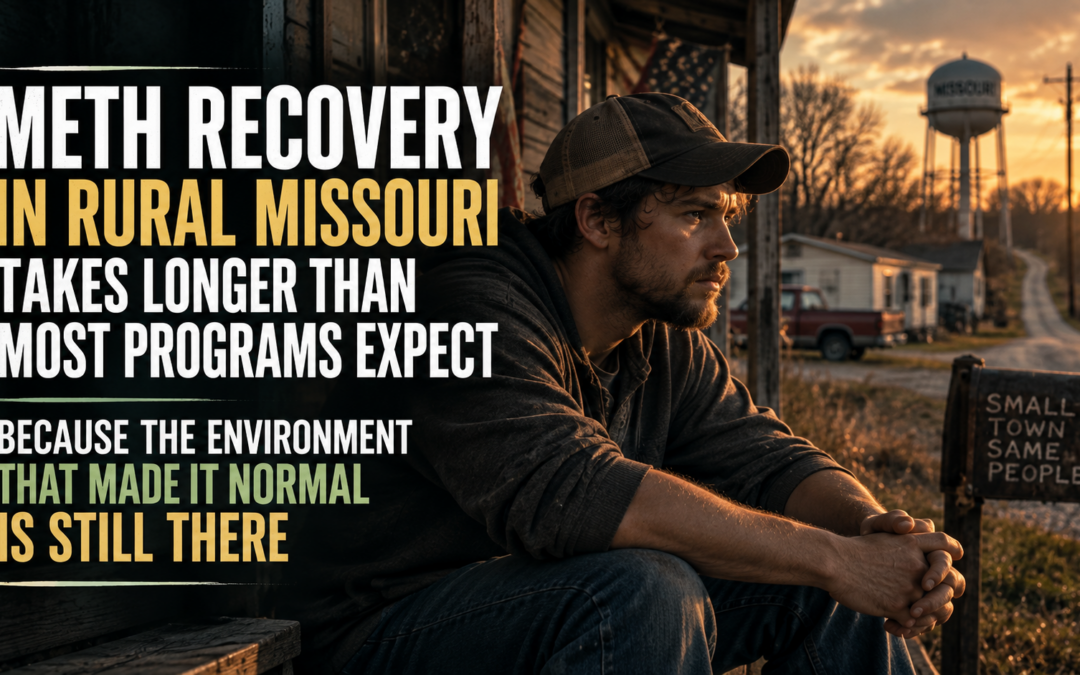
Meth recovery in rural Missouri often takes longer than standard programs expect, because the environment that made meth use feel normal is still waiting when treatment ends. If you or someone you love is walking this path, that reality can feel discouraging, and it deserves an honest, hopeful answer.
You are not failing, and you are not slow to heal. Recovery in a small town or rural community carries challenges that city programs rarely account for.
The reassuring truth is that longer does not mean impossible. When treatment reflects the real environment you return to, recovery has a far stronger chance to hold. Understanding why the timeline stretches can help you or your loved one find care that truly fits.
What Does Meth Recovery in Rural Missouri Actually Involve?
Meth recovery in rural Missouri involves treating both the physical dependence on meth and the environmental factors that keep pulling a person back toward it. It is not only about stopping use. It is about building a new life in a place where old patterns still surround you.
Meth, short for methamphetamine, is a powerful stimulant that changes how the brain handles energy, reward, and focus. Recovery takes time because the brain needs a long stretch to heal.
In rural areas, that healing happens alongside a community that may still treat meth use as ordinary. This adds a layer most programs are not built to address.
Why Does Meth Recovery Take Longer Than Other Substances?
Meth recovery often takes longer because the brain needs extended time to rebuild its natural reward system. Meth floods the brain with dopamine, and recovering that balance can take many months.
During this time, a person may feel low energy, low mood, or strong cravings. These symptoms are part of healing, not signs of weakness.
How Is Rural Recovery Different From Urban Recovery?
Rural recovery is different because access to treatment, support, and anonymity is far more limited. Fewer providers, longer drives, and closer-knit communities all shape the experience.
In a small town, everyone may know your story. That visibility can make seeking help feel harder, even when the courage to try is already there.
Why Does the Environment Make Meth Recovery in Rural Missouri So Hard?
The environment makes meth recovery in rural Missouri so hard because the same places, people, and social norms that surrounded meth use are still present after treatment ends. Recovery does not happen in a vacuum. It happens in the middle of daily life.
When meth use has become common in a community, returning home can mean returning to triggers on every corner. The cues that once signaled use are woven into ordinary routines.
This is why the timeline stretches. A person is not only healing their brain. They are learning to stay well in an environment that has not changed.
What Does “The Environment Made It Normal” Mean?
“The environment made it normal” means that meth use has become an accepted or expected part of daily life in some rural communities. When something feels ordinary, it stops raising alarm.
Clinically, this matters because behavior is shaped by surroundings. If friends, family, or neighbors use meth, it can feel like a normal way to cope, socialize, or get through a hard week.
Breaking free from that norm takes more than willpower. It takes new patterns, new support, and often more time than a short program allows.
How Do Social Norms and Peer Networks Drive Relapse?
Social norms and peer networks drive relapse because the people around you strongly influence your choices. When your closest relationships center on meth use, staying sober can feel isolating.
Returning to the same friend group often means facing constant temptation. Even loving relationships can pull a person back if those bonds formed around substance use.
Rebuilding a healthier network takes time, and that is one reason recovery in rural areas cannot be rushed.
Why Does Isolation Make Recovery Harder?
Isolation makes recovery harder because distance and limited resources can leave a person without steady support. Rural life often means long drives to the nearest meeting, provider, or group.
That distance can deepen loneliness, which is one of the strongest triggers for returning to use. Connection is protective, and isolation quietly chips away at it.
Why Do Standard Program Timelines Underestimate Rural Needs?
Standard program timelines underestimate rural needs because they often assume a supportive, resource-rich environment waiting at home. For many people in rural Missouri, that assumption simply does not match reality.
A typical program length may work well when a person returns to stable housing, sober support, and easy access to follow-up care. When those supports are missing, the same timeline can fall short.
Recovery is not one-size-fits-all. A plan built for an urban setting may leave a rural person unprepared for the pressures they actually face.
What Happens When Treatment Ends Too Soon?
When treatment ends too soon, a person may return home before new habits have taken root. The brain is still healing, and the old environment is still full of triggers.
This gap between readiness and reality is where many setbacks happen. It is rarely a matter of effort. It is a matter of timing and support.
Why Does Longer, Flexible Care Work Better?
Longer, flexible care works better because it gives the brain and the new routines time to strengthen. It also allows care to adapt as a person moves back into daily life.
Extended support, step-down levels of care, and strong aftercare all help bridge the gap. This is where a full continuum of care makes a real difference.
What Does Whole-Person, Longer-Term Care Look Like?
Whole-person, longer-term care means treating the mind, body, relationships, and environment together over an extended period. It looks beyond stopping meth use to address the reasons it took hold.
This approach treats you as a full person, not a diagnosis. It considers your history, your mental health, and the community you return to.
At Grand Falls® Center for Recovery, care can bring detox, therapy, and ongoing support together in one coordinated plan. This helps recovery feel steadier and more complete.
Why Do Co-occurring Conditions Matter Here?
Co-occurring conditions matter because meth use often connects to anxiety, depression, or trauma. Treating only the substance can leave those deeper struggles in place.
Many people use meth to cope with pain, exhaustion, or difficult emotions. When those needs receive care too, the pull toward use often begins to ease.
Integrated treatment addresses both at once, which gives recovery a stronger foundation. You can explore the mental health treatment woven into care at Grand Falls Recovery.
Why Does Rebuilding a New Environment Take Time?
Rebuilding a new environment takes time because new routines, relationships, and coping skills do not form overnight. A person may need to build a sober support network from the ground up.
This work is slow and meaningful. It includes finding healthier connections, new daily habits, and steady sources of support.
Longer care gives space for this rebuilding to happen before a person faces the old environment alone.
What Levels of Care Does Grand Falls Recovery Offer?
Grand Falls Recovery offers a range of care levels, from medically supervised detox to flexible outpatient support, so treatment can match your needs. This range means care can adapt to the realities of rural life.
Many people move between levels as their stability grows. A thorough assessment helps guide the right starting point with you.
Which Level of Care Might Fit Best?
The level of care that fits best depends on how much daily support and structure your situation requires. There is no single right answer for everyone.
Common options include:
- Medical detox offers supervised support as your body clears meth safely.
- Residential inpatient treatment provides structured, round-the-clock care away from daily triggers.
- Partial hospitalization delivers intensive daytime care with evenings spent at home.
- Intensive outpatient care offers therapy several days a week while you keep your routine.
- Aftercare and alumni support help you stay steady as you return to everyday life.
You can learn more about meth addiction treatment and residential inpatient treatment and how they connect.
Why Does Aftercare Matter So Much in Rural Recovery?
Aftercare matters so much in rural recovery because it provides ongoing support once a person returns to a challenging environment. That steady connection helps protect early progress.
Grand Falls Recovery’s aftercare and alumni support offers group therapy and personalized guidance over time. For someone heading back to a small community, this lifeline can make all the difference.
How Do You Know When to Reach Out for Help?
The clearest sign it is time to reach out is when meth use is affecting your health, relationships, or peace of mind. You do not need to reach a crisis point before asking for support.
Consider these prompts as you think about your next step:
- If your community makes meth use feel normal, longer care can help you build a different foundation.
- If past treatment ended and old surroundings pulled you back, extended support may reach what a short program missed.
- If isolation or distance has kept you from help, a full continuum of care can offer steady connection.
- If anxiety, depression, or trauma sits beneath your use, integrated care can treat both at once.
- If a loved one has expressed concern, that observation is worth exploring together.
Reaching out for that first conversation is often the hardest and most meaningful step. A caring team can help you sort through your options at your own pace.
Common Questions Before Starting Treatment
People often have honest questions before seeking care, and clear answers can ease the way forward. These are a few of the most common.
Why does meth recovery take so long? Meth changes how the brain handles reward and energy, and rebuilding that balance takes many months. Recovery also involves changing the environment and habits around use, which adds time. A longer timeline reflects real healing, not failure.
Will I have to leave my community to get better? Not always, though a period away can help. Residential care offers a safe reset from daily triggers, while outpatient and aftercare options let you heal while staying connected. The right path depends on your needs.
What if everyone around me still uses meth? That is a real and common challenge, and treatment can help you prepare for it. Longer care focuses on building new routines, healthier relationships, and strong ongoing support before you face the old environment alone.
How do I get started? You start with a simple conversation and an assessment. A caring team helps identify your needs and the right level of care, so you can move forward with a clear plan.
Moving Toward Healing With Hope
Meth recovery in rural Missouri takes longer than many programs expect, because the environment that made meth use feel normal is still there when treatment ends. Understanding this is not discouraging. It is the key to finding care that actually fits your life.
Your experience is real, and a longer road does not mean recovery is out of reach. With whole-person, longer-term support that accounts for your community and your needs, steadier days become far more reachable.
You do not have to face this alone, and you do not have to feel completely ready to begin. Small, steady steps taken with the right support can lead to lasting change.
If you or someone you love is struggling, reach out to Grand Falls Center for Recovery today. Our caring team is here to listen, answer your questions, and guide you toward a safe start and a clear path forward.