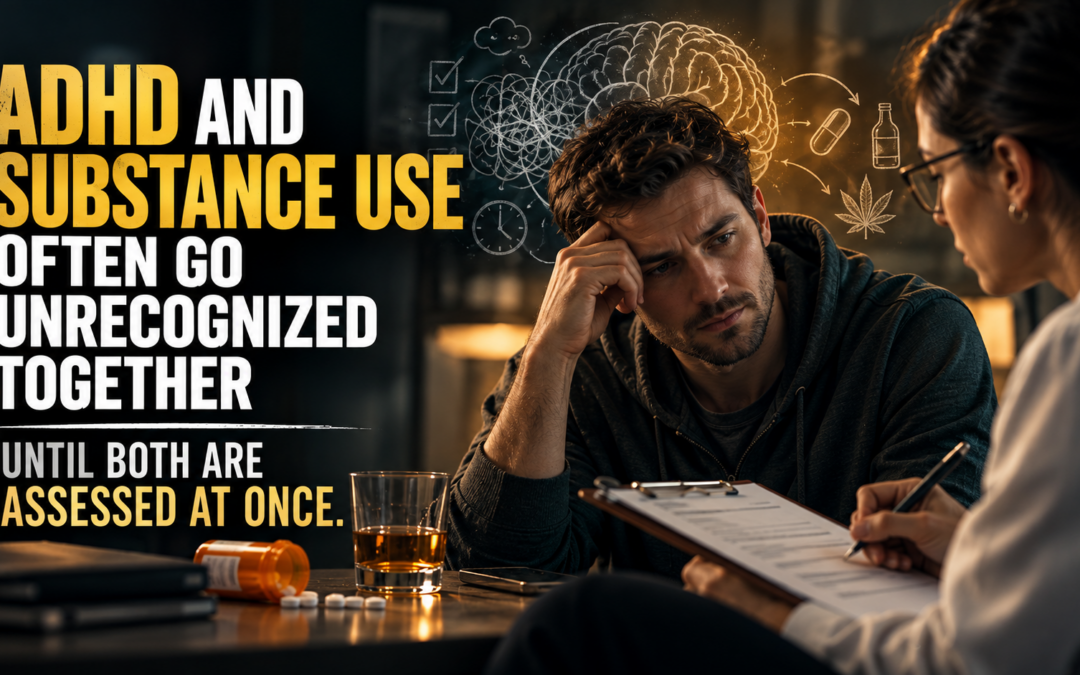
ADHD and substance use often show up together, yet attention-deficit/hyperactivity disorder (ADHD) is easy to miss once drinking or drug use becomes the focus. Many adults spent years being called lazy, scattered or “too much” before anyone named what was going on. By the time they reach treatment, the substance use is usually all anyone sees.
If this sounds familiar, you may feel frustrated or tired of starting over. Maybe you finished a program, felt hopeful and then struggled again when the restlessness, racing thoughts or trouble focusing came back. That pattern does not mean you failed.
It may mean only half the picture was ever treated. When ADHD and substance use are assessed at the same time, care can address the restless mind behind the cravings. You deserve a plan that sees all of you.
Why Do ADHD and Substance Use Often Go Unrecognized Together?
ADHD and substance use often go unrecognized together because their symptoms overlap so closely that one can hide the other. Restlessness, poor sleep, irritability and trouble focusing can come from ADHD, from withdrawal or from both.
When a clinician sees these signs early in treatment, it makes sense to link them to the substance first. The ADHD underneath may never get a second look.
How Do Overlapping Symptoms Cause Confusion?
Overlapping symptoms cause confusion because ADHD, intoxication and withdrawal can all affect attention, mood and impulse control. Stimulants can make focus seem sharper for a while. Alcohol or cannabis may seem to quiet a busy mind.
Without a careful history, it is hard to tell which came first. That is why timing matters so much in any assessment.
Why Is ADHD Often Missed in Adults?
ADHD is often missed in adults because many people were never evaluated as children, especially if they did well in school or did not fit the hyperactive stereotype. Girls and women are frequently overlooked because their symptoms can look more like daydreaming or anxiety.
Many adults built coping habits that hid the condition for years. Substances can quietly become one of those habits.
How Are ADHD and Substance Use Connected?
ADHD and substance use are connected because many people with ADHD turn to alcohol or drugs to manage symptoms that feel hard to control. Research has consistently found that people with ADHD face a higher risk of developing a substance use disorder than people without it.
This link is not about character or willpower. It reflects how ADHD affects the brain’s reward and attention systems.
What Is Self-Medication?
Self-medication means using alcohol or drugs to ease the symptoms of an untreated condition. A person with ADHD might misuse a friend’s stimulant to focus at work. Another might drink every night to slow racing thoughts and fall asleep.
The relief feels real, which is why the habit can grow quickly. Over time, the substance can create new problems on top of the old ones.
How Does Impulsivity Raise the Risk?
Impulsivity raises the risk because ADHD can make it harder to pause before acting, even when you know the cost. Using more than planned or returning to use after a hard day can happen faster than you expect.
Many people with ADHD also crave novelty and stimulation. Substances can fill that need in the short term while making recovery harder.
What Are the Warning Signs That ADHD and Substance Use Are Both Present?
The clearest warning sign is using alcohol or drugs to focus, calm down or feel “normal” rather than to enjoy yourself. When a substance feels like a tool for getting through the day, it may be covering an underlying condition.
Other signs may include:
- Lifelong trouble with focus, organization or finishing tasks
- Restlessness that existed long before substance use began
- Using stimulants to study, work or meet deadlines
- Drinking or using cannabis to quiet racing thoughts or sleep
- Frequent job changes, missed bills or forgotten appointments
- Relapse after treatment that never addressed attention or impulse control
Noticing a few of these is not a diagnosis. It is a reason to ask for an assessment that looks at ADHD and substance use together.
What Might This Look Like in Real Life?
In real life, it might look like a parent who has always felt scattered and starts relying on wine each evening to quiet the mental noise. It might also look like a college student who buys stimulants to keep up with classes, then struggles to stop.
Both people may believe the substance is the whole problem. A careful assessment can show what sits underneath it.
Why Does Assessing ADHD and Substance Use at Once Change Treatment?
Assessing ADHD and substance use at once changes treatment because it lets one team build a plan that addresses both conditions together. If only the substance use is treated, ADHD symptoms can return with full force in early sobriety.
That return of restlessness and frustration can feel a lot like a craving. Without tools to manage it, the pull to use again grows stronger.
What Happens During an Integrated Assessment?
An integrated assessment reviews your childhood history, current symptoms, substance use patterns and mental health in one coordinated process. Clinicians may ask when focus problems first began, how school or work went and whether relatives have similar traits.
Because withdrawal can mimic ADHD, an accurate diagnosis often comes after a period of stability. At Grand Falls Center for Recovery, dual-diagnosis treatment brings addiction care and mental health treatment together under one team.
Can ADHD Medication Be Part of Recovery?
Yes, ADHD medication can be part of recovery when your care team plans it carefully. Non-stimulant options and long-acting formulations may lower misuse risk, and your team will weigh what fits your history.
Grand Falls also uses GeneSight genetic testing, which relies on a simple cheek swab to show how your genetics may affect your response to certain medications. This can reduce frustrating trial and error.
Which Therapies Help?
Therapies that help build practical skills for attention, planning and emotional control alongside relapse prevention. A plan may include:
- Cognitive behavioral therapy (CBT) to reshape unhelpful thought patterns
- Skills coaching for organization, time management and daily routines
- Group therapy with peers who understand both struggles
- Relapse prevention planning that covers boredom, stress and impulse triggers
- Family therapy to help loved ones understand ADHD behaviors without blame
Which Levels of Care Support ADHD and Substance Use Recovery?
Grand Falls offers a full continuum of care, so support for ADHD and substance use can match each stage of recovery. A thorough assessment helps you and your care team choose the right starting point.
- Medical detox provides about a week of supervised care with 24/7 on-site staff, creating the stability needed before an accurate look at ADHD and substance use can begin.
- Residential inpatient treatment offers 30 to 90 days or more of structured care on a calm, secluded Joplin campus.
- Partial hospitalization (PHP) delivers intensive daytime treatment with evenings at home.
- Intensive outpatient care (IOP) offers therapy several days a week as you return to work and family.
- Aftercare and alumni support help you stay connected after formal treatment ends.
Structure matters for people with ADHD. Stepping down gradually gives you time to practice new routines while support stays close.
Is an Integrated Assessment the Right Next Step for You?
An integrated assessment may fit if you use substances to focus, calm down or feel normal. You don’t need every answer before reaching out.
- If you relapsed after treatment and still struggle with focus or restlessness, an assessment of ADHD and substance use may reveal what was missed.
- If you use stimulants to keep up at work or school, a care team can help you find safer ways to manage attention.
- If you drink or use to quiet your mind at night, integrated care can address both the habit and the reason behind it.
- If you were never evaluated for ADHD as a child, it is not too late to get answers as an adult.
- If a loved one has noticed lifelong distraction alongside substance use, that observation is worth exploring together.
Grand Falls offers a free consultation, so you can ask questions and explore options with no pressure.
Common Questions Before Starting Treatment
Can adults be diagnosed with ADHD during addiction treatment? Yes. Many adults receive their first ADHD diagnosis during treatment. Clinicians often wait until you are stable after detox so withdrawal symptoms don’t cloud the results.
Will I be able to take ADHD medication in recovery? Possibly. Your care team will consider your history, the substances involved and non-stimulant options. The goal is to manage symptoms safely without raising relapse risk.
Why does my focus feel worse since I stopped using? Substances may have been masking ADHD symptoms. When they are removed, those symptoms can surface more strongly. This is common and responds well to the right support.
Will my insurance cover treatment? Many insurance plans cover dual-diagnosis care. Grand Falls can help verify your benefits during a free consultation.
Moving Forward With Hope
ADHD and substance use do not have to stay hidden behind each other any longer. When both are assessed at once, treatment can finally reach the restless mind that substances were trying to quiet.
Your struggles with focus were never a character flaw. With integrated care, practical skills and steady support, many people find a calmer and more manageable way forward.
You do not have to sort this out alone. If you or someone you love is ready, reach out to Grand Falls Center for Recovery today. Our compassionate team is here to listen, answer your questions and help you take the next step.