
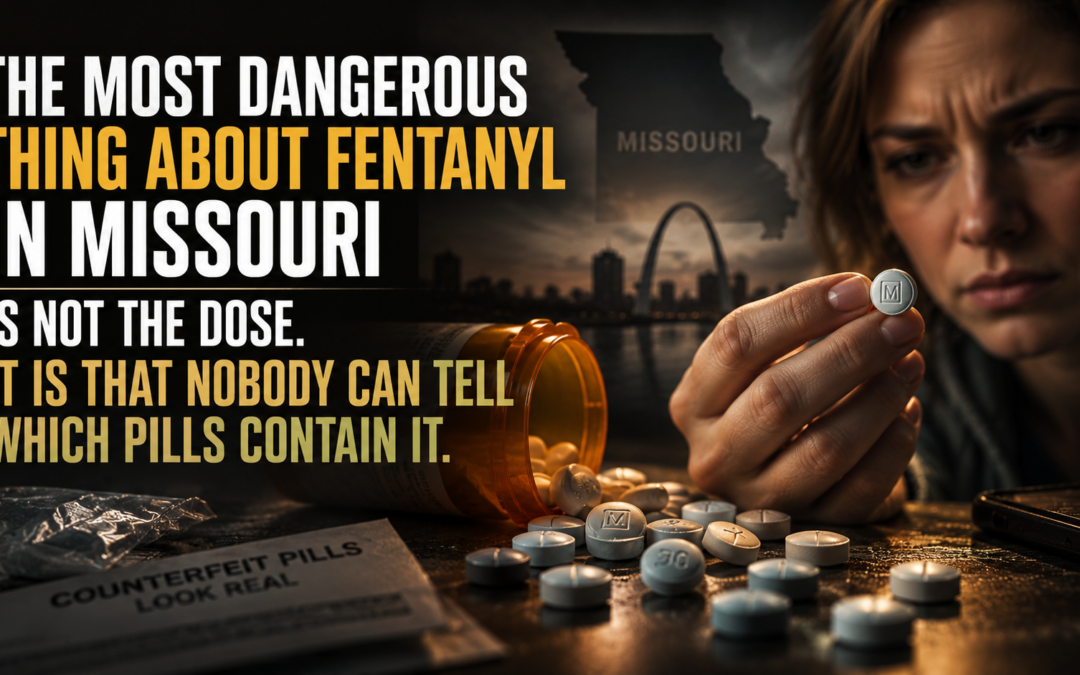
Fentanyl in Missouri poses a danger that goes far beyond how strong it is, because the real threat is that no one can tell which pills contain it just by looking. If you or someone you love is worried about this risk, that fear is valid, and it deserves clear, honest answers.
You are not overreacting by wanting to understand this. The unpredictability of counterfeit pills has changed the landscape for anyone who uses substances, even occasionally.
The reassuring truth is that knowledge is protective, and help is available. Understanding how this danger works can help you make safer choices and take steady steps toward support. You are not alone, and reaching out is always possible.
Why Is Fentanyl in Missouri So Difficult to Detect?
Fentanyl in Missouri is difficult to detect because it is often pressed into counterfeit pills that look identical to legitimate medications. You cannot see it, smell it, or taste it, which makes visual judgment unreliable.
Fentanyl is a powerful synthetic opioid. Because such a small amount produces a strong effect, it is frequently added to other substances without the user’s knowledge.
This is why a pill that looks like a familiar prescription may not be what it appears. The risk hides in plain sight.
What Do Counterfeit Pills Look Like?
Counterfeit pills often look exactly like real prescription medications, down to the color, shape, and stamped markings. That resemblance is what makes them so dangerous.
A pill sold as a common painkiller or anxiety medication may contain fentanyl instead. Without testing, there is no reliable way to know the difference by sight.
Why Doesn’t Appearance Tell You Anything?
Appearance tells you nothing because illicit manufacturing has no quality control or consistency. Two pills that look identical can contain very different amounts of fentanyl.
One might contain none, and the next might contain a dangerous amount. This inconsistency is at the heart of why fentanyl in Missouri feels so unpredictable.
Why Can No Pill Be Considered Safe Without a Test?
No pill can be considered safe without a test because the only reliable way to detect fentanyl is with a fentanyl test strip. Guessing based on the source, the seller, or the look of a pill offers no real protection.
Many people assume a pill is safe if it comes from someone they trust or resembles a known medication. That assumption does not hold anymore.
The safest choice is to treat any pill not dispensed by a pharmacy as potentially containing fentanyl.
What Are Fentanyl Test Strips?
Fentanyl test strips are small tools that can detect the presence of fentanyl in a substance. They offer a way to check before use, though they do not measure exact amounts.
These strips are not a guarantee of safety. Even a negative result carries risk, because contamination can be uneven within a single pill or batch.
Why Is “I Trust My Source” Not Enough?
Trusting a source is not enough because the person selling a pill often does not know what it truly contains. Contamination can happen anywhere along the supply chain.
A trusted contact may believe they are offering a genuine medication. Good intentions cannot remove fentanyl that was pressed in long before the pill reached them.
How Does Fentanyl Contamination Spread Across Substances?
Fentanyl contamination spreads across many substances because it is inexpensive to produce and easy to mix into other drugs. This reach extends far beyond opioids alone.
What began as a concern for prescription painkillers now touches a wide range of substances. This broadening risk is one reason fentanyl in Missouri deserves such careful attention.
Which Substances Can Contain Fentanyl?
Substances that can contain fentanyl include counterfeit pills, heroin, cocaine, methamphetamine, and other street drugs. The contamination is not limited to opioids.
People who believe they are using a non-opioid substance may still be exposed. This unexpected crossover puts many more people at risk than most realize.
Why Does This Make Casual or First-Time Use Dangerous?
This makes casual or first-time use dangerous because a single pill or dose can carry serious risk. A person does not need a long history of substance use to be affected.
Someone experimenting once, or using a pill to manage stress or sleep, may not expect any danger. The unpredictability of fentanyl removes the illusion that occasional use is low risk.
How Does Fentanyl Exposure Connect to the Need for Treatment?
Fentanyl exposure connects closely to the need for treatment because opioids like fentanyl are highly habit-forming. Even use that begins by accident can lead to dependence over time.
The body adapts quickly to opioids. What starts as occasional use can shift into a physical need, often faster than a person expects.
Recognizing this early opens the door to compassionate care. Reaching out is a sign of strength, not failure.
How Does Opioid Dependence Develop?
Opioid dependence develops as the body adjusts to a substance and begins to need it to feel normal. Stopping suddenly can then cause uncomfortable withdrawal.
This process is physical, not a matter of willpower. Understanding it helps replace shame with a clearer path toward support and healing.
Why Is Early Support So Important?
Early support is important because addressing substance use sooner can prevent the cycle from deepening. The earlier a person reaches out, the more options they often have.
You do not need to reach a crisis point to deserve help. Care is available at every stage, and asking for it early is a caring choice for yourself or a loved one.
How Does Grand Falls® Recovery Support Fentanyl Addiction Treatment?
Grand Falls Recovery supports fentanyl addiction treatment through a coordinated approach that addresses both the physical dependence and the reasons behind it. Care treats the whole person, not just the substance.
At Grand Falls Center for Recovery, treatment brings medical support, therapy, and ongoing guidance together in one plan. This coordinated care helps recovery feel steadier and more complete.
You can learn more about the specific fentanyl addiction treatment available and how it fits your needs.
Why Does Medically Supervised Detox Matter?
Medically supervised detox matters because opioid withdrawal can be intense and difficult to manage alone. A trained team monitors your symptoms and helps ease them safely.
A medical detox program clears the substance from your body while keeping you as comfortable as possible. It creates a steadier foundation for the healing work that follows.
Why Does Whole-Person Care Work Better?
Whole-person care works better because substance use often connects to pain, anxiety, depression, or trauma. Treating only the physical side can leave those deeper needs unaddressed.
When care addresses both the dependence and the reasons behind it, recovery gains a stronger footing. This is why one coordinated team makes such a meaningful difference.
How Do You Know When to Reach Out for Help?
The clearest sign it is time to reach out is when fentanyl exposure or opioid use is affecting your health, relationships, or peace of mind. You do not need to wait for a crisis to ask for support.
Consider these prompts as you think about your next step:
- If you or a loved one has used pills from any source other than a pharmacy, learning about the risks and options can help.
- If opioid use has become harder to stop than expected, medically supervised detox can help you stop safely.
- If you feel unwell or anxious between uses, that may signal dependence worth addressing with care.
- If pain, anxiety, or trauma sits beneath the substance use, coordinated treatment can address both at once.
- If a loved one has expressed concern, that observation is worth exploring together.
Reaching out for that first conversation is often the hardest and most meaningful step. A caring team can help you sort through your options at your own pace.
Common Questions About Fentanyl in Missouri
People often have honest questions before seeking help, and clear answers can ease the way forward. These are a few of the most common.
Can I tell if a pill contains fentanyl just by looking? No. Counterfeit pills are often made to look identical to real medications, and fentanyl has no visible signs. The only reliable way to detect it is with a fentanyl test strip, and even that does not guarantee safety.
Is fentanyl only found in opioids? No. Fentanyl in Missouri has been found in a range of substances, including counterfeit pills, heroin, cocaine, and methamphetamine. This means people who do not expect an opioid can still be exposed.
Does accidental exposure mean I need treatment? Not always, but any opioid use carries a risk of dependence. If use has continued or become difficult to stop, reaching out for support is a wise and caring step.
How do I help a loved one who may be at risk? Start with a calm, nonjudgmental conversation and share what you have learned. Encouraging them to speak with a caring treatment team can open the door to safer choices and support.
Moving Toward Safety and Hope
The most dangerous thing about fentanyl in Missouri is not the dose, it is that nobody can tell which pills contain it, and understanding that truth is a powerful first step toward safety. This unpredictability is exactly why knowledge, caution, and support matter so much right now.
Your concern is valid, and taking it seriously is an act of care for yourself or someone you love. Recovery and safer choices are possible with the right information and the right team beside you.
You do not have to face this alone, and you do not have to have every answer before reaching out. Help is closer than it may feel.
If you or someone you love is worried about fentanyl or opioid use, reach out to Grand Falls Center for Recovery today. Our caring team is here to listen, answer your questions, and guide you toward a safe start and a clear path forward.