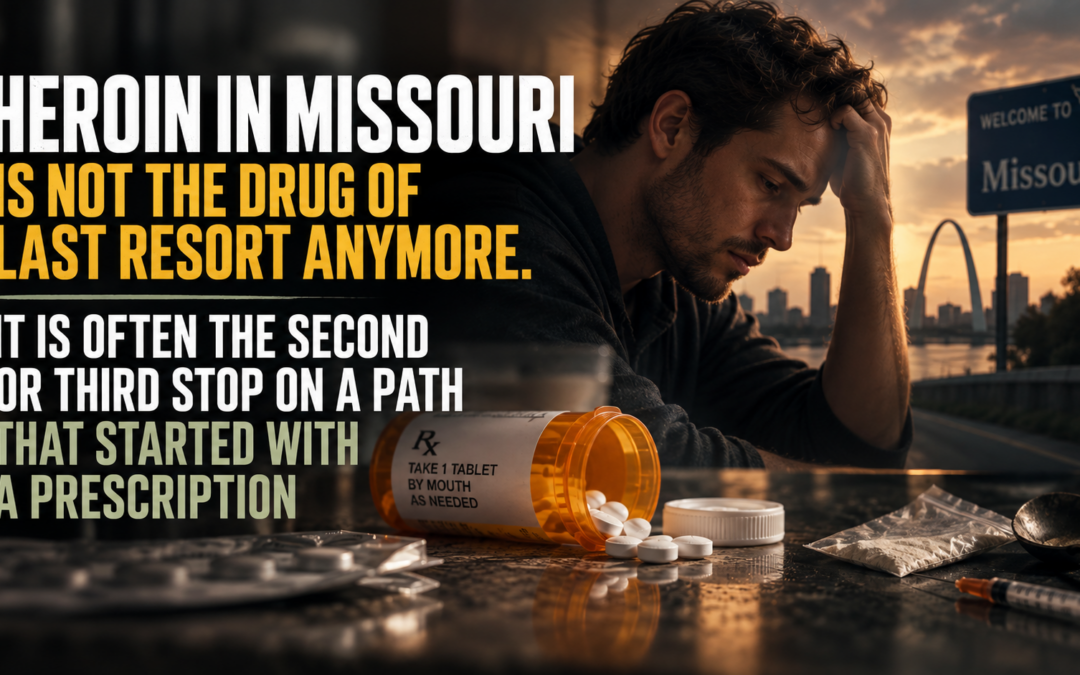
Heroin in Missouri is not the drug of last resort many people imagine, and for a growing number of individuals it is the second or third stop on a path that began with a legitimate prescription. If you or someone you love ended up here after starting with pain pills, you are not alone, and you are not a failure.
That path is more common than most people realize, and understanding it can lift a heavy weight of shame. Dependence often begins with medication a doctor prescribed for a real injury, surgery, or chronic pain.
The reassuring truth is that this pattern is treatable. With the right support, the story does not have to end here. Recovery is possible, and help is closer than it may feel right now.
How Does Heroin in Missouri Connect to Prescription Opioids?
Heroin in Missouri often connects directly to prescription opioids, because both act on the brain in similar ways. When a person becomes dependent on pain medication, heroin can become a substance the body already recognizes.
Opioids like oxycodone and hydrocodone change how the brain responds to pain and pleasure. Over time, the body adapts and begins to need the medication just to feel normal.
When a prescription ends or becomes harder to get, the dependence does not disappear. That gap is often where the transition begins.
What Is the Prescription-to-Heroin Pipeline?
The prescription-to-heroin pipeline describes how opioid dependence that started with medication can shift toward heroin over time. It is a pattern seen across Missouri and the country, not a personal weakness.
A person may take pain pills exactly as prescribed, then find the medication no longer eases their pain. As tolerance grows, so does the amount needed to feel relief.
When pills run out or become too costly, heroin can feel like the only remaining option. This shift rarely reflects a choice made lightly.
Why Does the Transition Happen?
The transition happens because heroin is often cheaper and easier to find than prescription opioids once dependence takes hold. The body craves relief, and heroin fills that need in a way that feels familiar.
Prescriptions can end, tighten, or become expensive. When the physical pull of dependence remains, a person may search for something that eases the withdrawal fast.
Heroin then becomes a substitute, not a first choice. Understanding this helps replace blame with compassion.
Who Is at Risk for This Path in Missouri?
Anyone prescribed opioids can be at risk for this path, because dependence stems from the medication itself, not from a person’s character. The risk comes from how opioids affect the brain and body.
You do not have to misuse a prescription to develop dependence. Many people follow their doctor’s instructions and still find themselves struggling.
Recognizing risk factors can help you or a loved one stay aware without living in fear.
Which Factors Increase the Risk?
Factors that increase the risk include longer opioid use, higher doses, and a history of substance use. Chronic pain that requires ongoing treatment can also play a part.
Risk may be higher if you:
- Take opioid medication for an extended period
- Need higher doses over time to feel the same relief
- Have a personal or family history of substance use
- Live with anxiety, depression, or unresolved trauma
- Have limited support while managing pain
Does Being at Risk Mean This Path Is Certain?
No, being at risk does not mean this path is unavoidable. Many people take opioids safely with careful medical guidance and open communication.
Awareness is your ally. Working closely with your prescriber and watching for early warning signs can help you catch a problem before it deepens.
What Are the Warning Signs to Watch For?
The clearest warning sign is needing an opioid to feel normal rather than to manage pain. When the body reacts strongly to a missed dose, that reaction offers important information.
Warning signs often appear in the body, the mind, and daily behavior. Noticing them early can make the path forward far gentler.
What Physical and Behavioral Signs Appear?
Physical and behavioral signs often include withdrawal-like feelings and changes in how a person uses medication. These shifts can happen quietly over time.
Signs worth noticing include:
- Sweating, chills, or body aches between doses
- Running out of a prescription earlier than expected
- Taking medication for stress or sleep rather than pain alone
- Visiting more than one doctor to get prescriptions
- Withdrawing from family, work, or activities once enjoyed
- New financial stress or secrecy around money
If several of these feel familiar, a caring conversation can bring clarity and relief.
How Does Integrated Treatment Help With Heroin in Missouri?
Integrated treatment helps with heroin in Missouri by addressing both the physical dependence and the reasons behind it through one coordinated plan. It treats the whole person, not just the substance.
Heroin dependence rarely exists on its own. It often connects to pain, anxiety, depression, or trauma that also needs care.
At Grand Falls® Center for Recovery, care can bring detox, therapy, and ongoing support together. This coordinated approach helps recovery feel steadier and more complete.
Why Does Medically Supervised Detox Matter?
Medically supervised detox matters because opioid withdrawal can be intense and difficult to manage alone. A trained team monitors your symptoms and helps ease them.
Detox clears the substance from your body while keeping you as comfortable and safe as possible. It creates a steadier foundation for the healing work that follows.
You can learn more about the heroin addiction treatment and broader opioid addiction treatment available.
Why Does Whole-Person Care Work Better?
Whole-person care works better because it addresses the pain and emotions underneath heroin use, not just the behavior. When those deeper needs go unmet, the pull toward substances often returns.
Treating dependence alongside any co-occurring mental health concerns gives recovery a stronger footing. This is why one coordinated team makes such a difference.
What Levels of Care Does Grand Falls Recovery Offer?
Grand Falls Recovery offers a range of care levels, from medically supervised detox to flexible outpatient support, so treatment can match your needs. This range means you can find help that fits your life rather than a single rigid path.
Many people move between levels as their stability grows. A thorough assessment helps guide the right starting point with you.
Which Level of Care Might Fit Best?
The level of care that fits best depends on how much daily support and structure your situation requires. There is no single right answer for everyone.
Common options include:
- Medical detox offers supervised support as your body clears heroin safely.
- Residential inpatient treatment provides structured, round-the-clock care in a stable setting.
- Partial hospitalization delivers intensive daytime care with evenings spent at home.
- Intensive outpatient care offers therapy several days a week while you keep your routine.
- Aftercare and alumni support help you stay steady as you return to everyday life.
Why Does Aftercare Matter for the Long Run?
Aftercare matters because recovery does not end when a program does. Ongoing connection helps protect the progress you have worked hard to build.
Grand Falls Recovery offers group therapy and personalized guidance that continue over time. This steady support can be the difference that helps recovery hold.
How Do You Know When to Reach Out for Help?
The clearest sign it is time to reach out is when opioid or heroin use is affecting your health, relationships, or peace of mind. You do not need to reach a crisis point before asking for support.
Consider these prompts as you think about your next step:
- If prescription opioids led to heroin, integrated care can address the full pattern, not just the surface.
- If you feel unwell or anxious between doses, medically supervised detox can help you stop safely.
- If you have tried to quit but withdrawal made it too hard, added medical support may reach what willpower alone could not.
- If pain, anxiety, or trauma sits beneath your substance use, coordinated care can treat both at once.
- If a loved one has expressed concern, that observation is worth exploring together.
Reaching out for that first conversation is often the hardest and most meaningful step. A caring team can help you sort through your options at your own pace.
Common Questions Before Starting Treatment
People often have honest questions before seeking help, and clear answers can ease the way forward. These are a few of the most common.
Does using heroin mean I did something wrong? No. Heroin use often follows opioid dependence that began with a prescription, and that is a medical pattern, not a moral failing. Understanding this helps replace shame with compassion and opens the door to care.
Can I detox from heroin safely? Yes, especially with medical supervision. A trained team monitors your symptoms, helps manage withdrawal, and keeps you safer and more comfortable throughout the process.
What if pain or another struggle is part of my story? That is common, and integrated care is designed for it. Your team looks at how pain, mental health, and substance use connect, then builds a plan that treats the full picture.
How do I get started? You start with a simple conversation and an assessment. A caring team helps identify your needs and the right level of care, so you can move forward with a clear plan.
Moving Toward Healing With Hope
Heroin in Missouri is often the second or third stop on a path that started with a prescription, and understanding that truth can lift a heavy burden of blame. Your story makes sense, and it is far more common than you may realize.
Dependence is a medical condition, not a character flaw, and it responds well to compassionate, whole-person care. With the right support, you can address the pain, the patterns, and the path forward together.
You do not have to figure this out alone, and you do not have to feel completely ready to begin. Reaching out is a brave and hopeful first step toward steadier days.
If you or someone you love is struggling with heroin in Missouri, reach out to Grand Falls Center for Recovery today. Our caring team is here to listen, answer your questions, and guide you toward a safe start and a clear path forward.