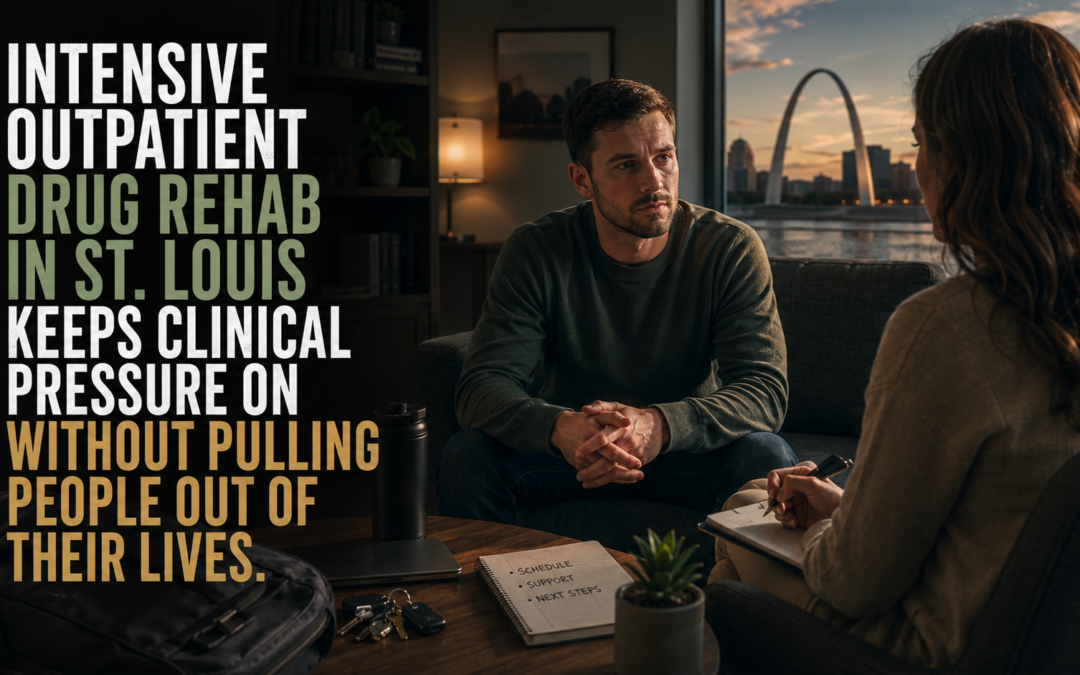
Intensive outpatient drug rehab in St. Louis gives you real clinical support while letting you stay connected to your home, work, and family. If you feel torn between needing serious help and not wanting to step away from everything you care about, you are not alone in that struggle.
Many people put off treatment because they believe getting help means putting their whole life on hold. Jobs, children, and daily responsibilities can feel impossible to leave behind. Those worries are valid, and they deserve honest answers.
The reassuring truth is that meaningful care does not always require walking away from your life. With the right structure and support, you can work toward recovery while staying grounded in your day-to-day world.
What Is Intensive Outpatient Drug Rehab in St. Louis?
Intensive outpatient drug rehab in St. Louis, often called IOP, is a structured treatment program that provides therapy several days a week without requiring you to live at a facility. It offers real clinical care while you continue living at home.
You attend sessions for a few hours at a time, then return to your daily routine afterward. This lets you keep clinical pressure on your recovery while staying connected to the people and responsibilities that matter.
How Many Hours Does IOP Usually Involve?
Intensive outpatient drug rehab usually involves around 9 to 15 hours of treatment per week, spread across three to five days. Sessions often take place in the morning or evening to work around a job or school.
This schedule gives you steady, consistent support without asking you to pause your life. Many programs adjust the hours over time as you grow steadier and more confident.
What Happens During a Typical Session?
A typical session blends group therapy, individual counseling, and skill-building focused on recovery. You explore the roots of substance use while learning practical tools you can use right away.
Group work also connects you with others who understand what you are going through. That shared experience can ease feelings of isolation and remind you that you are not walking this path alone.
Who Is Intensive Outpatient Drug Rehab Right For?
Intensive outpatient drug rehab is a strong fit for people who need real clinical structure but can safely live at home. It works well for those with a stable, supportive environment and no immediate need for medical detox.
This level of care suits many different situations. What matters most is whether you can stay safe and supported outside of treatment hours.
Which Signs Suggest IOP Might Fit?
Signs that IOP might fit include a stable home, a supportive network, and a substance use pattern that does not require constant supervision. You may also be stepping down from a higher level of care.
IOP often works well when you:
- Have completed detox or residential treatment and want continued support
- Live in a safe environment free from constant triggers
- Need to keep working, studying, or caring for family
- Feel motivated to engage in structured therapy
- Face mild to moderate substance use concerns rather than urgent medical needs
Who Might Need a Different Level of Care?
People facing severe withdrawal, unsafe living situations, or intense co-occurring conditions may need more support first. Residential care or a partial hospitalization program can offer that added structure and safety.
A thorough assessment helps clarify the right starting point. Your care team looks at your health, history, and home life to guide the decision alongside you.
How Does IOP Differ From PHP and Residential Care?
IOP differs from partial hospitalization and residential care mainly in intensity and living arrangements. Each level offers a different balance of support and independence.
Understanding these differences can help you feel more confident about which option fits your needs right now.
How Does IOP Compare to Residential Treatment?
IOP lets you live at home, while residential treatment provides round-the-clock care in a live-in setting. Residential care removes you from daily triggers entirely and offers the most immersive support available.
IOP, by contrast, keeps you connected to your everyday world. This can help when you have responsibilities you cannot pause and a home environment that supports your recovery.
How Does IOP Compare to a Partial Hospitalization Program?
IOP involves fewer weekly hours than a partial hospitalization program, or PHP, which usually runs most of the day. PHP offers a higher level of daily clinical support while still letting you sleep at home.
Many people step down from PHP into IOP as they gain stability. This gradual shift helps you build independence without losing structure too quickly.
How Does IOP Keep Clinical Pressure On Without Pulling You Out of Life?
IOP keeps clinical pressure on by delivering consistent, focused therapy while fitting around your existing schedule instead of replacing it. You get real accountability and structure without stepping away from work, parenting, or school.
Staying connected to your routine is not just convenient. It can actually strengthen your recovery over time.
Why Does Practicing Recovery in Real Life Help?
Practicing recovery in real life helps because it lets you apply new skills right where challenges actually happen. You learn a coping tool in session, then use it that same day at home or work.
This real-world practice helps new habits take root. Instead of returning to old patterns after treatment ends, you build steadier ones as you go.
How Does IOP Maintain Accountability?
IOP maintains accountability through regular sessions, honest check-ins, and a care team that tracks your progress closely. That steady structure keeps recovery front and center, even as you manage daily responsibilities.
At Grand Falls Recovery, care teams adjust your plan as your needs change. As you grow stronger, hours often decrease, giving you more room to stand on your own.
What Does an Intensive Outpatient Treatment Plan Include?
An intensive outpatient treatment plan usually combines therapy, skill-building, and support tailored to your specific needs. No single approach works for everyone, which is why a personalized plan matters.
Each part of the plan works together to address both the symptoms and the patterns keeping substance use in place.
What Elements Support Lasting Progress?
Elements that support lasting progress include individual therapy, group sessions, and practical coping skills. These pieces reinforce one another to build a steadier foundation.
A strong IOP often includes:
- Individual therapy that explores the roots of substance use
- Group sessions that build connection and reduce isolation
- Evidence-based approaches like cognitive behavioral therapy
- Relapse prevention planning for real-world situations
- Support for any co-occurring mental health needs
Why Does Whole-Person Care Matter?
Whole-person care matters because substance use often connects to stress, trauma, anxiety, or other life challenges. Treating only the behavior leaves those deeper needs unaddressed.
At Grand Falls Recovery, care can address the mind, body, and daily patterns together. This coordinated approach helps recovery feel more complete and more durable.
What Levels of Care Surround IOP?
The levels of care surrounding IOP range from immersive residential support to flexible outpatient options. Many people move through several stages as they build lasting stability.
The right path reflects your health history, home environment, and recovery goals. A thoughtful plan helps each step feel manageable rather than overwhelming.
How Do People Move Between Levels?
People move between levels as their stability grows, often stepping down gradually rather than all at once. This measured pace helps protect the progress made at each stage.
Common levels of care include:
- Residential treatment offers structured, round-the-clock support in a live-in setting.
- Partial hospitalization provides intensive daytime care with evenings spent at home.
- Intensive outpatient care delivers therapy several days a week while you keep your routine.
- Outpatient care offers ongoing support as you return to everyday life.
This flexibility means care can grow with you. You stay connected to a consistent approach, even as your needs shift from one season to the next.
How Do You Know if IOP Is the Right Next Step?
The clearest sign that IOP may be right is when you need structured support but can safely remain at home. You do not have to wait for a crisis to consider this level of care.
Consider these prompts as you think about your next step:
- If you want real clinical support but cannot step away from work or family, IOP may fit your life.
- If you have finished detox or residential care, IOP can keep steady structure in place.
- If your home environment feels stable and supportive, you may be a strong candidate.
- If standard outpatient therapy has not felt like enough, IOP offers more intensity.
- If you feel motivated but need accountability to stay on track, IOP can provide it.
- If you feel unsure where you fall, a simple assessment can bring clarity without pressure.
Reaching out for that first conversation is often the hardest and most meaningful step. A caring team can help you sort through your options at your own pace.
Common Questions Before Starting Treatment
People often have honest questions before beginning IOP, and clear answers can ease the way forward. These are a few of the most common.
Can I keep working while in IOP? Yes. IOP is designed to fit around your schedule, with sessions often offered in the morning or evening. Many people continue working, studying, or caring for family throughout treatment.
How long does IOP usually last? IOP often lasts several weeks to a few months, depending on your needs and progress. Your care team adjusts the timeline as you grow steadier and more confident.
Do I need detox before starting IOP? You may, depending on your situation. If you are still physically dependent on a substance, a medically supervised detox often comes first. An assessment helps determine the safest starting point.
Is IOP as effective as staying in a facility? For the right person, yes. IOP works well when your home is stable and you do not need constant supervision. It offers real clinical care while letting you practice recovery in daily life.
Moving Toward Recovery With Hope
Intensive outpatient drug rehab in St. Louis keeps clinical pressure on your recovery without pulling you out of the life you have built. It offers structure, accountability, and connection while keeping you rooted in your own world.
You do not have to choose between getting help and living your life. With the right support, you can work toward healing and keep moving forward at the same time.
Recovery is possible, and small, steady steps can lead to lasting change. You deserve care that meets you where you are and walks beside you through it.
If you or someone you love is ready to explore this level of care, reach out to Grand Falls Recovery today. Our compassionate team is here to listen, answer your questions, and help you find the support that fits your life.