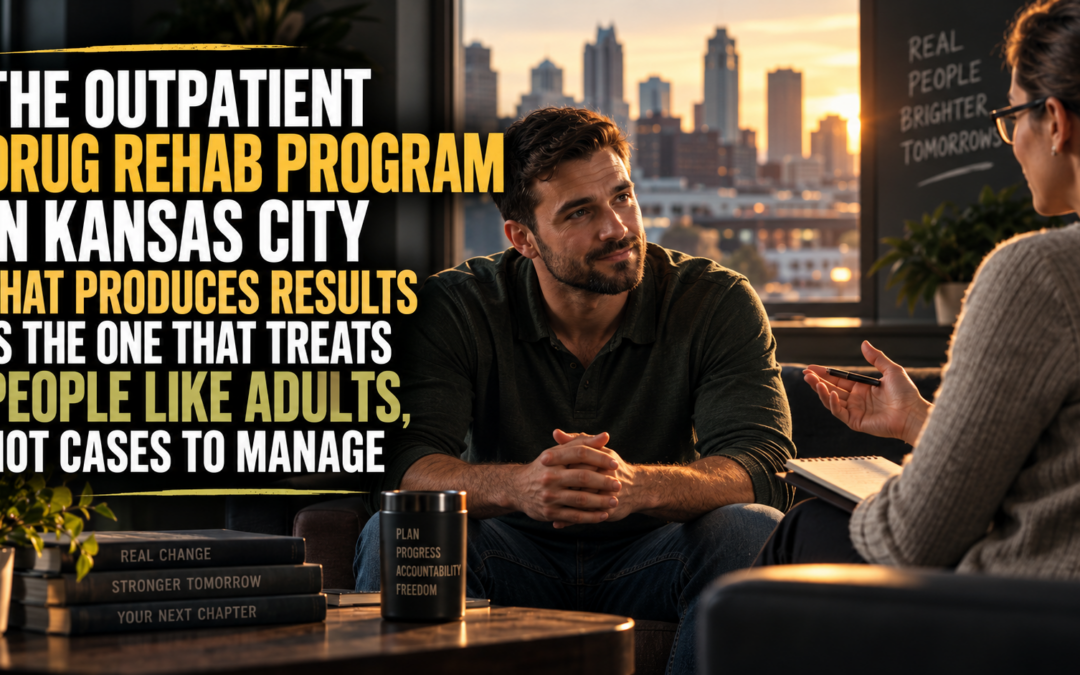
The outpatient drug rehab program in Kansas City that produces lasting results is the one that treats people like capable adults, not files to move through a system. If you or someone you love has felt reduced to a chart, a diagnosis, or a scheduled slot, that experience can leave you hesitant to try again.
That frustration is valid, and it does not mean recovery is out of reach. It often means the care you received overlooked the person at the center of it.
Treatment works best when it honors your intelligence, your choices, and your dignity. When you are treated as a whole person with real strengths, you are far more likely to stay engaged and see change hold. The good news is that this kind of respectful, results-driven care exists, and it can meet you where you are.
What Makes an Outpatient Drug Rehab Program in Kansas City Actually Work?
An outpatient drug rehab program in Kansas City works best when it combines real clinical structure with genuine respect for each person’s autonomy. It provides therapy several days a week while you keep living at home, working, and staying close to family.
The difference between a program that produces results and one that does not often comes down to how people are treated. Being talked at rarely builds lasting change. Being partnered with usually does.
Why Does Being Treated Like an Adult Matter So Much?
Being treated like an adult matters because respect fuels engagement, and engagement drives recovery. When you feel seen as capable rather than managed, you invest more fully in the work.
Recovery asks a lot of a person. It is far easier to commit when you feel like an active participant in your own care instead of a case to be processed.
What Does “Managing Cases” Look Like in Practice?
“Managing cases” looks like one-size-fits-all rules, rushed check-ins, and decisions made without your input. It can feel impersonal, as if you are simply moving down an assembly line.
That approach often leaves people feeling unheard. When care ignores who you are, the pull toward old patterns can quietly return.
How Does Dignity-First Care Change Outcomes?
Dignity-first care changes outcomes by building trust, which makes people more likely to stay in treatment and apply what they learn. When you feel respected, you are more willing to be honest, take risks, and try new tools.
Trust is the foundation of real progress. Without it, even the best clinical methods can fall flat.
Why Does Trust Improve Engagement?
Trust improves engagement because honesty flows more freely when judgment is off the table. You can talk openly about cravings, setbacks, or fears without worrying about shame.
That openness lets your care team respond with precision. They can adjust your plan based on what is truly happening, not a polished version of it.
How Does Respect Support Accountability?
Respect supports accountability by framing it as partnership rather than punishment. Real accountability means clear expectations, honest feedback, and steady support, offered with care instead of criticism.
You are not scolded for a hard week. You are helped to understand it, then guided toward a stronger next step. That balance keeps people moving forward.
What Does Patient-Centered Outpatient Care Include?
Patient-centered outpatient care includes therapy, practical skill-building, and a treatment plan shaped around your real life. It treats you as the expert on your own experience while your team brings clinical expertise.
This kind of care blends structure with flexibility. You gain the tools recovery requires without losing your voice in the process.
What Kinds of Support Are Offered?
The support offered usually blends individual and group work with real-world skills you can use right away. Each piece reinforces the others to help recovery feel steady and practical.
A strong program often includes:
- Individual therapy that explores the roots of substance use
- Group sessions that reduce isolation and build connection
- Evidence-based approaches like cognitive behavioral therapy
- Relapse prevention planning for everyday situations
- Support for any co-occurring mental health needs
Why Does Practical Skill-Building Matter?
Practical skill-building matters because recovery happens in daily life, not only in a therapy room. You learn a coping tool in session, then apply it that same day at work or home.
This real-world practice helps new habits take root. Grand Falls Recovery’s intensive outpatient program is built to keep clinical support strong while you stay connected to the people and routines that matter.
How Does This Approach Fit Into a Full Continuum of Care?
This approach fits into a full continuum of care by connecting outpatient treatment to every other level of support you might need. You are never locked into a single path that either works or does not.
Care can grow with you. You might step down into outpatient treatment after a higher level of care, or begin here if it matches your needs from the start.
What Levels of Care Are Available?
The levels of care available range from medically supervised detox to flexible outpatient options, so treatment can match your situation. A thorough assessment helps guide the right starting point with you.
Common options include:
- Medical detox offers supervised support as your body clears a substance safely.
- Residential inpatient treatment provides structured, round-the-clock care in a stable setting.
- Partial hospitalization delivers intensive daytime care with evenings spent at home.
- Intensive outpatient care offers therapy several days a week while you keep your routine.
- Aftercare and alumni support help you stay steady as you return to everyday life.
Why Does a Connected Plan Produce Better Results?
A connected plan produces better results because one coordinated team follows you through each stage, adjusting care as your needs change. Nothing important slips between separate providers.
This consistency keeps you seen as a whole person, even as your level of support shifts. At Grand Falls Center for Recovery, care stays personal and steady from detox through aftercare.
How Do You Know if This Kind of Outpatient Program Is Right for You?
The clearest sign that this kind of care may fit is when you want real support but refuse to be treated like a number. You do not need to be in crisis to deserve respectful, results-driven treatment.
Consider these prompts as you think about your next step:
- If past treatment left you feeling unheard or managed, a patient-centered program may reach what earlier care missed.
- If you need real clinical structure without stepping away from work or family, an outpatient program can offer both.
- If you value honest feedback and a voice in your own care, dignity-first treatment can support your goals.
- If standard outpatient therapy has not felt like enough, more frequent, structured sessions may help.
- If a loved one has encouraged you to seek steady support, that observation is worth exploring together.
Reaching out for that first conversation is often the hardest and most meaningful step. A caring team can help you sort through your options at your own pace, starting with a simple call to admissions.
Common Questions Before Starting Treatment
People often have honest questions before beginning care, and clear answers can ease the way forward. These are a few of the most common.
Will I have a say in my own treatment plan? Yes. A patient-centered outpatient drug rehab program in Kansas City builds your plan with you, not for you. Your goals, preferences, and daily life shape the care you receive, and your team adjusts it as your needs change.
Can I keep working while in an outpatient program? Yes. Outpatient care is designed to fit around your schedule, with sessions often offered in the morning or evening. Many people continue working, studying, or caring for family throughout treatment.
What does accountability look like without judgment? Accountability without judgment means clear expectations paired with steady, compassionate support. A hard week becomes something to understand and learn from, not a reason for shame.
Is outpatient care as effective as staying in a facility? For the right person, yes. This level of care works well when your home is stable and you do not need constant supervision. It offers real clinical support while letting you practice recovery in daily life.
Moving Toward Recovery With Hope
The outpatient drug rehab program in Kansas City that produces results is the one that treats you like a capable adult, with dignity, honesty, and real partnership at its core. When you feel respected rather than managed, recovery becomes something you engage in fully instead of something done to you.
You deserve care that honors your strengths and meets you where you are. With the right support, you can build practical skills, stay accountable without shame, and move steadily toward lasting change.
Recovery is possible, and you do not have to face it alone. If you or someone you love is ready to explore respectful, results-driven care, reach out to Grand Falls Center for Recovery today. Our compassionate team is here to listen, answer your questions, and help you find the support that fits your life.