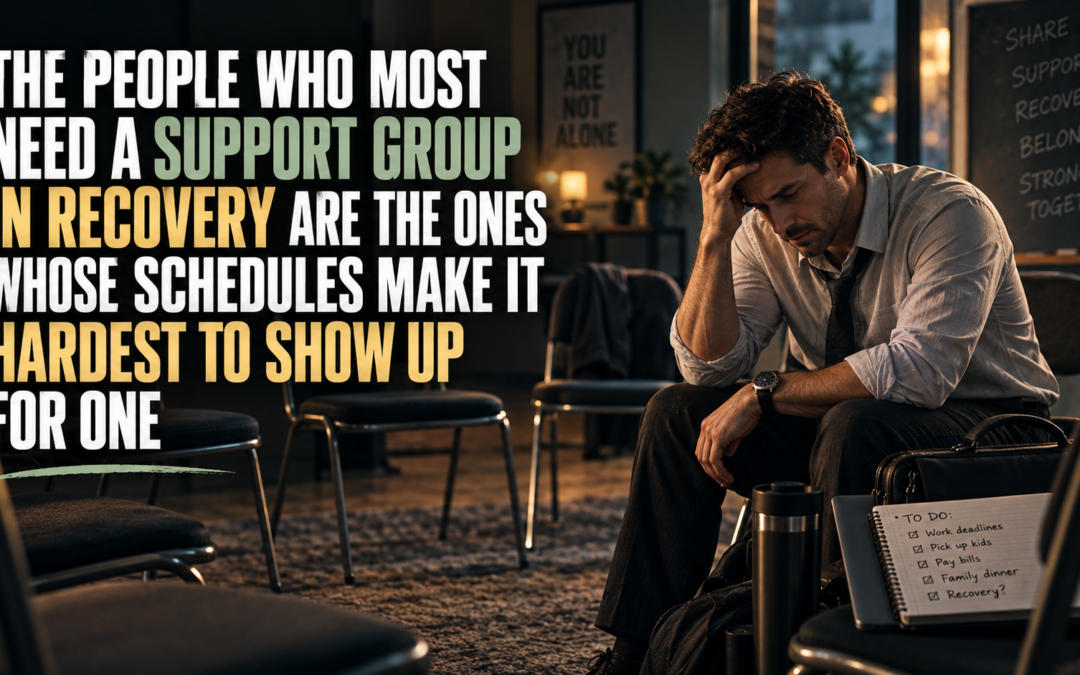
A support group in recovery can be one of the most powerful tools for lasting healing, yet the people who need it most are often the ones who simply cannot make it to a meeting. If you have wanted that kind of connection but felt boxed out by work, family, or a life that never slows down, you are not failing at recovery.
That frustration is real, and it does not mean you care any less about getting well. It often means the traditional format was never built with your life in mind.
The good news is that connection does not have to fit one rigid mold. Flexible options exist, and they can meet you where you actually are. With the right support, you can build the kind of steady community that helps recovery hold, even when your schedule feels impossible.
Why Do the People Who Need a Support Group in Recovery Struggle to Attend One?
The people who need a support group in recovery most often struggle to attend because their lives are already stretched thin by real, unavoidable demands. Work schedules, caregiving, and daily pressures leave little room for a fixed weekly meeting.
This is not a lack of willpower or commitment. It is a mismatch between rigid meeting times and the reality of a full life.
What Life Demands Get in the Way?
The life demands that get in the way are usually the same ones that make support so important in the first place. Stress, exhaustion, and isolation often build in the very people who cannot find an open hour.
Common barriers include:
- Shift work or unpredictable hours that clash with set meeting times
- Childcare needs with no one available to watch the kids
- Long commutes that eat into any free time
- Caregiving for aging parents or family members
- Financial pressure that makes taking time off feel impossible
Why Does Stigma Make It Harder to Show Up?
Stigma makes it harder to show up because many people fear being seen walking into a meeting. Worry about judgment from coworkers, neighbors, or family can keep someone home even when they want help.
That fear is understandable, and it carries real weight. When shame and a packed schedule combine, attending in person can feel out of reach.
Why Does Connection Matter So Much in Recovery?
Connection matters so much in recovery because isolation tends to deepen the very struggles that led to substance use or mental health challenges. Steady support reminds you that you are not carrying this alone.
A sense of belonging can ease shame, lower stress, and offer accountability during hard moments. These are the exact pressures that often push a person back toward old patterns.
How Does Support Help Recovery Last?
Support helps recovery last by giving you people who understand, encourage, and gently hold you accountable. Sharing your experience with others who get it can lighten a heavy load.
Connection also builds practical tools. You learn how others handle cravings, setbacks, and stress, then bring those ideas into your own daily life.
What Happens When Someone Stays Isolated?
When someone stays isolated, the challenges of recovery often grow louder and harder to manage. Difficult thoughts feel bigger in silence, and small setbacks can spiral without support.
Isolation is common, especially for those juggling demanding schedules. Recognizing it is not a weakness. It is a signal that reaching out, in whatever form fits, could help.
What Flexible Support Group Options Actually Exist?
Flexible support options exist in many forms, so connection no longer depends on a single weekly meeting at a fixed time. The goal is to find a rhythm that fits your life rather than forcing your life around a meeting.
These options range from structured clinical programs to gentler, everyday touchpoints. Many people combine a few to build steady support.
What Formats Can Fit a Busy Schedule?
The formats that fit a busy schedule are the ones built around real-life demands, not rigid calendars. You have more choices than you might expect.
Flexible options often include:
- Evening or early morning groups that work around a job
- Virtual meetings you can join from home after the kids are asleep
- Intensive outpatient programs with schedules designed to fit daily life
- Aftercare and alumni groups that keep you connected over time
- Smaller, private groups that feel less exposed and easier to attend
How Does Grand Falls® Recovery Build Flexibility Into Care?
Grand Falls Recovery builds flexibility into care by offering different levels of support that meet people where they are. Instead of one rigid path, care can adapt to your schedule and needs.
The intensive outpatient program offers real clinical structure while letting you keep working, parenting, or studying. It provides connection and accountability without asking you to step away from your whole life.
How Does a Continuum of Care Fill the Gap?
A continuum of care fills the gap by connecting several levels of support into one flexible plan that grows with you. You are not limited to a single format that either works or does not.
This approach means your support can shift as your life changes. A busier season might call for one kind of care, while a steadier stretch calls for another.
What Levels of Care Support Ongoing Connection?
The levels of care that support ongoing connection range from more structured programs to lighter, long-term options. Each keeps you tied to a community that understands recovery.
Common options include:
- Intensive outpatient care delivers group and individual support several days a week while you keep your routine.
- Outpatient care offers ongoing support with a lighter time commitment.
- Aftercare and alumni programs help you stay connected long after formal treatment ends.
Why Does Aftercare Matter for the Long Run?
Aftercare matters for the long run because recovery does not end when a program does. Ongoing connection helps protect the progress you have worked so hard to build.
Grand Falls Recovery’s aftercare and alumni support offers group therapy and personalized guidance that continue over time. This steady community can be the difference that helps recovery hold.
How Do You Know Which Support Option Fits Your Life?
The right support option depends on your schedule, your needs, and how much structure feels manageable right now. You do not need to have it all figured out before reaching out.
Consider these prompts as you think about your next step:
- If your work hours change week to week, a virtual or evening group may fit better than a fixed meeting.
- If childcare is your biggest barrier, an at-home option or a program with flexible timing can help.
- If you want real clinical structure without stepping away from life, an intensive outpatient program may be the right fit.
- If you have finished treatment but feel your connection fading, an aftercare or alumni group can keep you grounded.
- If stigma has kept you away, a smaller or private setting may feel safer to try.
Reaching out for that first conversation is often the hardest and most meaningful step. A caring team can help you sort through your options at your own pace.
Common Questions About Finding a Support Group in Recovery
People often have honest questions before joining a support group in recovery, and clear answers can ease the way forward. These are a few of the most common.
What if I can’t commit to a regular meeting time? You still have options. Flexible formats like virtual groups, evening sessions, and outpatient programs are designed for people whose schedules keep shifting. Support can adapt to your life rather than the other way around.
Can I get support if I’m working full time or raising kids? Yes. Many people balance recovery with work and family through flexible programs built around real-life demands. Intensive outpatient care and aftercare groups often offer timing that fits a busy schedule.
What if I’m worried about being seen or judged? That concern is common and valid. Virtual meetings and smaller, private settings can offer more privacy while still giving you genuine connection and support.
Is virtual support really as helpful as meeting in person? For many people, yes. Virtual groups still offer connection, accountability, and encouragement. What matters most is finding a format you can actually show up for consistently.
Moving Toward Connection With Hope
A support group in recovery should never feel like something reserved only for people with open calendars and easy schedules. If your life is full and your time is stretched, you deserve support that fits the way you actually live.
Connection is one of the strongest foundations for lasting recovery, and it can take many flexible forms. Whether through an intensive outpatient program, aftercare, or a virtual group, the right kind of support can meet you where you are.
You do not have to choose between your responsibilities and your healing. With the right options, you can have both.
If you or someone you love is ready to find support that fits your life, reach out to Grand Falls Center for Recovery today. Our compassionate team is here to listen, answer your questions, and help you build the connection that makes recovery possible.