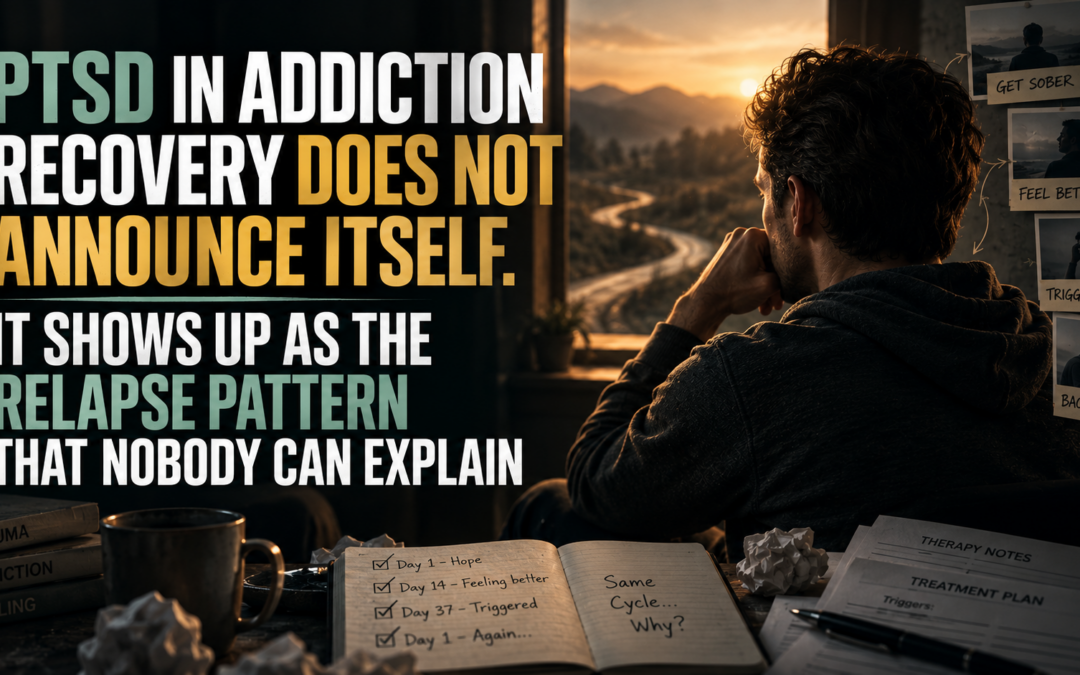
PTSD in addiction recovery rarely arrives with a clear label, and it often hides inside a relapse pattern that nobody around you can quite explain. If you or someone you love keeps returning to substance use despite real effort, that confusion is understandable, and it does not mean you are failing.
You may have done everything right. You went to treatment, built new habits, and stayed committed. Then a wave hit, and the old patterns returned without warning.
That experience can feel discouraging and even shameful. The reassuring truth is that unexplained relapse often has a reason, and that reason is frequently unaddressed trauma. With the right support, this cycle can finally make sense and begin to loosen its grip.
What Does PTSD in Addiction Recovery Actually Look Like?
PTSD in addiction recovery often looks like relapse that seems to come from nowhere, rather than an obvious trauma reaction. The trauma stays quiet, while its effects show up in your behavior, your body, and your cravings.
Post-traumatic stress disorder, or PTSD, is a condition that develops after a frightening or overwhelming experience. It keeps the nervous system on alert long after the danger has passed.
Why Doesn’t PTSD Announce Itself?
PTSD does not announce itself because its symptoms often disguise themselves as everyday stress, cravings, or mood swings. You may never connect a sudden urge to use with something buried in your past.
Instead of a clear memory, you might feel tension, dread, or a pull toward relief. The body reacts before the mind understands why.
What Signs Point to Hidden Trauma?
Signs that point to hidden trauma tend to show up quietly and repeat over time. They often appear right before a relapse, which makes them easy to miss.
Common signs include:
- Sudden cravings that seem to arrive without a clear cause
- Feeling on edge, numb, or disconnected during calm moments
- Trouble sleeping, or nightmares that leave you drained
- Strong reactions to sounds, places, or reminders you cannot always name
- A recurring relapse pattern that no one can quite explain
How Do Trauma Responses Masquerade as Cravings and Triggers?
Trauma responses masquerade as cravings because both come from a nervous system searching for relief and safety. When trauma stirs, your body craves calm, and substances once provided that calm quickly.
This is why a craving can feel so urgent and so confusing at the same time. It is not weakness. It is a survival response looking for a familiar way to settle.
Why Does the Body React Before the Mind Understands?
The body reacts before the mind understands because trauma is stored in the nervous system, not only in conscious memory. A sound, smell, or feeling can trigger a stress response in an instant.
That response can arrive as a racing heart, tightness, or a sudden need to escape. The craving feels like the answer, even when the real trigger stays hidden.
How Do Everyday Triggers Get Misread?
Everyday triggers get misread when a trauma reaction looks like an ordinary bad day. You might blame stress, tiredness, or a difficult conversation, while the deeper cause goes unnoticed.
Think of a smoke alarm reacting to burnt toast. The alarm is real, but the threat is not what it seems. A trauma response can sound the same kind of false alarm, sending you toward old coping patterns.
Why Does Treating Substance Use Alone Leave the Cycle Intact?
Treating substance use alone leaves the cycle intact because it removes the coping tool without healing the pain underneath. When the trauma remains, the pull toward relief returns.
Many people move through treatment, feel steadier for a while, then relapse when trauma resurfaces. This is not a lack of willpower. It is care that never reached the root.
What Happens When PTSD Goes Unaddressed?
When PTSD goes unaddressed, the nervous system stays braced for threat, which keeps cravings and stress active. You may stop using, yet the underlying distress continues to build.
Over time, that untreated pressure can lead back to substance use. The relapse looks mysterious, but it often traces straight back to unhealed trauma.
Why Does the Relapse Pattern Repeat?
The relapse pattern repeats because the same trauma triggers keep firing without being treated. Each cycle can feel more discouraging than the last.
Breaking the pattern usually requires treating both the substance use and the trauma together. When the root receives care, the cycle finally has a chance to change.
How Does Integrated Dual Diagnosis Care Help With PTSD in Addiction Recovery?
Integrated dual diagnosis care helps with PTSD in addiction recovery by treating trauma and substance use together through one coordinated team. Nothing important slips between separate providers.
This approach treats you as a whole person, not two disconnected problems. At Grand Falls Center for Recovery, care brings therapy, medical support, and daily structure together in one place.
How Does This Differ From Standard Treatment?
This care differs by pairing addiction treatment with trauma-focused therapy built to reach the nervous system. Instead of focusing only on stopping substance use, it also helps your body feel safe again.
When both are treated at once, cravings driven by trauma often begin to ease. That combined focus is what helps recovery hold.
What Might a Treatment Plan Include?
A treatment plan usually blends several supports that work together over time. No single element carries the whole load.
Common elements include:
- Trauma-focused therapy that helps you process painful experiences at a safe pace
- Cognitive behavioral therapy to reshape unhelpful thought patterns
- Skills for grounding and calming the body during difficult moments
- Support for sleep, routine, and daily stability
- Relapse prevention planning that accounts for trauma triggers
You can learn more about the PTSD treatment available and how it can fit your recovery.
What Levels of Care Does Grand Falls Recovery Offer?
Grand Falls Recovery offers a range of care levels, from immersive residential support to flexible outpatient options, so treatment can match your needs. This range means you can find help that fits your life rather than a one-size-fits-all program.
Many people move between levels as they grow steadier. A thorough assessment helps guide the right starting point with you.
Which Level of Care Might Fit Best?
The level of care that fits best depends on how much daily support and structure your situation requires. There is no single right answer for everyone.
Common options include:
- Residential inpatient treatment offers structured, round-the-clock support in a stable setting.
- Partial hospitalization provides intensive daytime care with evenings spent at home.
- Intensive outpatient care delivers therapy several days a week while you keep your routine.
- Aftercare and alumni support help you stay steady as you return to everyday life.
How Does Personalized Care Help?
Personalized care helps because your trauma, history, and needs are unique to you. A plan built around your situation tends to reach what a general approach may miss.
Grand Falls Recovery also uses GeneSight testing to help personalize medication plans when appropriate. This can bring greater precision to treating PTSD and any co-occurring concerns.
How Do You Know It Is Time to Look Deeper?
The clearest sign it is time to look deeper is when relapse keeps happening despite real effort and commitment. You do not need to reach a crisis point before seeking answers.
Consider these prompts as you think about your next step:
- If you keep returning to substance use without a clear reason, unaddressed trauma may be driving the cycle.
- If cravings arrive suddenly and feel overwhelming, a trauma response may be at work underneath them.
- If you feel anxious, numb, or on edge even during stable periods, integrated care can address the root.
- If sleep, nightmares, or strong reactions to reminders trouble you, trauma-focused support may help.
- If a loved one has watched you relapse and felt confused too, that pattern is worth exploring together.
Reaching out for that first conversation is often the hardest and most meaningful step. A caring team can help you sort through your options at your own pace.
Common Questions Before Starting Treatment
People often have honest questions before seeking care, and clear answers can ease the way forward. These are a few of the most common.
Can PTSD really cause relapse without me realizing it? Yes. Trauma often works quietly, showing up as cravings, stress, or mood shifts rather than clear memories. This can drive a relapse pattern that feels unexplained until the trauma is addressed.
Do I have to relive my trauma to heal? No. Effective trauma care moves at your pace and prioritizes your safety. A skilled clinician helps you process experiences gradually, without forcing you to relive the hardest moments.
Why did my last treatment stop working? Treatment that focuses only on substance use often leaves trauma unaddressed. When the trauma remains, cravings and relapse can return. Integrated care aims to treat both together.
Can trauma and substance use be treated at the same time? Yes. Dual diagnosis programs are built to address both at once, and this combined approach often produces steadier progress than treating them separately.
Moving Toward Lasting Healing With Hope
PTSD in addiction recovery does not announce itself, but understanding how it hides inside an unexplained relapse pattern can change everything about your path forward. Your struggle makes sense, and repeated relapse is not a sign of weakness or failure.
When trauma and substance use are treated together, the cycle that once felt impossible to explain can finally begin to ease. With compassionate, integrated care, your body can learn to feel safe again and steadier days become possible.
You do not have to face this alone, and you do not have to have every answer before you begin. If you or someone you love keeps returning to old patterns, reach out to Grand Falls Center for Recovery today. Our compassionate team is here to listen and guide you toward the support that fits your needs.