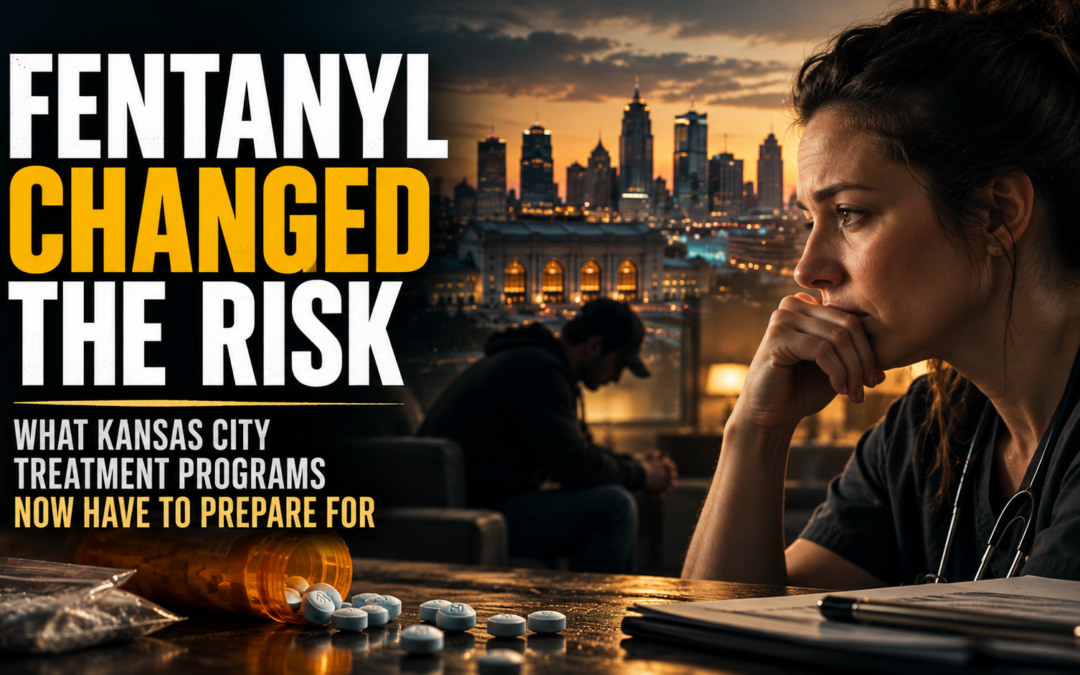
Fentanyl in Kansas City has changed what every substance use program has to prepare for, and it has changed what families quietly worry about at night. If you or someone you love uses pills or powders of any kind, that worry is understandable.
You may have heard stories that feel frightening and hard to make sense of. You may also wonder whether the risks you hear about apply to your situation.
The supply is less predictable than it used to be. A pill that looks familiar or a powder bought from someone you trust may not contain what you expect. That uncertainty affects people who never meant to use opioids at all.
Help is available, and safe, effective care exists. Treatment programs have adapted to this new reality, and understanding those changes can help you feel more prepared. You do not have to face this alone.
How Has Fentanyl in Kansas City Changed the Risks People Face?
Fentanyl in Kansas City has made the drug supply far less predictable, so the main risk now is not knowing what a substance contains. Someone can follow the same pattern of use for years and still face a very different level of danger today.
This change affects people with long histories of opioid use. It also affects people who occasionally use other substances and have no tolerance to opioids.
What Makes Fentanyl Different From Other Opioids?
Fentanyl is a synthetic opioid that is roughly 50 to 100 times stronger than morphine. Because it is so potent, a very small amount can slow or stop a person’s breathing.
Doctors use pharmaceutical fentanyl carefully in hospitals for severe pain. The fentanyl in Kansas City’s illegal supply is made without any quality control, so the amount in each pill or bag can vary widely.
Why Is This Not Only an Opioid Concern?
This is not only an opioid concern because fentanyl has been found mixed into stimulants and counterfeit prescription pills. A person who uses cocaine, methamphetamine or a pill sold as Adderall may be exposed without knowing it.
That is why fentanyl in Kansas City touches so many families. The person at risk may not see themselves as someone who uses opioids at all.
Why Can Any Pill or Powder Now Contain Fentanyl?
Any pill or powder can now contain fentanyl because it is cheap to produce, easy to hide and often pressed into pills designed to look like real medications. There is no reliable way to tell by sight, taste or smell.
Many people say they bought something from a friend or a familiar source. Even trusted sources often do not know what is actually in what they pass along.
What Do Counterfeit Pills Look Like?
Counterfeit pills often look almost identical to real prescription medications. Common examples include pills made to resemble oxycodone, Xanax or Adderall.
They may carry the right color, shape and markings. Only a pharmacy dispensing a prescription in your name offers real confidence about what a pill contains. You can learn more about how dependence on these medications develops through our oxycodone treatment and Xanax treatment pages.
How Can You Lower the Risk Right Now?
You can lower the risk right now by keeping naloxone nearby, never using alone and learning the signs of an overdose. These steps protect lives while a person considers treatment.
Practical safety steps include:
- Keep naloxone (often sold as Narcan), a medication that can reverse an opioid overdose, at home and in the car.
- Know that more than one dose of naloxone may be needed with fentanyl.
- Watch for slow or stopped breathing, blue lips or fingertips and a person who will not wake up.
- Call 911 right away if you suspect an overdose, even after giving naloxone.
- Use fentanyl test strips where they are legal and available, while knowing they cannot catch everything.
How Does Fentanyl in Kansas City Change Detox and Treatment Protocols?
Fentanyl in Kansas City has pushed treatment programs to plan for stronger dependence, less predictable withdrawal and unknown exposure. Programs can no longer assume a person’s history tells the whole story.
Good care now starts with careful questions, close monitoring and flexible medical plans. These changes help keep people safer from the very first day.
Why Can Fentanyl Withdrawal Feel Different?
Fentanyl withdrawal can feel different because the drug is very potent and can build stronger physical dependence. Symptoms may include intense cravings, body aches, sweating, anxiety, nausea and trouble sleeping.
Some clinicians also adjust the timing of certain medications for people who have used fentanyl. This helps avoid sudden, uncomfortable withdrawal and makes the process steadier.
Why Does Unknown Exposure Matter at Intake?
Unknown exposure matters at intake because a person may be dependent on fentanyl without realizing it. Someone who believes they use only pills or stimulants could still need opioid withdrawal care.
That is why programs preparing for fentanyl in Kansas City use thorough assessments and testing. Honest, judgment-free conversations help your team build a plan that matches what your body actually needs.
What Does Medically Supervised Detox Look Like?
Medically supervised detox is a safe, monitored process where trained staff help your body clear substances while managing withdrawal symptoms. It is often the safest first step for anyone exposed to fentanyl in Kansas City.
At Grand Falls Center for Recovery, medical detox takes place in a calm, supportive setting with 24/7 on-site medical and support staff. Detox typically lasts about seven days, though every person’s timeline is different.
During detox, you can expect:
- A full medical and mental health assessment when you arrive
- Regular checks on vital signs, comfort and safety
- Medications to ease withdrawal symptoms and cravings when appropriate
- Nutritious meals, rest and a quiet place to recover
- A plan for the next level of care before detox ends
Detox is a beginning, not the whole journey. It works best when it leads directly into ongoing treatment. Our fentanyl addiction treatment page explains more about how care continues after this first step.
Why Does Dual-Diagnosis Care Matter for People Exposed to Fentanyl?
Dual-diagnosis care matters because many people who use substances are also living with anxiety, depression, trauma or another mental health condition. Treating both together gives recovery a steadier foundation.
Some people first used pills to manage pain, stress or sleep. Others used substances to quiet memories or emotions that felt too heavy to carry.
At Grand Falls, dual-diagnosis treatment brings therapy, psychiatric care and medical support into one coordinated plan. This helps address the reasons behind substance use, not just the use itself.
How Does Personalized Medication Support Help?
Personalized medication support helps clinicians choose medications that fit how your body is likely to respond. Grand Falls uses GeneSight testing, which analyzes a simple cheek swab to show how your genes may affect your response to certain medications.
Results usually reach your provider within two days. This can reduce trial and error when treating anxiety or depression alongside substance use.
What Levels of Care Does Grand Falls Offer?
Grand Falls Center for Recovery offers a full range of care, from medical detox to aftercare, so treatment can match your needs as they change. Our Joplin, Missouri campus welcomes individuals and families affected by fentanyl in Kansas City and across the region.
Levels of care include:
- Medical detox offers supervised, round-the-clock support as your body stabilizes.
- Residential inpatient treatment provides structured care, often for 30 to 90 days or longer, away from daily triggers.
- Partial hospitalization program (PHP) delivers intensive daytime care with evenings at home.
- Intensive outpatient program (IOP) offers therapy several days a week around work or family.
- Aftercare and alumni support keeps you connected after formal treatment ends.
For many people affected by fentanyl in Kansas City, stepping away from a familiar environment helps. Distance from old contacts and routines can create room for real healing.
How Do You Know Which Next Step Fits Your Situation?
The right next step depends on your safety, your level of physical dependence and the support you have at home. You do not need every answer before reaching out.
Consider these prompts:
- If you use pills that did not come from a pharmacy, a confidential assessment can clarify your risk and options.
- If you feel sick or anxious when you go without a substance, medically supervised detox is often the safest place to start.
- If you have survived an overdose or needed naloxone, residential care can offer round-the-clock support while you stabilize.
- If anxiety, depression or trauma sits alongside your substance use, dual-diagnosis care can treat both together.
- If you need to keep working or caring for family after detox, PHP or IOP may let you continue treatment around your life.
- If you are worried about a loved one, our family therapy and admissions team can help you plan the next conversation.
Common Questions Before Starting Treatment
How do I know if I have been exposed to fentanyl? You may not know for certain without testing. Fentanyl in Kansas City is often hidden in pills and powders, so a medical assessment is the most reliable way to understand your situation.
Is detox from fentanyl dangerous? Withdrawal is rarely life-threatening on its own, but it can be very uncomfortable and raise the risk of returning to use. Medical supervision helps manage symptoms and supports a safer transition into treatment.
Will medication be part of my treatment? It may be, depending on your needs. Your care team will talk through options with you, including medications that ease cravings and withdrawal.
Can I bring a loved one into the process? Yes, with your permission. Family involvement can help everyone understand what is happening and how to support recovery.
Does insurance cover treatment? Many plans cover detox and treatment. Our team can verify your insurance and explain your options clearly.
Moving Forward With Hope
Fentanyl in Kansas City has changed what treatment programs must prepare for, but it has not changed the truth that recovery is possible. With careful assessment, medical support and integrated care, people find their way to steadier, healthier days.
Every path looks different, and asking for help takes real courage. You do not have to have it all figured out.
If you or someone you love is ready to talk, reach out to Grand Falls Center for Recovery today. Our caring team will listen, answer your questions and help you take the next safe step toward healing.