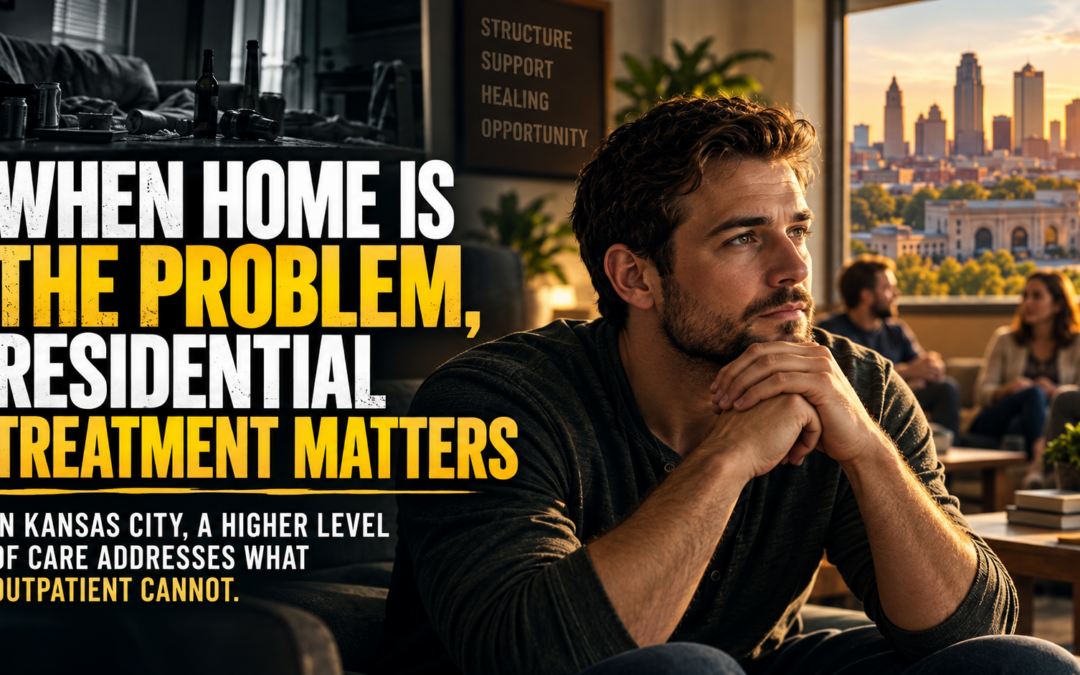
Residential drug treatment in Kansas City offers something outpatient care cannot: a safe place to heal when the place you live is making recovery harder. If your home holds the people, pressures or memories tied to substance use, you may already know how hard it is to change while standing in the same spot.
Maybe you tried outpatient sessions and felt hopeful during the day. Then each evening you walked back into the same kitchen, the same arguments or the same neighborhood, and the progress slipped away.
That pattern does not mean you lack willpower. It means your environment is working against you. Stepping away for a period of focused care can give you the space, safety and support to build a foundation strong enough to hold when you return home.
Why Does Home Make Early Recovery So Hard?
Home makes early recovery hard because it is often the place where substance use first took root and became part of daily life. The sights, routines and relationships around you can trigger cravings before you even notice them.
Early recovery is a fragile stage. Your brain and body are adjusting, emotions run high and new coping skills are still taking shape.
For many families exploring residential drug treatment in Kansas City, the real question is not whether someone wants to change. It is whether they can change while surrounded by everything that kept them stuck.
What Kinds of Home Environments Undermine Recovery?
Home environments that undermine recovery usually include easy access to substances, ongoing conflict or people who still use. Common examples include:
- A partner, roommate or family member who drinks or uses drugs at home
- Frequent arguments, tension or instability in the household
- Living near people or places connected to past use
- Caregiving or work pressure that leaves no room to rest
- A history of trauma or unsafe relationships within the home
None of these situations mean a home is beyond repair. They simply mean healing may need to begin somewhere calmer first.
Why Isn’t Willpower Enough to Overcome a Difficult Home?
Willpower is not enough because triggers act faster than conscious choices, especially in the first weeks of recovery. A familiar smell, a stressful phone call or a certain time of day can spark cravings automatically.
Think of it like trying to quit smoking while living in a room full of smoke. Even strong motivation wears down when the pressure never lets up.
What Does Residential Drug Treatment in Kansas City Provide That Outpatient Cannot?
Residential drug treatment in Kansas City provides round-the-clock structure, safety and distance from daily triggers, which outpatient care cannot offer. You live on site, so support is available during the hardest hours, not just during scheduled sessions.
Outpatient programs can be very effective for the right person. They work best when home is stable enough to support the progress made in therapy.
When home is part of the problem, residential drug treatment in Kansas City fills that gap. It removes the daily tug-of-war between treatment and environment.
How Does 24/7 Support Change Early Recovery?
Around-the-clock support changes early recovery by making sure help is available whenever cravings, anxiety or difficult emotions surface. At Grand Falls Center for Recovery, on-site medical and support staff are available 24/7.
Many of the toughest moments happen late at night or on weekends. That constant presence is a core strength of residential drug treatment in Kansas City, because you never have to face those moments alone.
Why Does Distance From Triggers Matter?
Distance from triggers matters because it gives your brain a chance to settle and practice new habits without constant temptation. Grand Falls sits on a secluded campus in Joplin, Missouri, a few hours south of Kansas City.
That physical distance can feel like a deep breath. Many people seeking residential drug treatment in Kansas City choose to travel so they can focus fully on healing.
What Does a Typical Day Look Like?
A typical day in residential care blends therapy, rest, healthy meals and time for reflection. You might attend individual counseling, join group sessions and take part in wellness activities.
Grand Falls offers semi-private rooms with en-suite bathrooms, nutritious daily meals and a calm setting designed for comfort. The structure of residential drug treatment in Kansas City helps rebuild healthy routines that can carry over when you return home.
Who Is Residential Drug Treatment in Kansas City Best Suited For?
Residential drug treatment in Kansas City is best suited for people whose home life, health or history makes outpatient care hard to sustain. It can also help those who have tried outpatient programs before without lasting progress.
This level of care may be a strong fit if you:
- Live with someone who uses substances or does not support your recovery
- Have relapsed after outpatient treatment despite real effort
- Live with anxiety, depression, post-traumatic stress disorder (PTSD) or bipolar disorder
- Need ongoing medical monitoring after detox
- Feel unsafe, overwhelmed or isolated at home
Residential drug treatment in Kansas City is not about hiding from life. It is a focused pause that builds the skills you need to return stronger.
How Does Residential Care Compare to Outpatient Treatment?
Residential drug treatment in Kansas City and outpatient treatment differ mainly in where you live and how much support surrounds you each day. Both are valuable, and the right choice depends on your situation.
Residential care at Grand Falls means living on campus with 24/7 support, usually for 30 to 90 days or longer. Outpatient care means attending therapy several days a week while living at home.
Here is a simple way to compare them:
- Residential care removes daily triggers and offers the most structure.
- Outpatient care keeps you connected to work and family but relies on a stable home.
- Residential care is often the better starting point when home adds stress or risk.
- Outpatient care is often a helpful next step once you have a steady foundation.
Many people use both. They begin with residential drug treatment in Kansas City and then step down to outpatient support as they grow steadier.
What Levels of Care Does Grand Falls Offer?
Grand Falls offers a full continuum of care that moves from detox to residential treatment, then to outpatient programs and aftercare. For anyone considering residential drug treatment in Kansas City, this means each stage connects to the next, so you never have to figure out the transition alone.
Program options include:
- Medical detox helps your body clear substances safely with 24/7 monitoring, usually over about a week.
- Residential inpatient treatment provides 30 to 90 days or more of evidence-based therapy and holistic care, with gender-specific and professional tracks available.
- Partial hospitalization offers intensive daytime treatment with evenings at home.
- Intensive outpatient care provides therapy several days a week as you return to work and family.
- Aftercare and alumni support keeps you connected through group therapy and personalized counseling.
How Does Grand Falls Treat Mental Health Alongside Addiction?
Grand Falls treats mental health alongside addiction through integrated dual-diagnosis care, where one team addresses both conditions together. Anxiety, depression, PTSD and bipolar disorder often sit beneath substance use, and effective residential drug treatment in Kansas City should reach those roots.
The team also uses GeneSight testing, a simple cheek swab that shows how your genetics may affect your response to certain medications. This insight helps your clinicians build a more personalized treatment plan.
Is Residential Drug Treatment in Kansas City the Right Next Step for You?
Residential drug treatment in Kansas City may be the right next step if your home makes it hard to stay focused on recovery. Consider these prompts as you weigh your options:
- If someone in your home still uses substances, stepping away can protect your early progress.
- If outpatient treatment has not held in the past, more structure may reach what was missing.
- If you are still physically dependent on a substance, a medically supervised detox can make the start safer.
- If anxiety, depression or trauma sits alongside substance use, integrated care can treat both at once.
- If you worry about stepping away from work or family, an admissions team can help you plan around those responsibilities.
- If you are concerned about a loved one, a conversation with admissions can help you plan a caring approach.
Reaching out is often the hardest part. A compassionate team can help you explore your options at your own pace.
Common Questions Before Starting Treatment
How long does residential treatment last? Residential treatment at Grand Falls usually lasts 30 to 90 days or more. Your length of stay depends on your needs, progress and care plan.
Can I travel from Kansas City for residential care? Yes. Many people choose Grand Falls in Joplin for its distance from everyday triggers. The admissions team can help coordinate your arrival.
What happens when residential treatment ends? You step down to a lower level of care, such as partial hospitalization or intensive outpatient, with an aftercare plan in place. This gradual transition lets you practice new skills at home with support.
Will my family be involved? Family involvement is often encouraged. Family therapy helps loved ones understand addiction and heal relationships, which can make home a healthier place to return to.
Moving Forward With Hope
Residential drug treatment in Kansas City addresses what outpatient cannot when home is part of the problem. Choosing a period of focused care is not giving up on your life. It is giving your recovery a fair chance to take root.
Recovery is possible, and you do not have to walk this path alone. With safe detox, personalized care and steady support, a healthier life at home can come within reach.
If you or someone you love is ready, reach out to Grand Falls Center for Recovery today. Our caring team is here to listen, answer your questions and help you take the next step.