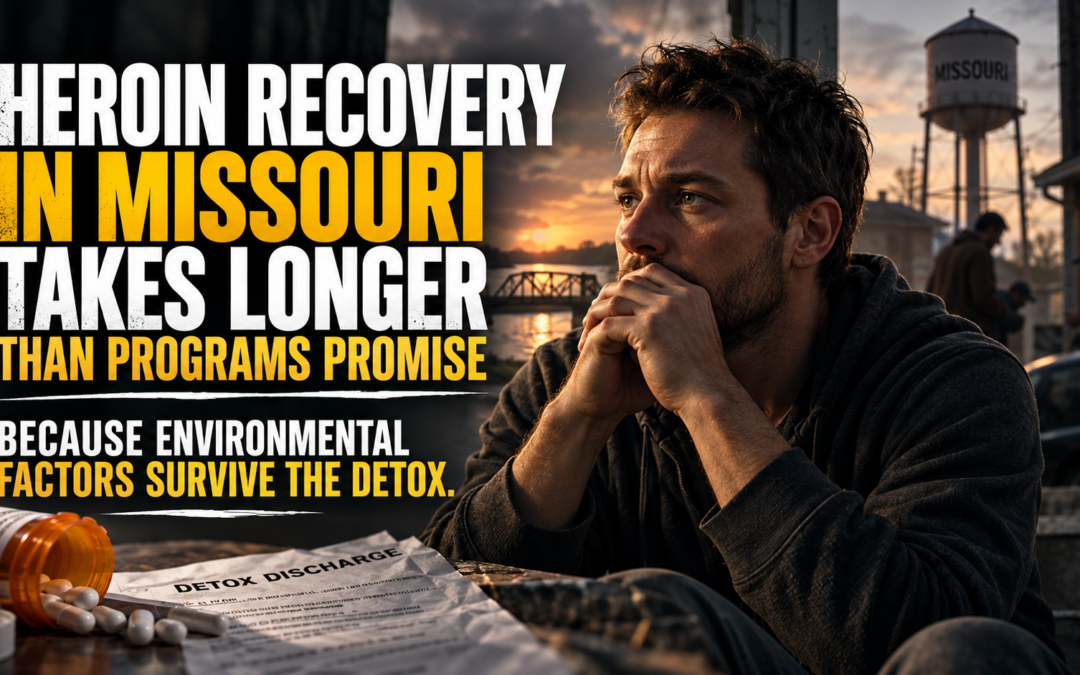
Heroin recovery in Missouri often takes longer than many programs suggest because detox clears the substance from the body but leaves the surrounding environment in place. The same people, places and pressures that made heroin use feel normal are usually still there when someone returns home.
If you or someone you love finished detox and still struggled, you may feel confused, frustrated or ashamed. Those feelings are understandable. A return to use after detox does not mean the effort was wasted or that recovery is out of reach.
It usually means the plan ended too soon. Detox is an important first step, but it was never built to change a neighborhood, a list of phone contacts or the daily routines tied to use. With enough time and the right support, those pieces can change too.
Why Does Heroin Recovery in Missouri Take Longer Than Programs Promise?
Heroin recovery in Missouri takes longer than many programs promise because physical withdrawal fades within days, while environmental triggers can last for months or longer. A short program can treat the body without ever touching the world the person goes back to.
Many people hear “detox” and picture the finish line. In reality, it is closer to the starting line.
What Does Detox Actually Accomplish?
Detox safely manages withdrawal while heroin leaves the body, which gives a person a stable foundation to begin treatment. At Grand Falls Center for Recovery, medical detox typically lasts about a week, with 24/7 on-site medical and support staff.
That stability matters. Still, detox does not teach new coping skills, heal the reasons behind use or change home surroundings.
Why Does a Short Timeline Lead to Frustration?
A short timeline leads to frustration because it suggests recovery should be complete once withdrawal ends. When cravings return weeks later, people often blame themselves instead of the plan.
Setting realistic expectations helps. Heroin recovery in Missouri works best when people and families expect a longer process with several stages of support.
What Environmental Factors Survive the Detox?
The environmental factors that survive detox include the people, places, routines, emotions and social norms connected to past heroin use. None of these leave the body during withdrawal, because they were never in the body to begin with.
Common factors include:
- Friends or partners who still use
- Homes, streets or parking lots where use happened
- Daily routines, like a certain drive or time of day
- Stress at work, money worries or conflict at home
- Social circles where heroin or pills feel ordinary
How Do People and Places Become Triggers?
People and places become triggers because the brain links them to the relief heroin once brought. Over time, simply seeing a familiar face or driving past a certain corner can spark a strong craving.
Think of how a song can instantly bring back a memory. Triggers work in a similar way, and they can catch someone off guard even after weeks without using.
Why Do Cravings Return Long After Withdrawal Ends?
Cravings return long after withdrawal ends because they are tied to learned cues, not just physical dependence. The body may be clear, yet the brain still remembers the patterns.
This is why heroin recovery in Missouri needs more than detox alone. Lasting change comes from building new responses to old cues, which takes practice and support.
What Do Environmental Factors Look Like for Heroin Recovery in Missouri?
Environmental factors for heroin recovery in Missouri look different in rural towns and larger cities, but both settings can make returning home difficult. Knowing what to expect helps you plan ahead instead of being surprised.
How Do Rural Communities Shape Recovery?
Rural communities shape recovery through close social networks, fewer nearby treatment options and long drives to appointments. In a small town, it can feel like everyone knows everyone, including people still using.
Limited job options and isolation can add stress. For many people, staying connected to care from a distance becomes a key part of heroin recovery in Missouri.
How Do Cities Like St. Louis and Kansas City Differ?
Cities like St. Louis and Kansas City often bring easier access to drugs and more familiar neighborhoods tied to past use. A person may live just a few blocks from the places where their use began.
Urban areas also offer more meetings and support groups. The challenge is building a daily routine that leans on those resources instead of old patterns.
Why Does Fentanyl Raise the Stakes After Detox?
Fentanyl raises the stakes after detox because it has been found throughout the illicit drug supply, often without the user knowing. After detox, a person’s tolerance drops, which increases overdose risk if they use again.
This is not meant to frighten you. It is a reason to plan for ongoing support and to keep naloxone (an overdose reversal medication) on hand.
How Does Residential Treatment Create Separation From the Environment?
Residential treatment creates separation by giving a person time away from the people, places and routines connected to their heroin use. That distance lets new habits form without constant triggers nearby.
At Grand Falls, residential inpatient treatment typically lasts 30 to 90 days or longer. Care takes place on a calm, secluded campus in Joplin.
Why Does Distance From Home Help?
Distance from home helps because it pauses the daily cues that drive cravings. Without a familiar street or contact list in reach, a person can focus fully on healing.
Many people from across the state choose to travel for this reason. Stepping away can make early heroin recovery in Missouri feel steadier and more focused.
What Happens During Residential Care?
Residential care blends therapy, medical support and daily structure to address both the substance use and what sits underneath it. A plan may include:
- Individual therapy to explore the roots of use
- Cognitive behavioral therapy (CBT) to change unhelpful thought patterns
- Group therapy with peers who understand
- Dual-diagnosis treatment for anxiety, depression or trauma
- GeneSight genetic testing to help personalize medication when appropriate
- Relapse prevention planning built around your home environment
How Does a Continuum of Care Support Long-Term Heroin Recovery in Missouri?
A continuum of care supports long-term heroin recovery in Missouri by stepping a person down gradually from intensive support to everyday life. Each level adds independence while keeping clinical support in place.
The Grand Falls continuum includes:
- Medical detox to manage withdrawal safely.
- Residential inpatient care for structured healing away from triggers.
- Partial hospitalization for intensive daytime care with evenings at home.
- Intensive outpatient care for therapy several days a week while you rebuild routines.
- Aftercare and alumni support for ongoing connection after formal treatment ends.
Why Does Stepping Down Gradually Matter?
Stepping down gradually matters because it lets you practice new skills in real life while your care team is still close by. You face triggers a little at a time instead of all at once.
Family therapy can also help loved ones support the changes happening at home. In short, the home environment heals alongside the person.
How Do You Know Which Next Step Fits?
The clearest way to choose a next step is to look honestly at your home environment and your history with detox. A thorough assessment can then help you and your care team decide where to begin.
Consider these prompts:
- If you completed detox before and returned to use soon after, a longer level of care may reach what detox alone could not.
- If people in your home or circle still use heroin, residential treatment can give you needed distance.
- If anxiety, depression or trauma sit under your use, dual-diagnosis care can treat both at once.
- If you have a stable, supportive home, partial hospitalization or intensive outpatient care may fit well.
- If you finished treatment but feel your support fading, aftercare can help you stay connected.
Common Questions Before Starting Treatment
Is detox enough for heroin recovery? Detox is an important first step, but it usually is not enough on its own. It manages withdrawal, while ongoing treatment addresses triggers, coping skills and the environment you return to.
Do I have to leave home for treatment? Not always. Many people benefit from residential care when home is part of the challenge, while others do well in outpatient programs. An assessment helps you decide.
What if my family does not understand? That is common. Family therapy gives loved ones education and tools so they can support your recovery with less conflict.
How long does heroin recovery in Missouri usually take? There is no set timeline. Recovery is an ongoing process, and many people stay connected to some level of support for months or longer.
Moving Forward With Hope
Heroin recovery in Missouri takes time because the environment that shaped use does not disappear after detox. Understanding that truth is not discouraging. It is freeing, because it shows you what a stronger plan looks like.
With separation from triggers, a gradual step-down in care and steady support, lasting change becomes far more reachable. You do not have to do this alone.
If you or someone you love is ready to take the next step, reach out to Grand Falls Center for Recovery today. Our compassionate team is here to listen, answer your questions and help you find care that fits your life.