
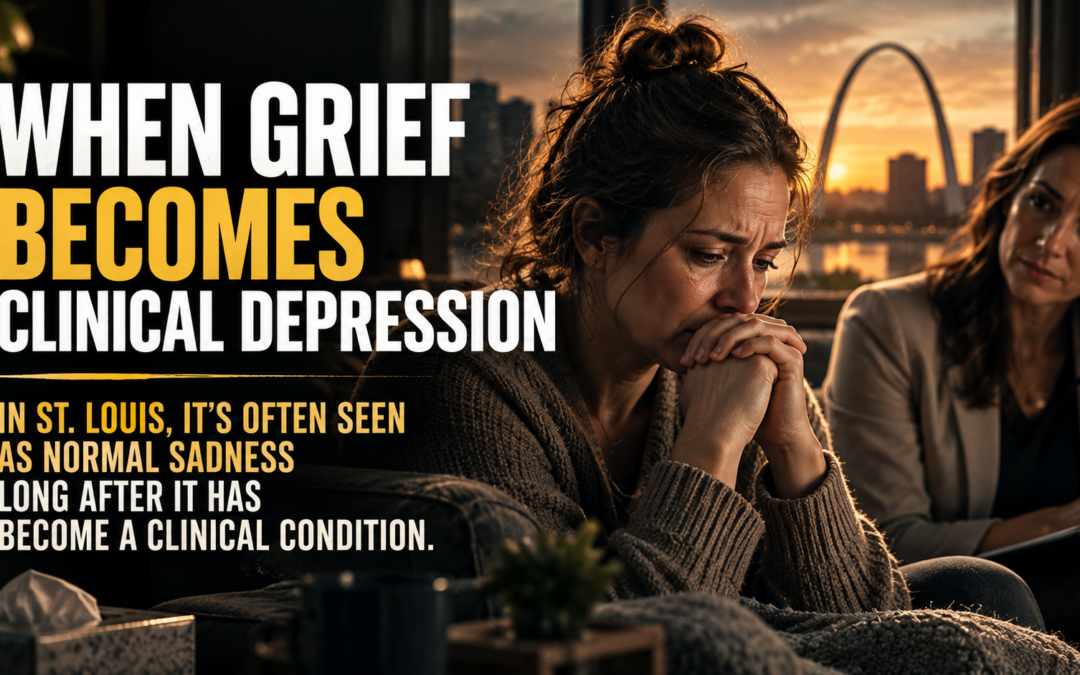
Grief-related depression in St. Louis often hides in plain sight, because friends, family and even the person living with it assume that deep sadness after a loss is simply part of mourning. If you lost someone months ago and still feel stuck in the same heavy fog, you may wonder whether something is wrong with you.
Maybe people have gently suggested it is time to move on. Maybe you have told yourself the same thing and felt guilty when you could not.
You are not grieving the wrong way. Grief has no deadline, but sometimes it changes shape and becomes a condition that needs care. Noticing that shift does not betray the person you lost. It is a way of caring for yourself, and help is available.
What Is Grief-Related Depression in St. Louis?
Grief-related depression in St. Louis is a clinical depression that develops after a loss and lingers beyond the natural ebb and flow of mourning. It can follow the death of a loved one, a divorce, a lost job or another life-altering change.
The sadness is real and valid. The difference is that it begins to affect sleep, appetite, work and relationships in ways that do not ease with time.
How Is Grief Different From Depression?
Grief usually comes in waves, while depression tends to feel like a constant, flat weight. In grief, painful moments often mix with warm memories and even laughter.
Depression drains interest in almost everything. It can bring feelings of worthlessness and make the future feel empty. A person can experience both at once, which is part of why the line is so hard to see.
What Is Prolonged Grief Disorder?
Prolonged grief disorder is a recognized mental health condition in which intense yearning for or preoccupation with the person who died continues for at least a year and disrupts daily life. It was added to the Diagnostic and Statistical Manual of Mental Disorders, Fifth Edition, Text Revision (DSM-5-TR) in 2022.
This condition often overlaps with depression. A clinician can help sort out which one is present, or whether both are, so care fits your actual needs.
Why Does Grief-Related Depression in St. Louis Get Mistaken for Normal Sadness?
Grief-related depression in St. Louis gets mistaken for normal sadness because mourning is expected, so lingering symptoms rarely raise concern. Loved ones may see tears and withdrawal as a sign of how much you cared, not as a sign you need help.
Many people also feel pressure to stay strong. Families, faith communities and workplaces often rally around someone right after a loss, then step back as weeks turn into months.
Why Do People Wait So Long to Ask for Help?
People wait because they fear that seeking treatment means they are “over” their loved one or grieving incorrectly. Others worry about seeming weak or becoming a burden.
Reaching out does not erase your love or your loss. Treatment for grief-related depression in St. Louis is about helping you carry that loss without being crushed by it.
What Signs Suggest Grief Has Become a Clinical Condition?
Grief has likely become a clinical condition when symptoms stay intense for months, interfere with daily life and do not ease over time. These signs deserve a closer look:
- Feeling hopeless, numb or empty most of the day, nearly every day
- Losing interest in people and activities you once enjoyed
- Major changes in sleep, appetite or energy that do not improve
- Struggling to work, parent or handle basic tasks
- Intense guilt or a belief that you should have prevented the loss
- Pulling away from friends and family for long stretches
- Using alcohol, sleep aids or other substances to get through the day
- Thoughts of death or of not wanting to be alive
Noticing a few of these signs does not mean you are failing at grief. It means grief-related depression in St. Louis may be part of what you are facing, and support can help.
When Is It Urgent?
It is urgent if you have thoughts of harming yourself or ending your life. Call or text 988 to reach the 988 Suicide & Crisis Lifeline at any hour, or call 911 if you are in immediate danger.
You deserve support right now. You do not have to wait until things get worse.
How Does Grief Connect to Substance Use?
Grief often connects to substance use because alcohol, pills or other substances can briefly numb pain that feels unbearable. Over time, that relief can turn into a pattern that deepens depression rather than easing it.
Alcohol is a depressant, so it can worsen low mood, disrupt sleep and make grief harder to process. For many people facing grief-related depression in St. Louis, a nightly drink slowly becomes the only way to fall asleep.
Why Does Treating Both Together Matter?
Treating both together matters because grief-related depression in St. Louis and substance use tend to feed each other. When only one is addressed, the other often pulls a person back.
Dual-diagnosis treatment at Grand Falls Center for Recovery treats mental health and substance use through one coordinated team. If physical dependence has developed, medically supervised detox can help you stop safely with 24/7 support before deeper therapy begins.
How Is Grief-Related Depression in St. Louis Treated?
Grief-related depression in St. Louis is usually treated with a combination of therapy, careful psychiatric evaluation and, when appropriate, medication. The goal is not to make you forget. It is to help you function, feel again and honor your loss in a healthier way.
What Does Treatment Include?
Treatment often includes several supports working together through personalized mental health treatment:
- A thorough assessment to understand your loss, symptoms and history
- Individual therapy to process grief, guilt and painful memories
- Evidence-based approaches such as cognitive behavioral therapy (CBT)
- Group therapy with others who understand loss
- Family therapy to help loved ones heal and support one another
- Medication management when it can ease symptoms
Grand Falls also offers GeneSight testing, a simple cheek swab that shows how your genetics may affect your response to certain medications. This insight helps your care team choose options more precisely and reduce trial and error.
Which Level of Care Fits?
The right level of care depends on how much grief-related depression in St. Louis is affecting your safety and daily life. Options at Grand Falls include:
- Residential inpatient treatment offers round-the-clock care on a calm, secluded campus in Joplin, Missouri.
- Partial hospitalization provides intensive daytime treatment with evenings at home.
- Intensive outpatient program (IOP) care offers therapy several days a week while you keep up with work and family.
- Aftercare and alumni support keeps you connected through group therapy and personalized counseling.
Many people traveling from St. Louis choose Grand Falls for the distance it offers from places filled with reminders of their loss. That space can make it easier to focus fully on healing.
Is It Time to Seek Help for Grief-Related Depression in St. Louis?
It may be time to seek help for grief-related depression in St. Louis when your sadness has stopped shifting and started shrinking your life. Consider these prompts as you weigh your next step:
- If months have passed and the heaviness feels the same or worse, a clinical assessment can bring clarity.
- If you are drinking or using substances to sleep or get through the day, integrated care can treat both concerns together.
- If you can no longer keep up with work, parenting or basic routines, a structured program can help you regain your footing.
- If friends have urged you to move on and you feel more alone for it, a compassionate team can offer support without judgment.
- If your home is filled with reminders that keep you stuck, residential care can give you room to heal.
- If you are worried about someone you love, a conversation with admissions can help you plan a caring approach.
Reaching out is often the hardest step. Our admissions team can walk you through your options at your own pace.
Common Questions Before Starting Treatment
Isn’t it normal to feel depressed after losing someone? Sadness after a loss is normal and expected. When symptoms stay intense for months and interfere with daily life, it may be grief-related depression in St. Louis that deserves care. A clinician can help you tell the difference.
Will treatment make me forget the person I lost? No. Treatment helps you carry your loss in a way that lets you live more fully again. Many people find they can remember their loved one with more warmth once the heaviest symptoms ease.
Can I travel from St. Louis for care? Yes. Grand Falls is located in Joplin, in southwest Missouri, and many people travel for treatment. Distance from familiar places can make it easier to focus on healing.
What if I started drinking more after my loss? That is common and nothing to be ashamed of. Integrated care addresses depression and alcohol use together, so both can be treated at the same time.
Moving Forward With Hope
Grief-related depression in St. Louis often gets treated as normal sadness long after it has become a clinical condition. Recognizing that shift takes courage, and it opens the door to care that honors both your loss and your future.
Healing is possible, and you do not have to walk through grief alone. With compassionate, personalized support, steadier days can come within reach.
If you or someone you love is struggling, reach out to Grand Falls Center for Recovery today. Our caring team is here to listen, answer your questions and help you take the next step.