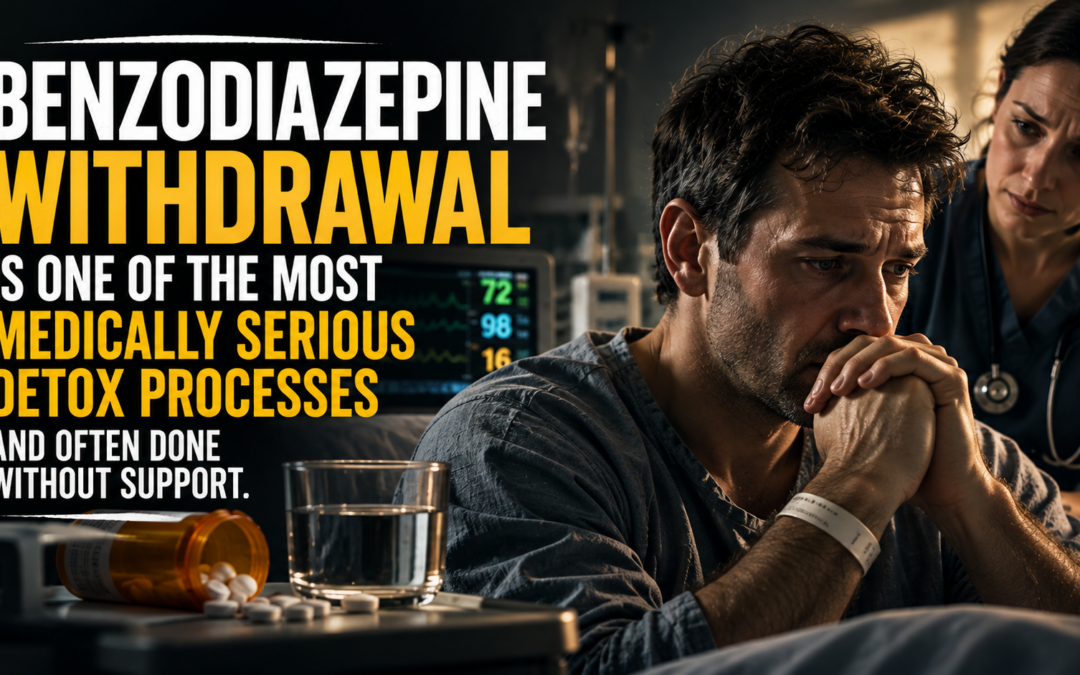
Benzodiazepine withdrawal is one of the most medically serious detox processes a person can go through, yet many people try to manage it alone at home. Medications like Xanax, Ativan, Klonopin and Valium are often prescribed for anxiety, panic or sleep. Because they come from a doctor, stopping them can seem simple.
If you or someone you love has tried to quit and felt shaky, panicked or unable to sleep, you have not done anything wrong. Your body has adapted to the medication, and it needs time and careful support to adjust again. That is a medical reality, not a personal failing.
You may also feel stuck. Maybe your prescription ran out, a provider stopped refilling it or you simply want your life back without relying on a pill. Those reasons are valid.
Benzodiazepine withdrawal can be managed safely with the right medical care. You do not have to face it by yourself.
Why Is Benzodiazepine Withdrawal So Medically Serious?
Benzodiazepine withdrawal is medically serious because stopping suddenly after regular use can trigger seizures, severe confusion and other complications that can become life-threatening. Along with alcohol withdrawal, it is one of the few types of withdrawal where stopping abruptly can directly put a person’s life at risk.
Not everyone has severe symptoms. Risk depends on the dose, how long you have taken the medication and whether other substances are involved.
What Happens in the Brain When You Stop Taking Benzodiazepines?
When you stop taking benzodiazepines suddenly, the brain loses a calming signal it has come to rely on. These medications strengthen GABA (gamma-aminobutyric acid), a natural chemical messenger that slows nerve activity.
Think of it like a car where someone else has been pressing the brake for you. Over time, your brain eases off its own brake. When the medication stops, the nervous system can speed up with nothing to slow it down.
What Symptoms Can Benzodiazepine Withdrawal Cause?
Benzodiazepine withdrawal can cause symptoms that range from uncomfortable to dangerous. Many of them look like the anxiety the medication was first prescribed to treat.
Common symptoms include:
- Rebound anxiety, panic or irritability
- Trouble falling or staying asleep
- Tremors, sweating and a racing heart
- Headaches, muscle tension or nausea
- Strong sensitivity to light, sound or touch
- Feeling detached or unreal
- Confusion, hallucinations or delirium in severe cases
- Seizures, which can happen without warning
Seizures, hallucinations and severe confusion need emergency care. Call 911 right away if you or someone near you experiences them.
When Do Symptoms Start and How Long Do They Last?
Symptoms from short-acting benzodiazepines such as alprazolam (Xanax) or lorazepam (Ativan) often begin within one to two days of the last dose. With longer-acting medications such as diazepam (Valium) or clonazepam (Klonopin), symptoms may not appear for several days.
That delay can be misleading. A person may feel fine at first, then face the hardest symptoms after assuming the worst has passed.
The acute phase often lasts a few weeks. Some people notice lingering anxiety, low mood or sleep problems for months, which is why ongoing care matters.
Why Do So Many People Face Benzodiazepine Withdrawal Without Support?
Many people face benzodiazepine withdrawal without support because they don’t realize that stopping a prescribed medication can be dangerous. Most people link detox with alcohol or heroin, not with a pill from the pharmacy.
Why Does a Prescription Make the Risk Easy to Miss?
A prescription makes the risk easy to miss because it signals safety and trust. People can take these medications exactly as directed and still develop physical dependence over time.
Physical dependence is not the same as addiction, though both can lead to withdrawal. In 2020 the U.S. Food and Drug Administration (FDA) added a boxed warning to benzodiazepines about dependence and withdrawal reactions. That step reflects how real these risks are.
What Pushes People to Quit Suddenly?
People often quit suddenly because a prescription ends unexpectedly or they feel ashamed and want to stop quietly on their own. Worries about cost, work or what others might think can also keep them from asking for help.
Common situations include:
- A doctor retires or stops refilling the prescription
- Someone runs out early and cannot get more
- A person decides to quit “cold turkey” after reading about the risks
- Someone who bought pills outside a pharmacy suddenly loses access
Pills from outside a pharmacy carry another concern. Counterfeit pills made to look like Xanax have been found to contain fentanyl, which raises the risk of overdose.
What Does Medically Supervised Detox Look Like for Benzodiazepine Withdrawal?
Medically supervised detox for benzodiazepine withdrawal gives you round-the-clock monitoring, a gradual reduction plan and a fast response if complications appear. At Grand Falls Center for Recovery, medical detox takes place on a calm, secluded campus in Joplin, Missouri, with 24/7 on-site medical and support staff.
Why Does Tapering Matter?
Tapering matters because slowly lowering the dose gives the brain time to restore its own calming system. Medical teams often use a gradual taper, sometimes switching to a longer-acting benzodiazepine, to reduce the risk of seizures and severe symptoms.
Your care team adjusts the pace based on how your body responds. The goal is safety and comfort, not speed.
What Can You Expect During Your Stay?
You can expect regular checks on your vital signs, symptoms and sleep, along with emotional support during difficult moments. Detox at Grand Falls typically lasts about a week.
Because benzodiazepine withdrawal can take longer than that, your care team may continue a careful taper as you move into the next level of care. You will not be sent home to finish it alone.
How Does Anxiety Affect Benzodiazepine Withdrawal and Recovery?
Anxiety affects benzodiazepine withdrawal because the condition the medication once treated often returns, sometimes more strongly for a while. This rebound can convince people they cannot live without the medication.
Recovery does not mean leaving your anxiety untreated. It means finding safer, lasting ways to manage it.
How Does Dual-Diagnosis Care Help?
Dual-diagnosis care helps by treating anxiety, panic, depression or trauma at the same time as substance use through one coordinated team. Grand Falls offers dual-diagnosis treatment so the reason you started the medication is not left behind.
Care may include cognitive behavioral therapy (CBT), grounding skills and healthy sleep routines. These tools help calm the body and mind in ways that last.
Can Medication Still Be Part of the Plan?
Yes, other medications with lower misuse risk may still help, and Grand Falls uses GeneSight genetic testing to guide those choices. A simple cheek swab shows how your genetics may affect your response to certain medications.
This personalized approach can reduce frustrating trial and error. It helps your care team match treatment to your body and your needs.
Which Levels of Care Support Recovery After Benzodiazepine Withdrawal?
Grand Falls offers a full continuum of care, so support continues after the physical symptoms of benzodiazepine withdrawal ease. A thorough assessment helps you and your care team choose the right starting point.
- Medical detox provides supervised tapering with 24/7 on-site staff.
- Residential inpatient treatment offers 30 to 90 days or more of structured care in a peaceful setting.
- Partial hospitalization (PHP) delivers intensive daytime treatment with evenings at home.
- Intensive outpatient care (IOP) offers therapy several days a week as you return to work and family.
- Aftercare and alumni support help you stay connected after formal treatment ends.
Stepping down gradually gives you time to practice new coping skills. Your support stays close while your confidence grows.
Is Medically Supervised Detox the Right Next Step for You?
The clearest sign you may need supervised detox is regular benzodiazepine use combined with symptoms when you skip or lower a dose. You don’t need every answer before reaching out.
- If you feel shaky, panicked or unable to sleep when you miss a dose, your body may be dependent and needs medical support to stop safely.
- If you have had a seizure or severe confusion during a past attempt to quit, supervised detox is the safest choice.
- If you also drink alcohol or use opioids, the combined risks call for round-the-clock care.
- If anxiety is the reason you started the medication, dual-diagnosis care can treat both together.
- If you are unsure how serious your situation is, a free consultation can bring clarity without pressure.
Common Questions Before Starting Treatment
Can I stop taking my benzodiazepine on my own? Stopping suddenly is not safe for most people who take benzodiazepines regularly. Talk with a medical provider before making any changes. A supervised taper lowers the risk of seizures and severe symptoms during benzodiazepine withdrawal.
What if I only took my medication as prescribed? You can still develop physical dependence when taking a medication exactly as directed. This is common and does not mean you misused it. It simply means your body needs support to adjust safely.
Will my anxiety come back after detox? Some anxiety may return for a time. Treatment helps you build practical tools and explore other medication options so anxiety feels more manageable.
Will my insurance cover detox? Many insurance plans cover medical detox. Grand Falls offers a free consultation and can help verify your benefits before you begin.
Moving Forward With Hope
Benzodiazepine withdrawal is serious, but it does not have to be faced alone or without a plan. With medical supervision, a gradual taper and care for the anxiety underneath, a safer recovery is within reach.
Your reasons for starting the medication were real. So is your hope for a steadier, healthier life now.
If you or someone you love is ready to stop safely, reach out to Grand Falls Center for Recovery today. Our compassionate team will listen, answer your questions and help you take the next step with confidence.