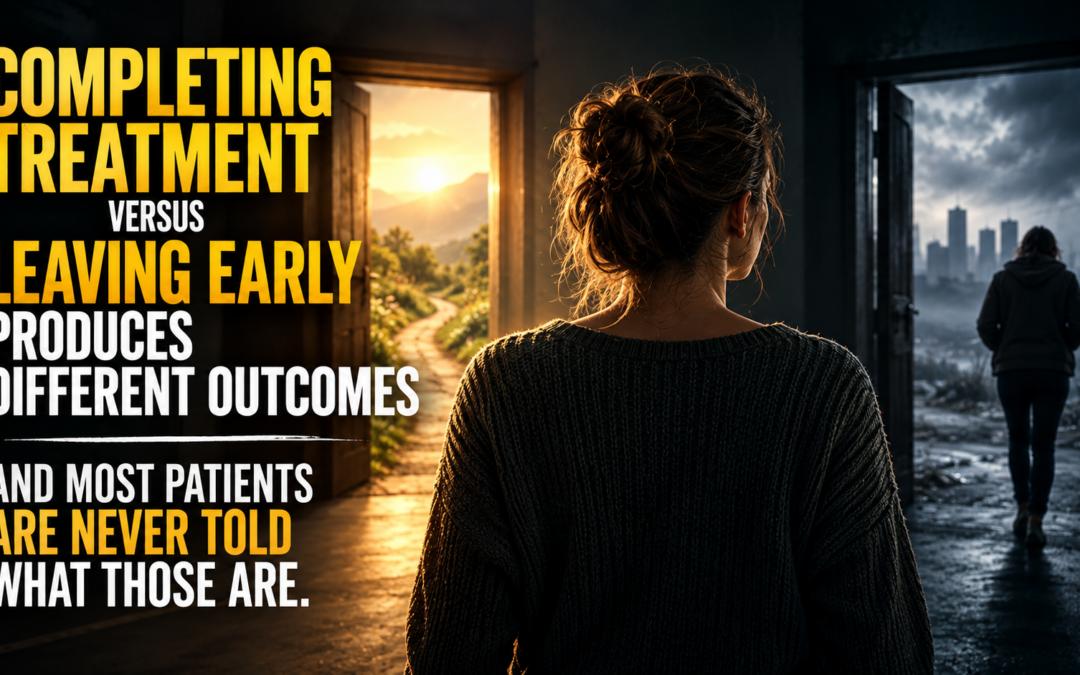
Completing treatment versus leaving early is one of the most important factors in recovery, yet many people start a program without anyone explaining why it matters so much. You may be thinking about treatment for yourself or someone you love. Or you may already be in a program and feeling a strong pull to go home.
That pull is real, and it is very common. The first weeks can bring restlessness, homesickness, worry about work or a sudden feeling that you are already better. None of those feelings mean something is wrong with you.
What often goes unsaid is that the decision to stay or go shapes what happens next. Knowing the difference ahead of time can help you make a confident choice when hard moments arrive. You deserve clear information instead of surprises, and you do not have to face this decision alone.
What Does Completing Treatment Versus Leaving Early Actually Mean?
Completing treatment versus leaving early comes down to whether a person finishes the plan their care team built with them or stops before that plan is done. Completion does not mean recovery is over. It means the foundation had enough time to set.
What Counts as Completing Treatment?
Completing treatment means reaching the goals in your individual plan and moving to the next level of care with an aftercare plan in place. For one person, that might mean finishing detox and a residential stay. For another, it might mean stepping down through partial hospitalization and outpatient care.
Your plan is built around your history, your health and your goals. Finishing it looks different for everyone.
What Does Leaving Early Look Like?
Leaving early usually means ending care before the clinical team recommends it, which is often called leaving against medical advice (AMA). It can happen in a single moment of frustration. It can also happen slowly, as missed sessions turn into dropping out altogether.
In conversations about completing treatment versus leaving early, the days right after detox are often the turning point. Once the worst physical symptoms fade, the remaining work can seem unnecessary. The brain and emotions, however, are still healing.
Why Are Most Patients Never Told About Completing Treatment Versus Leaving Early?
Most patients are never told about completing treatment versus leaving early because intake conversations tend to focus on logistics like insurance, schedules and what to pack. The reasons to stay often come up only when someone is already halfway out the door.
Some providers worry that talking about leaving early might sound like pressure. Others assume patients already know. As a result, many people face the hardest moment of treatment without the information that could help them through it.
At Grand Falls Center for Recovery, we believe this conversation belongs at the very start. When you know what to expect, the urge to leave becomes something you can plan for rather than something that catches you off guard.
How Do Outcomes Differ When Completing Treatment Versus Leaving Early?
The outcomes of completing treatment versus leaving early differ mainly in relapse risk, overdose risk and how well underlying conditions get addressed. The National Institute on Drug Abuse (NIDA) states that staying in treatment for an adequate period of time is critical. It notes that many people need at least three months of treatment to significantly reduce or stop their drug use.
Every path is different, and no length of stay guarantees a specific result. Still, time in treatment gives new skills a chance to become everyday habits.
How Does Leaving Early Affect Relapse Risk?
Leaving early can raise relapse risk because cravings, stress and triggers often return before a person has practiced new ways to handle them. Detox clears substances from the body. It does not teach coping skills or change the routines tied to use.
When you look at completing treatment versus leaving early side by side, the biggest difference is often preparation. People who finish their plan usually leave with a relapse prevention plan, a support network and scheduled aftercare.
Why Does Leaving Early Raise Overdose Risk?
Leaving early can raise overdose risk because tolerance drops quickly once a person stops using. If someone returns to the amount they used before, their body may no longer be able to handle it.
This risk is especially serious with opioids, since fentanyl has been found throughout the illicit drug supply. This is not meant to frighten you. It is one of the most important reasons to talk with your care team before deciding to leave.
What Happens to Co-Occurring Conditions?
Co-occurring conditions like anxiety, depression or trauma often need more time to treat than the physical side of addiction. When someone leaves early, these conditions may go unaddressed. Those untreated symptoms can quietly drive a return to use.
Grand Falls offers dual-diagnosis treatment, which treats mental health and substance use together through one coordinated team. Giving this work enough time is a key part of completing treatment versus leaving early.
Why Do People Want to Leave Treatment Early?
People most often want to leave treatment early because of discomfort, outside pressures or a sense that they have already improved enough. These reasons are understandable and deeply human.
Common reasons include:
- Feeling physically better after detox and believing the hard part is over
- Worrying about a job, bills or children at home
- Conflict with a peer or frustration with program rules
- Painful emotions that surface during therapy
- Homesickness or missing a partner
- Cravings that feel easier to satisfy than to sit through
Knowing these reasons ahead of time is part of understanding completing treatment versus leaving early. When you can name the feeling, you can respond to it with a plan.
What Should You Do If You Feel the Urge to Leave?
If you feel the urge to leave, the most helpful first step is telling someone on your care team before you make a decision. Saying the feeling out loud often takes away some of its power.
Try giving yourself 24 hours before acting. Talk with your therapist about what is driving the urge. Many concerns, like work or family responsibilities, can be solved with planning rather than leaving.
How Can Families Help?
Families can help by encouraging a loved one to talk with staff before agreeing to pick them up. That simple pause can make a real difference in completing treatment versus leaving early.
Listening without judgment matters too. You can say, “I hear how hard this is, and I want you to talk with your team first.”
How Does Grand Falls Support Patients Through Every Stage of Care?
Grand Falls supports patients through a full continuum of care, so each stage builds on the one before it and no one leaves without a clear next step. Care takes place on a calm, secluded campus in Joplin, Missouri.
- Medical detox provides about a week of supervised withdrawal care with 24/7 on-site medical and support staff.
- Residential inpatient treatment offers 30 to 90 days or more of structured, evidence-based care.
- Partial hospitalization (PHP) delivers intensive daytime treatment with evenings at home.
- Intensive outpatient care (IOP) offers therapy several days a week as you return to work and family.
- Aftercare and alumni support helps you stay connected after formal treatment ends.
A continuum of care changes the conversation about completing treatment versus leaving early. Instead of choosing between staying and going home, you can step down gradually as your confidence grows.
GeneSight genetic testing can also help personalize medication choices for anxiety or depression. Fewer frustrating side effects can make it easier to stay engaged in care.
How Do You Know Whether to Stay or Revisit Your Plan?
The clearest sign you may need to revisit your plan, rather than leave it, is feeling stuck or overwhelmed without knowing why. You do not need every answer to start that conversation.
- If you feel physically better but still have strong cravings, staying gives you time to build skills that detox alone cannot provide.
- If work or family responsibilities are pulling you home, your care team may help you step down to PHP or IOP instead of stopping care.
- If painful memories or emotions are surfacing, that is often a sign therapy is reaching something important.
- If you left a program before and returned to use, weighing completing treatment versus leaving early this time can help you plan differently.
- If a loved one wants to leave, gently encouraging them to talk with staff first can protect their progress.
Grand Falls offers a free consultation, so you can ask questions and explore options with no pressure.
Common Questions Before Starting Treatment
Does leaving early mean I failed? No. Many people leave early and later return with new clarity. What matters most is reaching out again when you are ready.
How long will my treatment take? Length depends on your needs and progress. Detox at Grand Falls typically lasts about a week, while residential care often runs 30 to 90 days or more before stepping down.
Can I change levels of care instead of leaving? Yes. If your needs change, your care team can talk with you about moving to a different level. This keeps support in place while adjusting to your life.
What if I already left treatment early? You can come back. A new assessment helps your team understand what changed, and understanding completing treatment versus leaving early can shape a stronger plan this time.
Moving Forward With Hope
Completing treatment versus leaving early is a choice you deserve to understand before you ever face it. Knowing what is at stake does not take away the hard moments. It helps you meet them with a plan.
Recovery is possible, and every step you take matters. With a full continuum of care and a team that walks beside you, staying the course can feel more manageable.
If you or someone you love is ready to begin, or ready to try again, reach out to Grand Falls Center for Recovery today. Our compassionate team is here to listen, answer your questions and help you take the next step.