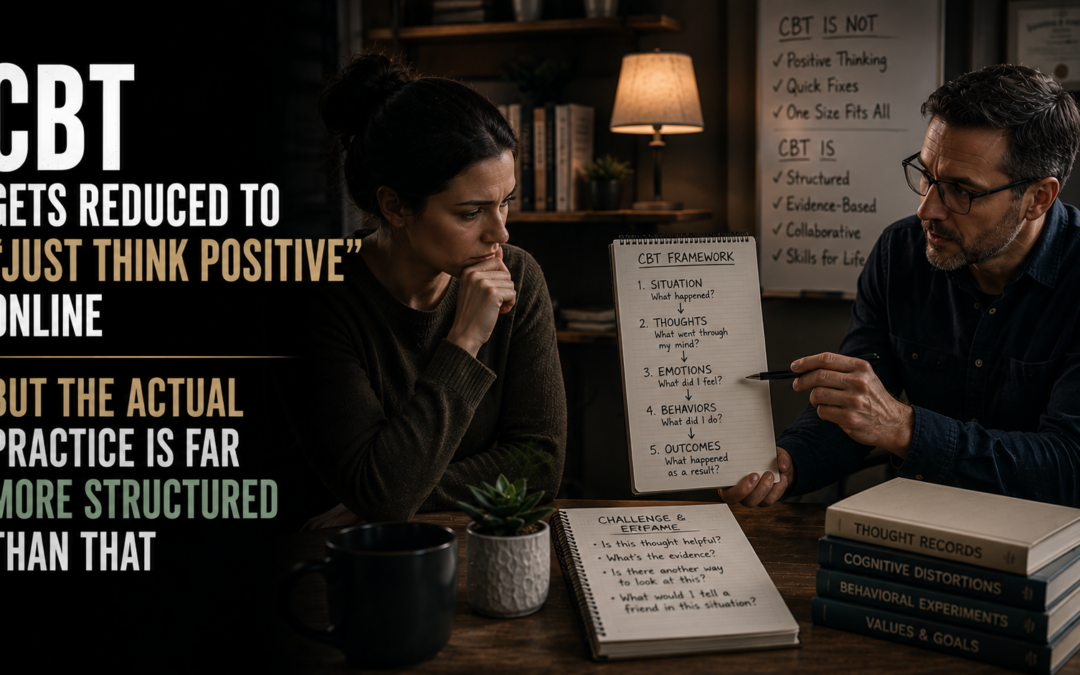
CBT, or Cognitive Behavioral Therapy, is often shrunk down to “just think positive” online, yet the real practice is far more structured, skilled, and supportive than that phrase suggests. If you have felt discouraged by advice that told you to simply cheer up, you are not alone, and you were not doing it wrong.
Positive thinking sounds simple, but real change rarely comes from forcing a smile. When you have tried and still felt stuck, it can leave you wondering if therapy even works.
The good news is that actual CBT is a well-researched, step-by-step process. It does not ask you to ignore hard feelings. Instead, it gives you practical tools to understand them and respond in healthier ways.
What Is CBT and Why Does It Get Misunderstood?
CBT is a structured, evidence-based form of therapy that helps you notice and reshape unhelpful thought patterns so your feelings and actions can shift too. It rests on a clear idea: your thoughts, emotions, and behaviors are deeply connected.
Online, that idea often gets flattened into slogans. “Change your thoughts, change your life” sounds catchy, but it skips the actual method underneath.
Why Does “Just Think Positive” Fall Short?
“Just think positive” falls short because it asks you to override real feelings instead of understanding them. Forcing cheerfulness rarely lasts, and it can leave you feeling like a failure when it does not work.
CBT does something different. It helps you examine a thought, check whether it is accurate, and build a more balanced response. That is a skill, not a slogan.
Where Do These Misconceptions Come From?
These misconceptions come from short posts that trade depth for simplicity. A single graphic cannot capture a therapy built on structure, practice, and guidance.
Real CBT involves a trained therapist, clear goals, and steady work between sessions. That process is harder to fit into a caption, so the nuance often gets lost.
What Makes CBT More Structured Than People Assume?
CBT is more structured than people assume because it follows a clear, goal-focused process with defined steps and measurable progress. Sessions are organized, not open-ended venting.
You and your therapist set specific goals together. Then you work through them using proven techniques, tracking what changes along the way.
What Does a Typical Session Look Like?
A typical CBT session includes reviewing your week, focusing on a specific challenge, and practicing a new skill together. Your therapist helps you connect real situations to the thoughts and feelings around them.
Many sessions end with a small practice exercise to try before the next visit. This keeps the work grounded in your actual life.
What Skills Does CBT Teach?
CBT teaches concrete skills you can use long after therapy ends. These tools help you respond to difficult moments with more clarity and less overwhelm.
Common CBT skills include:
- Noticing the automatic thoughts that shape how you feel
- Checking whether a thought is accurate or exaggerated
- Replacing harsh self-talk with a more balanced view
- Facing feared situations gradually and safely
- Building routines that support steadier moods
How Does CBT Actually Change Thought Patterns?
CBT changes thought patterns by helping you catch, question, and reshape the automatic thoughts that drive your reactions. These thoughts move so fast that you often miss them, yet they steer how you feel and act.
Once you can see them clearly, you can decide whether they hold up. That awareness creates room to respond differently.
What Are Automatic Thoughts?
Automatic thoughts are the quick, reflexive interpretations your mind produces in a given moment. They feel true even when they are distorted or overly harsh.
For example, one mistake might trigger the thought, “I always ruin everything.” That single thought can shape your mood and your next choice without you noticing.
How Do You Reshape These Thoughts?
You reshape these thoughts by pausing, examining the evidence, and choosing a steadier response. This is not about pretending everything is fine.
It is about accuracy. Instead of “I always fail,” you might land on “This was hard, and I can try again.” That shift is realistic, not falsely cheerful.
Who Can Benefit From CBT?
CBT can help a wide range of people facing mental health challenges, substance use concerns, or difficult life patterns. It has been studied extensively and adapted for many different needs.
You do not need a specific diagnosis to benefit. If unhelpful thoughts are affecting how you feel or act, this approach may support you.
What Concerns Does CBT Commonly Address?
CBT commonly addresses conditions where thought patterns play a central role in daily distress. Its flexibility makes it useful across many experiences.
People often find CBT helpful for:
- Anxiety and persistent worry
- Depression and low mood
- Substance use disorders
- Post-traumatic stress
- Difficulty managing anger or stress
How Does CBT Support Addiction Recovery?
Cognitive behavioral therapy supports addiction recovery by helping you recognize the thoughts and triggers that lead to substance use. Once you spot them, you can respond with healthier coping skills.
You learn to pause between a trigger and a reaction. That pause creates space for a different, more supportive choice, which is a powerful part of lasting recovery.
How Does CBT Fit Into a Full Treatment Plan?
Cognitive behavioral therapy fits into a full treatment plan as one part of coordinated, whole-person care rather than a standalone fix. It often works alongside other supports to address the roots of what you are facing.
Many people benefit most when CBT is combined with additional therapies, medical care, and community connection. This layered approach treats the person, not just a single symptom.
Why Does CBT Work Well With Other Support?
Cognitive behavioral therapy works well with other support because it gives you practical tools while other care addresses deeper needs. Therapy, medical guidance, and daily structure can reinforce one another.
At Grand Falls® Recovery, CBT is often woven into a broader plan. It supports your progress while other elements of care help you build a steadier foundation.
What Levels of Care Might Include CBT?
The levels of care that include CBT range from flexible outpatient therapy to more structured programs, depending on your needs. Many people access CBT at more than one stage.
Common options include outpatient therapy that fits around your routine, intensive outpatient programs for more frequent support, and higher levels of care when steadier structure would help. A thorough assessment helps guide the right fit.
How Do You Know if CBT Might Be Right for You?
Cognitive behavioral therapy might be right for you if unhelpful thoughts are shaping your emotions, choices, or daily life in ways you want to change. You do not need to be in crisis to benefit from support.
Consider these prompts as you think about your next step:
- You notice the same negative thoughts repeating and affecting your mood.
- You have tried to change a behavior but keep returning to old patterns.
- Advice like “just think positive” has left you feeling more frustrated.
- Anxiety, low mood, or stress is interfering with your daily life.
- Substance use has become a way to cope with difficult thoughts.
- You want practical tools you can use in everyday situations.
If several of these feel familiar, a conversation with a care team can bring clarity. Reaching out early is a caring, proactive step for yourself or someone you love.
Common Questions Before Starting Treatment
People often have honest questions before beginning therapy, and clear answers can ease the way forward. These are a few of the most common.
Is CBT really just positive thinking? No. CBT is a structured, skill-based therapy that helps you examine and reshape thoughts based on accuracy, not forced cheerfulness. It gives you real tools, guided by a trained therapist.
Do I have to relive painful memories in CBT? No. CBT focuses mainly on the present and the patterns affecting you now. While your history matters, the work centers on building skills you can use today.
How long does CBT usually take? CBT is often a shorter-term therapy, with many people attending sessions over a period of weeks to months. Because it is skill-based, the tools you gain can keep supporting you long after therapy ends.
Can CBT help with more than one struggle? Yes. CBT can address several concerns together, which is common. Your therapist tailors the approach to fit your full situation.
Moving Toward Real Change With Hope
CBT is far more than a slogan about thinking positive, and understanding its true structure can open the door to genuine, lasting change. This is a skilled, step-by-step approach that meets you where you are and gives you practical tools to move forward.
Your struggles are not a sign of weakness, and the patterns holding you back can shift with the right support. With clear guidance and compassionate care, steadier and more grounded days are possible.
You do not have to figure this out alone. Support is available, and reaching out is a genuine act of care for yourself.
If you or someone you love is ready to explore how therapy can help, reach out to Grand Falls Recovery today. Our compassionate team is here to listen and guide you toward the support that fits your needs.