Drug detox in Kansas City is the medically supported first step that makes lasting recovery possible for so many people. If you are looking into treatment for yourself or someone you love, you may feel a mix of fear, hope, and uncertainty. Those feelings are completely understandable.
Detox often carries more worry than any other part of treatment. Concerns about withdrawal, discomfort, and the unknown can hold people back from reaching out. Those concerns deserve honest, caring answers.
The reassuring truth is that detox is a guided, supervised process. You do not go through it alone. With a skilled team beside you, your body has the chance to stabilize so the deeper work of healing can begin on steady ground.
What Is Drug Detox and Why Does It Matter?
Drug detox is the medically supervised process of clearing substances from the body while managing withdrawal symptoms safely. It is the first phase of care, not the entire journey, and it prepares you for the treatment that follows.
When someone uses a substance regularly, the body adapts to its presence over time. Stopping suddenly can cause uncomfortable or even risky symptoms. Detox helps you move through that transition with support.
Why Is Detox Considered the Foundation of Recovery?
Detox is considered the foundation because lasting recovery is hard to build while the body is still physically dependent. Withdrawal can cloud thinking, drain energy, and make it difficult to focus on therapy.
Once your body begins to stabilize, your mind starts to clear. That clarity opens the door to the counseling, skill-building, and connection that help recovery hold over time.
Why Does Medical Supervision Matter During Drug Detox in Kansas City?
Medical supervision matters during drug detox in Kansas City because withdrawal can be unpredictable, and professional care helps keep you safe. A trained team monitors your symptoms and responds quickly if anything changes.
Trying to detox alone can feel isolating and, in some cases, be dangerous. Certain substances cause serious withdrawal symptoms that need medical attention. Supervised care lowers those risks and adds a layer of comfort.
What Does Medical Support Actually Involve?
Medical support involves monitoring your physical and emotional well-being throughout the process. A care team checks on you regularly, helps manage symptoms, and supports your comfort along the way.
Common forms of support include:
- Regular monitoring of vital signs like heart rate and blood pressure
- Help easing symptoms such as nausea, aches, or restlessness
- Emotional support during a vulnerable time
- Medication support when appropriate and guided by a clinician
- Attention to any co-occurring mental health needs
How Does Supervision Make Detox More Comfortable?
Supervision makes detox more comfortable by addressing symptoms before they become overwhelming. When your body feels steadier, staying substance-free becomes more manageable.
Comfort is not a luxury during this phase. It helps you rest, regain strength, and prepare mentally for the next stage of care.
What Can You Expect During Withdrawal?
During withdrawal, you can expect a range of physical and emotional symptoms that vary based on the substance and your health history. Knowing what may come can ease some of the fear around this step.
Withdrawal is temporary. Symptoms tend to build, peak, and then gradually ease as your body finds its balance again.
What Physical Symptoms Are Common?
Common physical symptoms include nausea, sweating, body aches, and changes in sleep or appetite. These reactions reflect your body adjusting to the absence of a substance.
Physical experiences during withdrawal may include:
- Nausea or stomach discomfort
- Headaches or muscle aches
- Sweating or chills
- Trouble sleeping
- Cravings that come and go
What Emotional Symptoms Might Appear?
Emotional symptoms often include anxiety, irritability, and mood swings as the mind and body recalibrate. These feelings are a normal part of the process, not a sign of weakness.
Some people also feel sadness, guilt, or hope mixed together. A compassionate care team understands these emotions and offers steady support through them.
How Long Does Withdrawal Usually Last?
Withdrawal usually lasts several days to about a week, though the timeline depends on the substance and the person. Some symptoms fade quickly while others linger a bit longer.
Your care team can help you understand what to expect based on your situation. That clarity often makes the process feel far less daunting.
How Does Drug Detox Connect to the Full Continuum of Care?
Drug detox connects to the rest of recovery by preparing you for the ongoing treatment that addresses the roots of substance use. Detox handles physical dependence, while later care supports lasting change.
Substance use is often tied to stress, trauma, anxiety, or other life challenges. These deeper needs take time, therapy, and support to work through well.
Why Isn’t Detox Enough on Its Own?
Detox is not enough on its own because it focuses on the body, not the emotional and behavioral patterns behind substance use. Leaving treatment right after detox can raise the risk of returning to old habits.
Think of detox as clearing the ground before building a house. The foundation matters deeply, yet the structure still needs to be built with care and support.
What Levels of Care Come After Detox?
The levels of care after detox range from immersive residential support to flexible outpatient options, depending on your needs. Many people move through several stages as they grow steadier.
Common next steps include:
- Residential treatment offers structured, round-the-clock support in a setting away from daily triggers.
- Partial hospitalization (PHP) provides intensive daytime care with evenings spent at home.
- Intensive outpatient (IOP) delivers therapy several days a week while you rebuild routine.
- Outpatient care offers ongoing therapy and support as you return to everyday life.
The right path depends on your health history, home environment, and recovery goals. A thoughtful plan helps each step feel manageable rather than overwhelming.
How Does Grand Falls® Recovery Support the Transition?
Grand Falls Recovery supports the transition by pairing medically guided detox with a clear plan for continued care. The goal is a smooth handoff from stabilization into deeper healing.
A strong detox program does not end at discharge. It helps you understand your next step and prepares you to take it with support rather than uncertainty.
Supportive elements often include a personalized treatment plan, a recommended level of care for after detox, and attention to any co-occurring mental health concerns. You stay connected to therapy, structure, and community throughout.
How Do You Know It Is Time to Reach Out?
The clearest sign it is time to reach out is when substance use is affecting your health, relationships, or peace of mind. You do not need to reach a crisis point before asking for help.
Consider connecting with a care team if any of these feel familiar:
- You have tried to stop using but withdrawal symptoms made it too hard.
- Substance use is interfering with work, family, or daily responsibilities.
- You feel worried about detoxing safely on your own.
- Your physical or mental health has changed in ways that concern you.
- A loved one has expressed worry about your substance use.
- You feel ready for change but unsure where to begin.
If several of these resonate, a conversation with a care team can bring clarity and relief. Reaching out early is a caring, proactive step for yourself or someone you love.
Common Questions Before Starting Treatment
People often have honest questions before beginning detox, and clear answers can ease the way forward. These are a few of the most common.
Is detox safe? Detox is safest when it happens under medical supervision. A trained team monitors your symptoms and helps manage them, which lowers risk and increases comfort during withdrawal.
How long does detox take? Detox usually lasts several days to about a week, depending on the substance and your health. Your care team can offer a clearer estimate after an assessment.
What happens after detox? After detox, most people continue into another level of care, such as residential, partial hospitalization, intensive outpatient, or outpatient treatment. This ongoing support addresses the deeper causes of substance use.
Do I have to have everything figured out before I start? No. You do not need a complete plan to begin. Detox is often where people start sorting through what they need next, with guidance from a caring team.
Moving Toward Healing With Hope
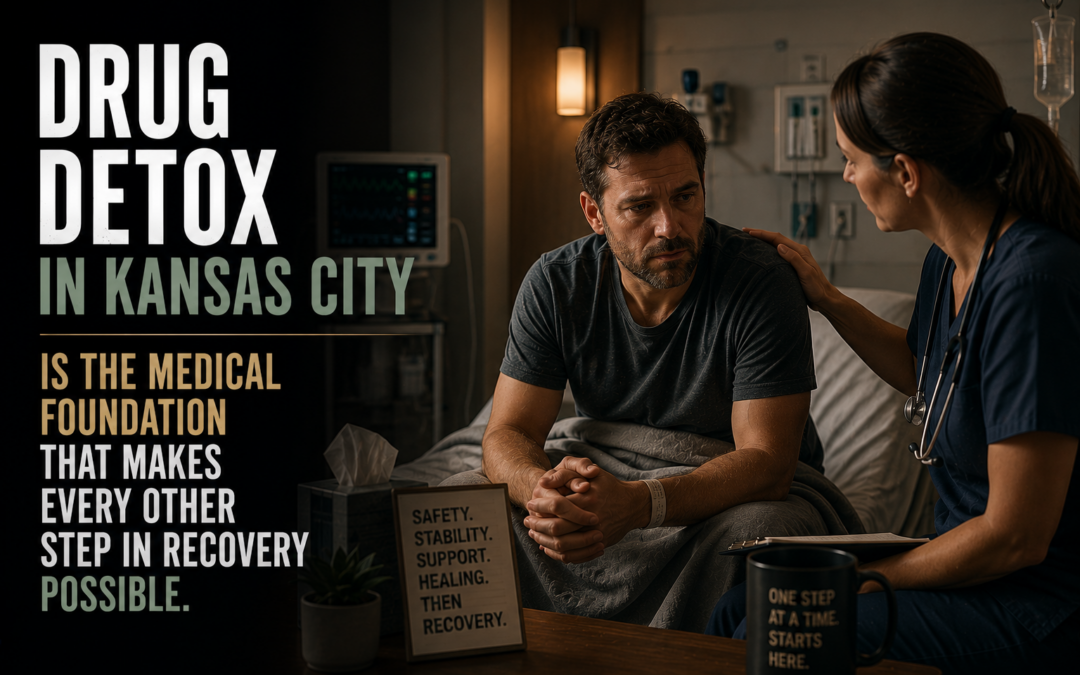
Drug detox in Kansas City is the medical foundation that makes every other step in recovery possible, and choosing it is a brave, hopeful decision. Detox helps your body stabilize so you can begin the deeper work of building a healthier life.
You do not have to feel completely ready to take the first step. What matters most is reaching out and letting a compassionate team walk beside you.
Recovery is possible with the right support in place. Small steps, taken with care, can lead to steadier and brighter days ahead.
If you or someone you love is considering detox, reach out to Grand Falls Recovery today. Our caring team is here to listen, answer your questions, and guide you toward a safe start and a clear path forward.