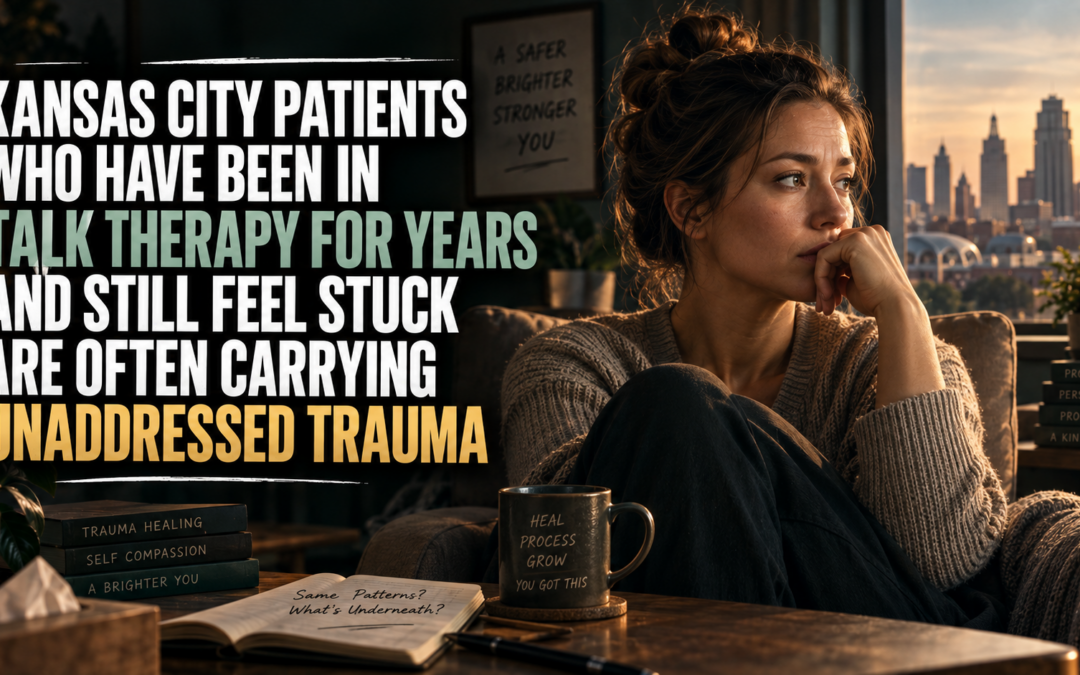
Talk therapy Kansas City residents have relied on for years can offer real comfort and still leave them feeling stuck when unaddressed trauma sits underneath the surface. If you have shown up to sessions faithfully and wondered why the same heaviness keeps returning, you are not failing at recovery.
That frustration is understandable, and it does not mean therapy was a waste. It often means something deeper has not yet been reached.
Trauma can live in the body and nervous system long after you have talked through the events out loud. Without care built to address it directly, the pain can quietly stay in place. The hopeful truth is that this is common, and it responds to the right kind of support.
Why Does Talk Therapy in Kansas City Sometimes Miss Trauma?
Talk therapy in Kansas City sometimes misses trauma because trauma is stored in the body and nervous system, not only in conscious memory. Traditional talk therapy focuses on thoughts and words, which are powerful yet limited when the pain lives somewhere words cannot fully reach.
You might understand your history clearly and still feel anxious, tense, or numb. That gap is a sign, not a personal shortcoming.
What Does Traditional Talk Therapy Do Well?
Traditional talk therapy does many things well, including helping you gain insight, process emotions, and feel heard. It creates a safe space to reflect and understand your patterns.
For many concerns, this approach is genuinely effective. The challenge appears when trauma is present but never addressed with methods built for it.
Why Isn’t Insight Always Enough?
Insight alone is not always enough because understanding a painful event does not automatically calm the body’s response to it. You can know a memory no longer poses danger while your nervous system stays braced for threat.
That is why some people talk about their trauma for years yet still feel on edge. The mind has processed the story, but the body has not felt safe.
How Does Unaddressed Trauma Show Up After Years of Therapy?
Unaddressed trauma often shows up as symptoms that persist despite consistent effort in therapy. These signs can appear in your body, your emotions, and your daily patterns, even when you feel like you should have moved on.
Recognizing them can bring relief. What feels like being stuck may actually be trauma asking for a different kind of care.
What Emotional and Physical Signs Should You Notice?
Emotional and physical signs of unaddressed trauma tend to linger regardless of how much you have talked things through. They reflect a nervous system still working hard to protect you.
Common signs include:
- Anxiety or a sense of being on edge that never fully settles
- Trouble sleeping, or waking up feeling unrested
- Emotional numbness or feeling disconnected from others
- Strong reactions to small stressors or sudden reminders
- Tension in your body with no clear physical cause
How Does Being Stuck Show Up in Daily Life?
Being stuck often shows up as the same struggles resurfacing no matter how much progress you seem to make. You may reach a certain point in healing, then feel yourself sliding back.
This pattern can feel discouraging. It is not a sign that you are broken. It usually points to a root that talk alone has not yet touched.
What Does Trauma-Informed, Integrated Care Look Like?
Trauma-informed integrated care means treating both the mind and the body through coordinated approaches that address trauma at its source. It combines talk therapy with methods designed to calm the nervous system and help you feel safe again.
This care does not replace what talk therapy gave you. It builds on it, reaching the layers that words alone could not.
How Is This Different From Talk Therapy Alone?
This care is different because it pairs conversation with body-based and evidence-based tools that work directly with trauma. Instead of focusing only on thoughts, it also helps your body release the stress it has been holding.
A trauma-informed approach might include therapy that targets how you process memories, plus skills for grounding and calming your body. Together, these methods help loosen trauma’s grip.
Why Does Treating the Whole Person Matter?
Treating the whole person matters because trauma often connects to anxiety, depression, or substance use. Addressing only one piece can leave the others unaddressed.
At Grand Falls® Center for Recovery, care can address mental health and any co-occurring concerns together. This coordinated approach helps healing feel steadier and more complete.
What Approaches Support Trauma Healing?
Approaches that support trauma healing blend evidence-based therapy with care for the nervous system. Each plays a role in helping you feel safe.
A supportive plan often includes:
- Trauma-focused therapy that helps you process painful experiences at a safe pace
- Cognitive behavioral therapy to address unhelpful thought patterns
- Skills for grounding and calming the body during hard moments
- Support for sleep, routine, and daily stability
- Care for any co-occurring anxiety, depression, or substance use
What Levels of Care Does Grand Falls Recovery Offer?
Grand Falls Recovery offers a range of care levels, from immersive residential support to flexible outpatient options, so treatment can match your needs. This range means you can find help that fits your life rather than a one-size-fits-all program.
Many people move between levels as they grow steadier. A thorough assessment helps guide the right starting point with you.
Which Level of Care Might Fit Best?
The level of care that fits best depends on how much daily support and structure your situation requires. There is no single right answer for everyone.
Common options include:
- Residential inpatient treatment offers structured, round-the-clock support in a stable setting.
- Partial hospitalization provides intensive daytime care with evenings spent at home.
- Intensive outpatient care delivers therapy several days a week while you keep your routine.
- Aftercare and alumni support help you stay connected as you return to everyday life.
You can learn more about these options and the mental health treatment available by reaching out directly.
How Does Personalized Care Help?
Personalized care helps because your trauma, history, and needs are unique to you. A plan built around your specific situation tends to reach what a general approach may miss.
Grand Falls Recovery also uses GeneSight testing to help personalize medication plans when appropriate. This can bring greater precision to treating co-occurring anxiety or depression.
How Do You Know It Is Time to Try a Different Approach?
The clearest sign it is time to try a different approach is when years of effort have not eased the heaviness you carry. You do not need to reach a crisis point before seeking deeper support.
Consider these prompts as you think about your next step:
- If the same struggles keep returning despite consistent therapy, deeper care may reach what talk alone has not.
- If you feel anxious, numb, or on edge even after processing your history, trauma-informed care can address the root.
- If your sleep, mood, or relationships still feel strained, integrated support may help you feel steadier.
- If you have leaned on substances to quiet difficult feelings, coordinated care can treat both at once.
- If a loved one has noticed you seem stuck, that observation is worth exploring together.
Reaching out for that first conversation is often the hardest and most meaningful step. A caring team can help you sort through your options at your own pace.
Common Questions Before Starting Treatment
People often have honest questions before trying a new approach, and clear answers can ease the way forward. These are a few of the most common.
Does feeling stuck mean my therapy failed? No. Feeling stuck often means unaddressed trauma is still present, not that your work was wasted. The insight you gained can become a strong foundation for deeper, trauma-informed care.
Do I have to relive my trauma to heal? No. Effective trauma care moves at your pace and prioritizes your safety. A skilled clinician helps you process experiences gradually, without forcing you to relive the hardest moments.
Will I lose the progress I made in talk therapy? No. Trauma-informed care builds on what you already gained rather than replacing it. Your self-awareness and emotional tools remain valuable throughout the process.
What if I have more than one struggle? That is common, and integrated care is designed for it. Your team looks at how trauma, anxiety, or substance use connect, then builds a plan that supports the full picture.
Moving Toward Deeper Healing With Hope
Talk therapy Kansas City residents have trusted for years can be a meaningful part of your journey, even when it has not fully eased the weight you carry. When progress stalls, it often points to unaddressed trauma that needs care built to reach it, not a failure on your part.
Your reactions make sense, and they are not a sign of weakness. With compassionate, trauma-informed support, your body can learn to feel safe again and steadier days can follow.
You do not have to stay stuck, and you do not have to figure this out alone. The right team can walk beside you toward the healing you have been working toward.
If you or someone you love feels stuck despite years of effort, reach out to Grand Falls Center for Recovery today. Our compassionate team is here to listen and guide you toward the support that fits your needs.