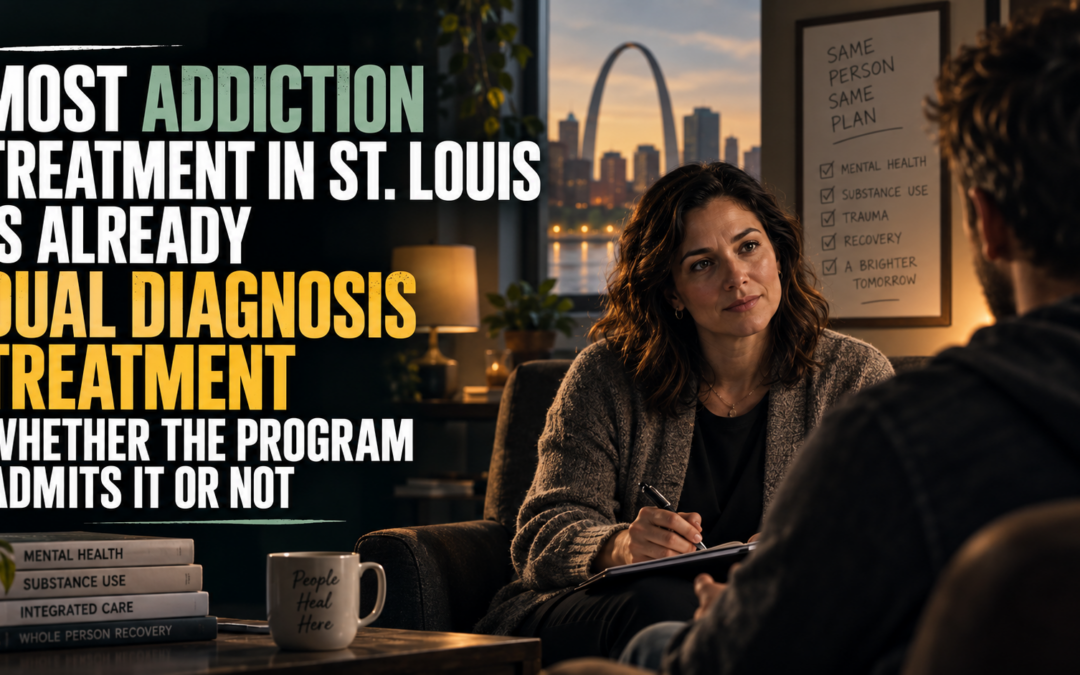
Addiction treatment in St. Louis is almost always dual diagnosis treatment in practice, because most people who seek help are also carrying a mental health concern, whether or not anyone has named it yet. If you or someone you love is looking for help, this may explain why past attempts at recovery did not fully hold.
That experience is more common than you might think, and it does not mean you failed. It often means the care you received treated only one part of a larger picture.
Substance use and mental health are deeply connected. Anxiety, depression, and trauma frequently sit beneath the surface of addiction, quietly shaping it. The reassuring truth is that when treatment addresses both together, recovery has a far stronger foundation. Understanding this can help you find care that truly fits your needs.
What Does Dual Diagnosis Mean in Addiction Treatment in St. Louis?
Dual diagnosis means a person is living with both a substance use disorder and a mental health condition at the same time. In addiction treatment in St. Louis, this combination is the norm rather than the exception, even when a program does not use the term.
You do not need a formal diagnosis for this to apply to you. Many people arrive at treatment with unrecognized anxiety, depression, or trauma driving their substance use.
Why Is Dual Diagnosis So Common?
Dual diagnosis is common because substance use and mental health conditions often develop together and feed each other. One rarely exists in isolation.
A person might use a substance to quiet anxiety, ease depression, or numb painful memories. Over time, that substance can deepen the very struggles it was meant to soothe.
Does This Mean I Have a Mental Health Condition?
Not necessarily, but it does mean your care should look at the full picture. Many people are surprised to learn how closely their substance use connects to their emotions or history.
A thorough assessment can help clarify what is happening. Rather than a label, think of it as a fuller understanding of what you have been carrying.
Why Is Most Addiction Care Already Dual Diagnosis Treatment?
Most addiction care is already dual diagnosis treatment because the people walking through the door bring both struggles with them, even when only one gets named. The mental health piece is present whether a program addresses it or not.
When care focuses only on stopping substance use, the untreated condition often remains. That gap is a large part of why some people cycle through treatment more than once.
What Happens When Programs Ignore the Mental Health Side?
When programs ignore the mental health side, they treat a symptom while leaving the cause in place. A person may stop using for a time, then return to old patterns when the underlying pain resurfaces.
Think of it like draining water from a flooded room without fixing the leak. The relief is real, but it rarely lasts.
Why Do Some Programs Not Name It?
Some programs do not name it because they are not built to treat both conditions together. They may focus on substance use alone, leaving mental health care to someone else.
This split can leave a person managing two disconnected plans that never quite align. Naming and treating both together removes that strain and creates a clearer path forward.
What Does Real Dual Diagnosis Care Actually Look Like?
Real dual diagnosis care means one coordinated team addresses your substance use and mental health through a single, connected plan. You are not passed between programs that never communicate.
This approach treats you as a whole person, not a set of separate problems. At Grand Falls® Center for Recovery, care brings therapy, medical support, and daily structure together under one roof.
What Might a Treatment Plan Include?
A treatment plan usually blends several supports that work together over time. No single element carries the whole load.
Common elements include:
- Individual therapy that explores the roots of substance use
- Support for co-occurring conditions like anxiety, depression, or trauma
- Medication support when appropriate and guided by a clinician
- Group sessions that build connection and reduce isolation
- Skill-building for coping and relapse prevention
How Does Personalized Care Help?
Personalized care helps because your history, symptoms, and needs are unique to you. A plan built around your situation tends to reach what a general approach may miss.
Grand Falls Recovery also uses GeneSight testing to help personalize medication plans when appropriate. This can bring greater precision to treating co-occurring anxiety or depression.
Why Does Integrated Treatment Work Better Than Siloed Care?
Integrated treatment works better because substance use and mental health influence each other, and treating them together produces steadier results. When care is split, progress in one area can be undone by the other.
Siloed care often forces a person to juggle separate providers who may not share information. One team might not know what the other recommends, which creates confusion and added stress.
How Does Treating Both at Once Break the Cycle?
Treating both at once breaks the cycle because it addresses the pain underneath the substance use, not just the behavior on the surface. When emotional struggles ease, the pull toward substances often loosens too.
This coordinated approach helps recovery feel more complete. You can learn more about the mental health treatment woven into care at Grand Falls Recovery.
Why Does One Coordinated Team Matter?
One coordinated team matters because it keeps your care consistent and personal. Your therapist, medical team, and support staff work from the same shared understanding.
This connection means nothing important slips between providers. You stay seen as a whole person, even as your level of care changes over time.
What Signs Suggest Co-occurring Conditions Are Present?
The clearest sign of a co-occurring condition is when substance use rises alongside anxiety, low mood, or painful memories. These patterns often point to something deeper than the substance itself.
Recognizing these signs early can lead to more effective care. Noticing them is not a sign of weakness. It is a step toward fuller understanding.
Which Signs Are Worth Noticing?
Signs worth noticing tend to show up in your emotions, your body, and your daily patterns. They often persist even during periods of sobriety.
Common signs include:
- Substance use that increases when you feel overwhelmed or low
- Ongoing anxiety, sadness, or a sense of being on edge
- Trouble sleeping or changes in appetite you cannot explain
- Old memories or painful experiences that keep resurfacing
- Feeling that stopping substance use alone has never been enough
If several of these feel familiar, a conversation with a caring team can bring clarity and relief.
What Levels of Care Does Grand Falls Recovery Offer?
Grand Falls Recovery offers a range of care levels, from immersive residential support to flexible outpatient options, so treatment can match your needs. This range means you can find help that fits your life rather than a one-size-fits-all program.
Many people move between levels as their stability grows. A thorough assessment helps guide the right starting point with you.
Which Level of Care Might Fit Best?
The level of care that fits best depends on how much daily support and structure your situation requires. There is no single right answer for everyone.
Common options include:
- Medical detox offers supervised support as your body clears substances safely.
- Residential inpatient treatment provides structured, round-the-clock care in a stable setting.
- Partial hospitalization delivers intensive daytime care with evenings spent at home.
- Intensive outpatient care offers therapy several days a week while you keep your routine.
- Aftercare and alumni support help you stay steady as you return to everyday life.
How Do You Know When to Reach Out for Help?
The clearest sign it is time to reach out is when substance use is affecting your health, relationships, or peace of mind. You do not need to reach a crisis point before asking for support.
Consider these prompts as you think about your next step:
- If past treatment addressed only your substance use and the same struggles returned, dual diagnosis care may reach what was missed.
- If substance use rises alongside anxiety, low mood, or difficult memories, integrated care can treat both at once.
- If stopping the behavior alone has never felt like enough, coordinated care can offer more support.
- If you feel unsure where to begin, a simple assessment can bring clarity without pressure.
- If a loved one has expressed concern, that observation is worth exploring together.
Reaching out for that first conversation is often the hardest and most meaningful step. A caring team can help you sort through your options at your own pace.
Common Questions Before Starting Treatment
People often have honest questions before seeking care, and clear answers can ease the way forward. These are a few of the most common.
Do I need an existing mental health diagnosis to qualify for dual diagnosis care? No. Many people discover co-occurring conditions during their assessment. Dual diagnosis care is designed to identify and treat these needs, even when they have gone unrecognized for years.
Can substance use and mental health really be treated together? Yes. Integrated programs are built to address both at once, and this combined approach often produces steadier progress than treating them separately.
Why did my last treatment stop working? Treatment that focuses only on substance use often leaves the underlying mental health condition unaddressed. When that condition remains, the same struggles can return. Dual diagnosis care aims to treat the full picture.
What if I have more than one struggle? That is common, and integrated care is designed for it. Your team looks at how your challenges connect, then builds a plan that supports every part of your recovery.
Moving Toward Whole-Person Healing With Hope
Addiction treatment in St. Louis is already dual diagnosis treatment for most people, whether or not a program names it that way, and understanding this can change how you approach recovery. When care treats both substance use and mental health together, healing rests on a far steadier foundation.
Your experience is real, and struggling before does not mean recovery is out of reach. With compassionate, coordinated support, the roots of substance use can be addressed and real change becomes possible.
You do not have to figure this out alone, and you do not have to feel completely ready to begin. Small, steady steps, taken with the right support, can lead to brighter days ahead.
If you or someone you love is ready to take that next step, reach out to Grand Falls Center for Recovery today. Our caring team is here to listen, answer your questions, and help you find care that supports every part of your recovery.