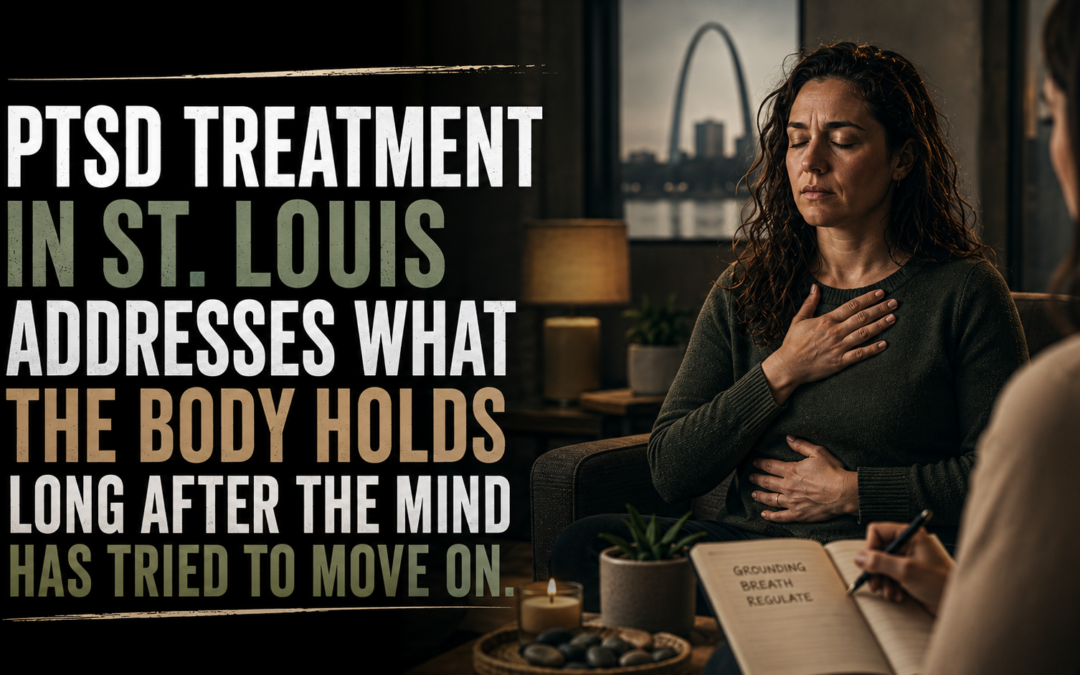
PTSD treatment in St. Louis focuses on what the body still carries, even when the mind has worked hard to leave a painful experience behind. If you have ever felt calm on the surface while your body stayed tense, jumpy, or exhausted, you are not imagining it.
Trauma does not simply fade because time has passed or because you have tried to move forward. It often settles into the body, shaping how you sleep, react, and feel safe.
The hopeful truth is that this experience makes sense, and it responds to care. With the right support, the body can learn to feel safe again, and steadier days are possible.
What Does PTSD Treatment in St. Louis Actually Address?
PTSD treatment in St. Louis addresses both the emotional and physical effects of trauma, not just the memories themselves. It looks at the whole person, including the ways the body holds stress long after the event has passed.
Post-traumatic stress disorder, or PTSD, is a condition that develops after a frightening or overwhelming experience. It affects thoughts, emotions, and the nervous system all at once.
Effective care treats these pieces together. The goal is not to erase the past but to help you feel safe, grounded, and more in control of the present.
What Symptoms Does Treatment Focus On?
Treatment focuses on the emotional, mental, and physical symptoms that keep trauma active in daily life. These symptoms often show up even when you feel like you should have moved on.
Common symptoms treatment addresses include:
- Flashbacks or intrusive memories that feel vivid and sudden
- Trouble sleeping, nightmares, or feeling constantly on edge
- Avoiding places, people, or reminders tied to the experience
- Physical tension, a racing heart, or feeling easily startled
- Emotional numbness or feeling disconnected from others
Who Is PTSD Treatment For?
PTSD treatment is for anyone whose past experiences keep interfering with their daily life, relationships, or sense of safety. You do not need a specific type of trauma to qualify for care.
People seek treatment after many different experiences, including accidents, loss, abuse, or serving in high-stress roles. What matters is how the experience continues to affect you, not how it compares to anyone else’s.
Why Does Trauma Stay in the Body Even After the Mind Moves On?
Trauma stays in the body because the nervous system stores overwhelming experiences as ongoing threats rather than finished events. Your mind may know the danger has passed, yet your body can stay braced for it.
During a frightening event, your body activates its survival response. When that response never fully switches off, it keeps running in the background, quietly draining your energy and peace.
This is why you can feel fine one moment and flooded the next. The body remembers, even when the mind is ready to let go.
How Does the Nervous System Hold Trauma?
The nervous system holds trauma by staying in a heightened state of alert long after the threat is gone. It keeps scanning for danger, ready to react at any moment.
This constant alertness can leave you feeling tense, tired, and reactive. Small stressors may trigger big responses because your body is already primed to protect you.
What Physical Signs Point to Unresolved Trauma?
Physical signs of unresolved trauma often include tension, disrupted sleep, and a body that struggles to relax. These reactions reflect a nervous system that has not yet found safety.
Common physical signs include:
- Tightness in your chest, shoulders, or stomach with no clear cause
- Trouble falling asleep or waking often feeling unrested
- A racing heart or shallow breathing during calm moments
- Feeling exhausted even after a full night of sleep
- Being easily startled by sounds or sudden movement
How Does PTSD Treatment Help the Body Feel Safe Again?
PTSD treatment helps the body feel safe again by teaching the nervous system that the danger has truly passed. This happens gradually, at a pace that respects your comfort and readiness.
Care combines approaches that work with both the mind and the body. Talk therapy helps you process the experience, while body-based tools help calm the physical stress response.
Over time, these methods help loosen trauma’s grip. The goal is a body that can rest and a mind that feels steadier.
What Approaches Are Commonly Used?
Commonly used approaches blend evidence-based therapy with support for the nervous system. Each method plays a role in helping you heal.
A supportive plan often includes:
- Trauma-focused therapy that helps you process painful experiences safely
- Cognitive behavioral therapy, which targets the thought patterns fueling distress
- Skills for grounding and calming the body during difficult moments
- Support for healthy sleep, routine, and daily stability
- Care for any co-occurring conditions, including anxiety or substance use
Will Treatment Force Me to Relive the Trauma?
No, effective treatment moves at your pace and prioritizes your safety at every step. You are never forced to relive the worst moments in detail.
A skilled clinician helps you process experiences gradually and with support. The aim is to reduce the pain, not to overwhelm you with it.
How Does PTSD Connect to Substance Use and Other Conditions?
PTSD often connects to substance use and other mental health conditions because people naturally seek relief from ongoing distress. When trauma keeps resurfacing, the search for comfort is deeply human.
Many people living with PTSD also face anxiety, depression, or substance use. Treating only one part often leaves the cycle in place.
This is why integrated care matters. Addressing trauma and any related conditions together helps break the loop rather than treating a single piece of it.
Why Do PTSD and Substance Use Often Appear Together?
PTSD and substance use often appear together because substances can temporarily quiet the pain that trauma keeps stirring up. The relief feels real in the moment, even though it does not last.
At Grand Falls Recovery, care teams understand how these experiences connect. Treatment can address the trauma underneath while supporting recovery from substance use at the same time.
What Levels of Care Are Available for PTSD Treatment?
The levels of care available range from flexible outpatient support to more structured programs, depending on your needs. Many people move between levels as they build stability.
The right fit reflects your history, your daily life, and how much support you need right now. A thorough assessment helps guide that decision with you.
Which Level of Care Might Fit Best?
The level of care that fits best depends on how much daily structure your situation requires. There is no single right answer for everyone.
Common options include:
- Residential treatment offers structured, round-the-clock support in a stable setting.
- Partial hospitalization provides intensive daytime care with evenings spent at home.
- Intensive outpatient care delivers therapy several days a week while you keep your routine.
- Outpatient care offers ongoing support as you return to everyday life.
Many people begin with more structured care and step down as they grow steadier. You stay connected to a consistent approach throughout.
How Do You Know When to Seek Help for PTSD?
The clearest sign it is time to seek help is when past experiences keep interfering with your daily life, relationships, or sense of safety. You do not need to wait until things feel unbearable.
Consider reaching out for support if any of these feel familiar:
- Old memories or feelings keep resurfacing and disrupting your day.
- You avoid certain places, people, or situations to keep painful feelings away.
- Your sleep, mood, or focus has changed in ways you cannot explain.
- You use substances to quiet distressing thoughts or emotions.
- Relationships feel harder to maintain because of fear, anger, or withdrawal.
- A loved one has expressed concern about changes in how you feel or cope.
If several of these resonate, professional support can bring real relief. Reaching out early is a caring and courageous choice for yourself or someone you love.
Common Questions Before Starting Treatment
People often have honest questions before seeking care, and clear answers can ease the way forward. These are a few of the most common.
Can PTSD really be treated years after the event? Yes. Healing is possible no matter how much time has passed, because trauma responds to care rather than to the calendar. With the right support, the nervous system can learn that the danger is over.
Do I need treatment if I function fine most days? You may still benefit from support if trauma resurfaces even occasionally. Functioning well does not mean the pain has resolved, and care can help you feel steadier underneath.
What if I have more than one struggle? That is common, and integrated care is designed for it. Your team looks at how trauma, anxiety, or substance use connect, then builds a plan that supports the full picture.
How do I get started? You start with an assessment. A conversation with a care team helps identify what you are facing and the right level of care, so you can move forward with a clear plan.
Moving Toward Healing With Hope
PTSD treatment in St. Louis addresses what the body holds long after the mind has tried to move on, offering care for both the emotional and physical weight of trauma. Understanding why these responses happen is a meaningful and hopeful step toward relief.
Your reactions are not flaws. They are signs of a body that has worked hard to protect you, and it can learn to feel safe again with the right support.
Healing is possible, and you do not have to face it alone. Compassionate, experienced care can help you process the past and reconnect with a steadier sense of safety.
If you or someone you love is struggling with the weight of the past, reach out to Grand Falls Recovery today. Our caring team is here to listen and guide you toward the support that helps you move forward.