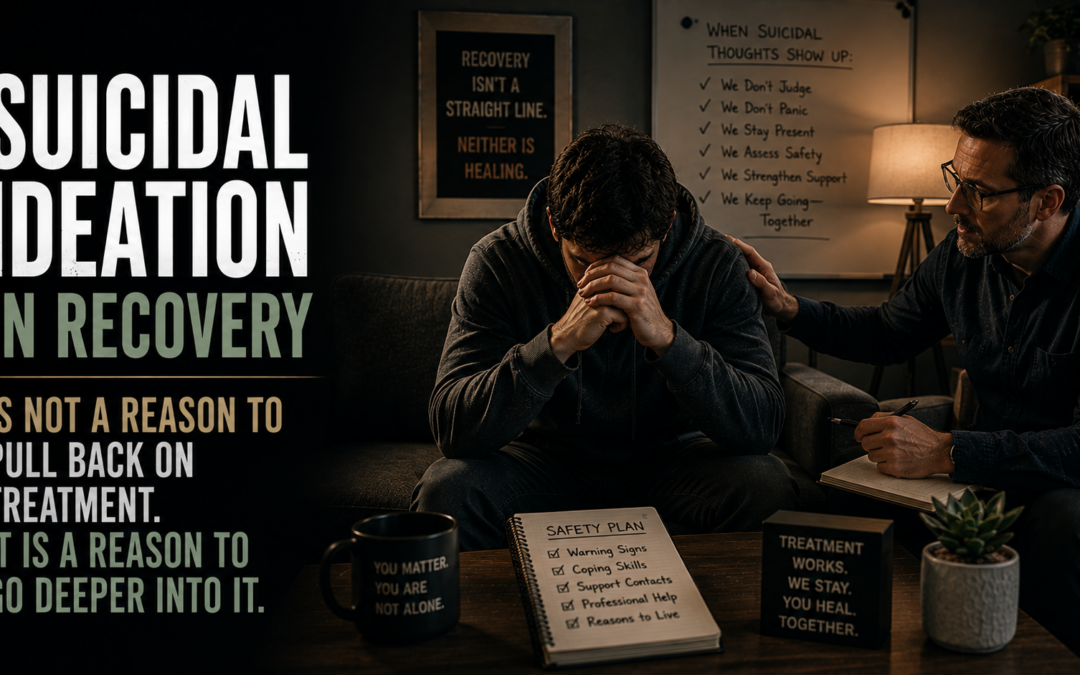
Suicidal ideation in recovery can feel terrifying, both for the person experiencing it and for the people who love them, but it is not a signal to step back from care. It is a signal to lean in with more support, not less.
If you or someone you love is having these thoughts while working toward healing, you may feel afraid that treatment has failed. You might worry that admitting it will lead to being pushed away. Those fears are understandable, and they deserve gentle honesty.
The truth is more hopeful than that fear suggests. These thoughts are information your care team needs, and they often mean the deeper work is just beginning.
What Does Suicidal Ideation in Recovery Actually Mean?
Suicidal ideation in recovery means having thoughts about ending your life while working through addiction or mental health treatment. These thoughts can range from fleeting and vague to persistent and detailed.
Recovery is not a straight line, and hard feelings can surface even as you make real progress. Having these thoughts does not erase the work you have done. It shows that something underneath still needs care.
Clinicians view suicidal ideation as a symptom that points to pain, not as a character flaw. A thought is not the same as an action, and having one does not mean something is wrong with who you are.
Why Do These Thoughts Appear During Recovery?
These thoughts often appear during recovery because healing brings buried emotions to the surface. As substances or old coping patterns fall away, feelings you once numbed can rise up all at once.
This surge can feel overwhelming, especially early on. Your care team expects this possibility and knows how to help you move through it safely.
Why Is Suicidal Ideation in Recovery a Reason to Go Deeper, Not Pull Back?
Suicidal ideation in recovery is a reason to go deeper because these thoughts reveal pain that still needs attention, and stepping back leaves that pain unaddressed. More support, not less, is what helps a person stay safe.
Pulling away from treatment during this moment can feel isolating. Isolation tends to make difficult thoughts louder, while connection does the opposite.
Think of it like a warning light on a dashboard. Ignoring the light does not fix the engine. Suicidal ideation in recovery works the same way, signaling a deeper need that treatment can meet.
What Happens When Someone Pulls Back Too Soon?
When someone pulls back too soon, the underlying pain often intensifies without support. The thoughts that felt manageable can grow heavier when a person faces them alone.
Recovery gains real strength from steady, ongoing care. Leaving treatment during a vulnerable stretch removes the very support most likely to help.
What Does “Going Deeper” Actually Look Like?
Going deeper looks like intensifying care through more frequent sessions, added support, and a coordinated plan. It responds to increased distress with increased presence.
Deeper care often includes:
- More frequent individual therapy sessions
- A safety plan you build together with your care team
- Support for any co-occurring mental health conditions
- Regular check-ins that keep you connected
- A step up to a higher level of care when needed
How Do Clinical Teams Respond to Suicidal Ideation in Recovery?
Clinical teams respond to suicidal ideation in recovery with structured, compassionate support rather than panic or judgment. They ask gentle questions to understand your experience, then adjust care to meet you where you are.
Most people expect a dramatic or frightening reaction. In reality, trained professionals treat this information as an important and normal part of care.
This calm response is intentional. It creates space for honesty and helps you feel safer sharing what is truly happening.
Will Sharing These Thoughts Take Away My Control?
Sharing these thoughts rarely takes away your control, and most care happens collaboratively with your input. Your team works with you, not around you.
Higher levels of intervention are reserved for moments of immediate danger. In everyday care, your preferences and goals stay central to the plan you build together.
How Does Honesty Help Your Care Team?
Honesty helps your care team respond with the right level of support at the right time. When they know what you are experiencing, they can act with precision.
Speaking these thoughts aloud is not a loss of control. It is an invitation for skilled people to walk beside you during the hardest part of the journey.
Why Do These Thoughts Sometimes Surface During Healing?
These thoughts sometimes surface during healing because recovery asks you to face emotions you may have avoided for a long time. That process is meaningful, and it can also feel raw.
As you build new coping skills, old pain can rise before it settles. This does not mean you are moving backward. It often means you are reaching the roots that need care.
How Do Co-occurring Conditions Factor In?
Co-occurring conditions factor in because depression, trauma, and anxiety often intensify suicidal thoughts when left untreated. Many people in recovery live with these conditions alongside a substance use disorder.
Treating them together tends to work better than treating them one at a time. When the underlying pain eases, these thoughts often begin to loosen their grip.
At Grand Falls Recovery, care teams understand how these experiences connect. Support can address substance use and mental health as parts of one whole picture.
What Levels of Care Can Support Suicidal Ideation in Recovery?
The levels of care that support suicidal ideation in recovery range from outpatient therapy to more structured programs, depending on your safety and needs. The right fit reflects how intense and frequent your thoughts are.
Many people move between levels as their needs change. You might step up to more support during a hard stretch, then step back down as stability grows.
Which Level of Care Might Fit Best?
The level of care that fits best depends on how much daily support and structure your situation requires. A thorough assessment helps guide that decision with you.
Common options include:
- Residential treatment offers structured, round-the-clock support in a stable setting.
- Partial hospitalization provides intensive daytime care with evenings spent at home.
- Intensive outpatient care delivers therapy several days a week while you keep your routine.
- Outpatient care offers ongoing support as you continue everyday life.
Choosing more support during a difficult moment is not a setback. It is a wise, protective step forward.
How Do You Know It Is Time to Reach Out for More Support?
The clearest sign it is time to reach out is when suicidal thoughts appear at all, whether mild or overwhelming. You do not need to wait until things feel unbearable to seek help.
Consider connecting with your care team if any of these feel familiar:
- You have had recurring thoughts about not wanting to be alive.
- These thoughts are becoming more frequent or more detailed over time.
- You feel tempted to step back from treatment when things get hard.
- Emotional pain feels heavier than your current coping tools can manage.
- You feel increasingly isolated or convinced you are a burden.
- A loved one has expressed concern about changes in your mood or words.
If several of these resonate, reaching out early is a strong, caring choice. Sharing these thoughts opens the door to the deeper support you deserve.
Common Questions Before Going Deeper Into Treatment
People often have honest questions before sharing these thoughts, and clear answers can ease the way forward. These are a few of the most common.
Does having these thoughts mean my recovery has failed? No. Suicidal thoughts during recovery often mean buried pain is surfacing, not that your progress has been undone. This is a signal to deepen care, not a sign of failure.
Will I be hospitalized just for talking about it? No. Most conversations about these thoughts lead to added outpatient or structured support, not hospitalization. Higher levels of care are reserved for moments of immediate danger, and your team works with you throughout.
Should I stop treatment until the thoughts pass? No. Stopping treatment usually removes the support most likely to help. Staying connected, and often going deeper, keeps you safer and moves you toward relief.
Can these thoughts really get better? Many people find that these thoughts ease with the right support in place. Treatment addresses the pain underneath, which often helps the thoughts lose their hold over time.
Moving Toward Deeper Support With Hope
Suicidal ideation in recovery is not a reason to pull back on treatment, it is a reason to lean in and go deeper with the support of people who understand. These thoughts are not the end of your story, and they do not undo the courage you have already shown.
You deserve care that leans in when things feel hardest, not care that steps away. Speaking these thoughts aloud is an act of strength, and it opens the door to genuine relief.
Recovery is possible with the right people beside you. You do not have to carry this alone, and help is closer than it may feel right now.
If you or someone you love is struggling, reach out to Grand Falls Recovery today. Our compassionate team is here to listen, support your safety, and guide you toward the deeper care that helps you move forward.