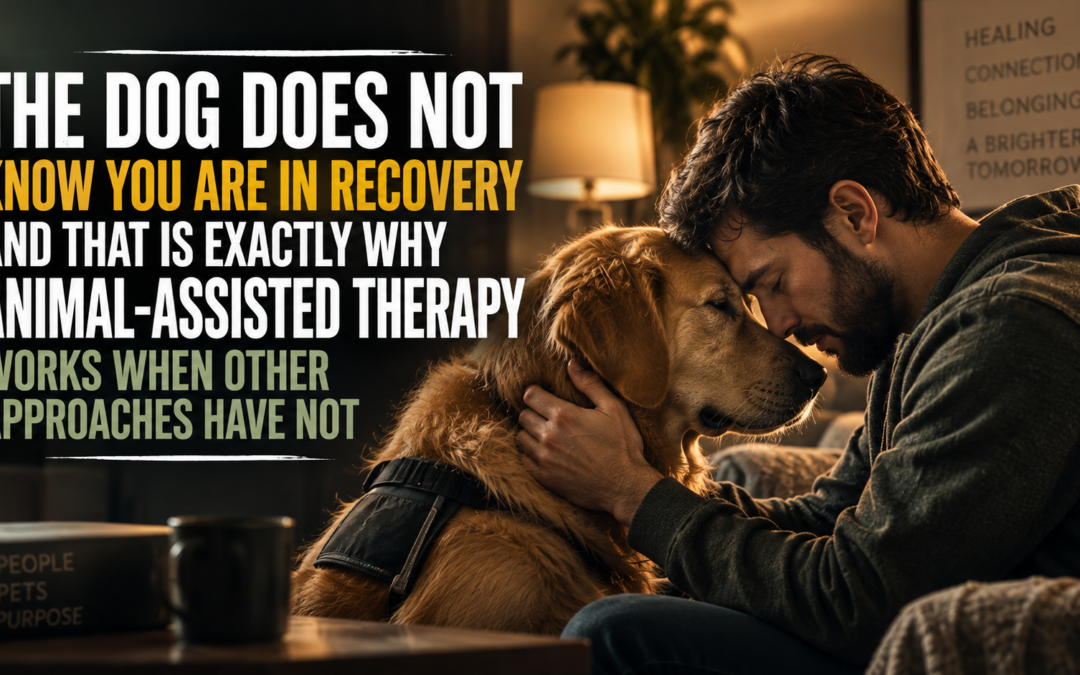
Animal-assisted therapy works for many people precisely because a dog does not know your history, your diagnosis, or your setbacks, and that simple truth can reach someone when other approaches have not. If you or someone you love has tried therapy after therapy and still felt guarded, you are not broken, and you are not out of options.
Sometimes the pressure to explain your pain is exactly what keeps healing at arm’s length. When talking feels impossible, progress can stall.
The hopeful truth is that connection does not always begin with words. Sometimes it begins with the steady presence of an animal who asks nothing of you except to be there. With the right support, that connection can open a door you thought was closed.
What Is Animal-Assisted Therapy and How Does It Work?
Animal-assisted therapy is a structured, professionally guided approach that uses interactions with trained animals to support emotional and psychological healing. A licensed therapist shapes each session around clear goals within a person’s overall treatment plan.
This is not simply spending time with a friendly pet. The connection between you and the animal becomes a tool the therapist uses to build trust, ease anxiety, and open the door to deeper work.
How Is This Different From Just Petting an Animal?
Animal-assisted therapy is different because it happens within a purposeful clinical framework, not by chance. A trained professional guides each interaction toward specific therapeutic goals.
Petting a dog at home can feel soothing, and that matters. In therapy, though, those moments are intentional, helping you practice skills like grounding, emotional regulation, and safe connection.
Which Animals Are Commonly Involved?
The animals commonly involved include dogs, horses, and other gentle, well-trained companions suited to a therapeutic setting. Each is carefully selected and prepared to work calmly with people in treatment.
The right animal depends on the setting, the goals, and the person receiving care. What stays consistent is the sense of safety these companions help create.
Why Does Animal-Assisted Therapy Work When Other Approaches Have Not?
Animal-assisted therapy works when other approaches have not because an animal responds to your presence, not your past. There is no fear of judgment, no pressure to perform, and no need to explain yourself.
For many people in recovery, that freedom is rare. Years of shame, disappointment, or difficult treatment experiences can build walls that talk therapy alone struggles to reach.
An animal meets you exactly as you are in this moment. That acceptance can quietly lower defenses that words never could.
Why Does the Dog Not Knowing Your History Matter So Much?
The dog not knowing your history matters because it removes the weight of your story from the room. A dog does not see a diagnosis, a relapse, or a mistake. It simply sees you.
This is deeply freeing for someone carrying shame. When you feel judged, you tend to guard yourself. When you feel accepted, you begin to soften and open up.
How Do Animals Bypass the Defenses That Block Other Therapies?
Animals bypass those defenses by offering connection that asks nothing in return. You do not have to find the right words or relive a painful memory to be met with warmth.
Trauma and addiction can keep a person braced for judgment or threat. The gentle presence of an animal can quiet that alertness, creating an opening for trust to grow before a single hard conversation begins.
How Does Animal-Assisted Therapy Create Safety Without Words?
Animal-assisted therapy creates safety by offering acceptance that requires no explanation, no performance, and no fear of being judged. This kind of presence can calm the nervous system in ways talking sometimes cannot.
For people in recovery, words often carry heavy weight. Explaining trauma can reopen it. An animal removes that pressure and meets you fully in the present.
Why Does Presence Matter More Than Conversation?
Presence matters more than conversation because the nervous system often calms through connection before it responds to talking. A steady, nonjudgmental companion helps a person feel safe enough to lower their guard.
When a dog leans into you or rests quietly at your side, your body can begin to relax. That felt sense of safety often reaches deeper than any sentence.
How Does This Help People Who Feel Guarded or Ashamed?
This helps guarded or ashamed people by giving them a safe place to feel again without fear of rejection. An animal offers no opinion about your past and no expectation about your future.
That simple acceptance can melt years of self-protection. Many people find they can finally soften around an animal, which then makes the deeper work of recovery feel possible.
What Are the Benefits of Animal-Assisted Therapy in Recovery?
The benefits of animal-assisted therapy in recovery include reduced anxiety, greater emotional openness, and a stronger sense of connection. These gains support the deeper healing that addiction and mental health treatment require.
This approach reaches parts of a person that talk therapy sometimes cannot access right away. It builds a bridge toward trust, comfort, and steadier emotions.
What Emotional Benefits Can People Experience?
The emotional benefits people experience often include more calm, less anxiety, and a renewed sense of being cared for. Time with an animal can ease the loneliness and fear that recovery can stir up.
Common emotional benefits include:
- A calmer, more grounded feeling during difficult moments
- Reduced anxiety and emotional overwhelm
- A gentle way to reconnect with feelings after numbing them
- Comfort during the isolation that recovery sometimes brings
- A renewed sense of being valued and accepted
How Does It Support the Rest of Treatment?
Animal-assisted therapy supports the rest of treatment by helping people feel safe enough to engage in other forms of care. When anxiety eases, deeper therapeutic work becomes more possible.
At Grand Falls® Center for Recovery, this approach can complement individual therapy, group sessions, and other evidence-based care. It works alongside a full treatment plan rather than replacing it.
Who Can Benefit From Animal-Assisted Therapy?
People who can benefit from animal-assisted therapy include those working through addiction, trauma, anxiety, depression, or the fear of opening up. You do not need a specific diagnosis to find comfort in this kind of care.
This approach can be especially helpful for people who feel guarded or overwhelmed by traditional talk therapy. It offers a gentler entry point into healing.
What Signs Suggest It Might Help You?
Signs that this approach might help include feeling stuck, guarded, or unable to express what you are carrying. These experiences are common, and they do not mean you are failing at recovery.
You may find this approach supportive if:
- Talking about your experiences feels too painful or overwhelming right now
- Anxiety makes it hard to settle into therapy sessions
- Shame has kept you from opening up in past treatment
- Traditional therapy alone has not felt like enough
- You respond warmly to the comfort of animals
Is It a Replacement for Other Treatment?
No, animal-assisted therapy is not a replacement for other forms of treatment. It works best as one part of a comprehensive, whole-person plan.
Think of it as a supportive companion to therapy, medical care, and community connection. Together, these pieces create a steadier foundation for lasting recovery.
How Does Animal-Assisted Therapy Fit Into Whole-Person Care?
Animal-assisted therapy fits into whole-person care as a complementary approach that strengthens other forms of treatment. It helps build trust and calm, which supports progress across the entire recovery process.
Substance use and mental health challenges rarely stand alone. They often connect to trauma, anxiety, and years of holding pain in silence.
At Grand Falls Recovery, care can address these layers together through coordinated mental health treatment. When a person feels safe, they are often more able to engage in the deeper work ahead.
What Levels of Care Might Include It?
The levels of care that might include animal-assisted therapy range from residential treatment to outpatient support, depending on the program and your needs. Many people encounter this approach as part of a broader continuum of care.
Common levels of care include:
- Residential inpatient treatment offers structured, round-the-clock support in a stable setting.
- Partial hospitalization provides intensive daytime care with evenings spent at home.
- Intensive outpatient care delivers therapy several days a week while you keep your routine.
- Aftercare and alumni support help you stay connected as you return to everyday life.
A thorough assessment helps match each person with the right level of care.
Why Does Whole-Person Care Matter Here?
Whole-person care matters because healing involves the mind, the body, and the emotions all at once. Treating only the behavior can leave deeper needs unaddressed.
Approaches like animal-assisted therapy support the emotional side of recovery. This coordinated care helps healing feel more complete and more sustainable.
How Do You Know if Animal-Assisted Therapy Is Right for You?
The clearest sign that this approach may fit is when you long for connection but find talking difficult. You do not need to have everything figured out before reaching out.
Consider these prompts as you think about your next step:
- If explaining your pain feels overwhelming, a gentle, wordless form of support may help you begin.
- If anxiety makes traditional therapy hard to settle into, this approach can ease that tension first.
- If shame has kept you guarded, the acceptance of an animal may help you soften.
- If past treatment felt too clinical, a warmer approach may help you stay engaged.
- If you feel calmer around animals, that instinct is worth exploring in care.
Reaching out for that first conversation is often the hardest and most meaningful step. A caring team can help you understand your options at your own pace.
Common Questions Before Starting Treatment
People often have honest questions before beginning this kind of care, and clear answers can ease the way forward. These are a few of the most common.
Is animal-assisted therapy a real form of treatment? Yes. It is a structured, professionally guided approach used within many treatment programs. A trained therapist directs each session toward specific goals as part of your overall care.
Do I need to love animals for it to work? No, though a natural comfort with animals can help. A therapist adjusts the experience to fit your comfort level and needs, meeting you where you are.
Will this replace my regular therapy? No. Animal-assisted therapy complements other forms of care rather than replacing them. It works alongside individual therapy, group sessions, and medical support within a full treatment plan.
What if I feel nervous about the animal? That is completely understandable, and your comfort comes first. A trained professional introduces the animal slowly and never pushes you beyond what feels safe.
Moving Toward Healing With Hope
Animal-assisted therapy works when other approaches have not because a dog does not know you are in recovery, and that unconditional acceptance can reach places words cannot. When shame and guardedness melt around a gentle presence, deeper healing finally has room to begin.
Your pain is real, and finding it hard to speak about is not a failure. With compassionate, whole-person care, you can feel safe again and move toward steadier days, one quiet moment at a time.
You do not have to face this alone, and you do not have to have every answer before you start. Reaching out is a brave and hopeful first step.
If you or someone you love is ready to explore this kind of care, reach out to Grand Falls Center for Recovery today. Our compassionate team is here to listen, answer your questions, and guide you toward the support that fits your needs.