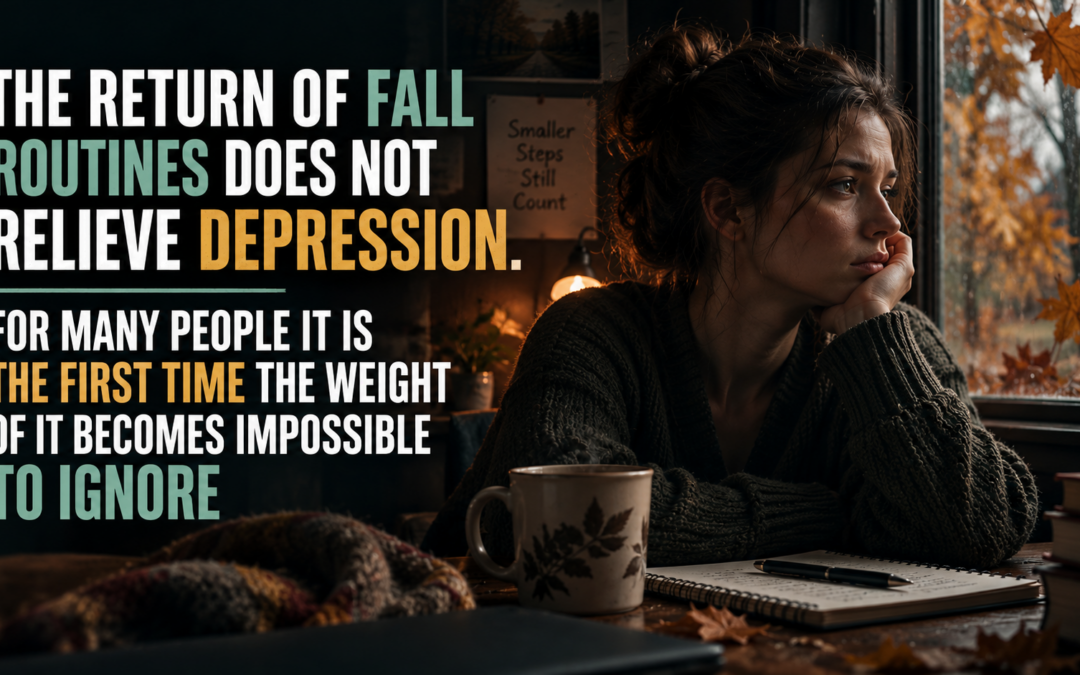
Fall routines depression can feel confusing, because the season everyone calls a fresh start often makes the heaviness harder to carry, not easier. If the return of school schedules, work deadlines, and shorter days has left you feeling worse instead of renewed, you are not imagining it.
Many people expect autumn to bring a sense of order and motivation. When that lift does not come, the gap between how you feel and how you think you should feel can sting.
The reassuring truth is that this experience is common, and it is not a personal failing. Sometimes the return of structure is simply the moment the weight you have been carrying becomes impossible to ignore. With the right support, steadier days are possible.
What Does Fall Routines Depression Actually Mean?
Fall routines depression describes the way returning schedules and seasonal shifts can bring underlying depression into sharper focus. It is not that routines cause the depression. They often reveal what was already there.
During slower summer months, low mood can hide behind flexible days and lighter demands. When fall returns with structure and pressure, the contrast can make the struggle far more noticeable.
Why Does This Happen in the Fall?
This happens in the fall because several changes land at once, and together they can strain your mood. Shorter days, less sunlight, and a sudden rise in responsibilities all play a part.
For some people, reduced sunlight affects energy and mood directly. For others, the return of demands simply removes the distractions that once masked how heavy things felt.
Is This the Same as Seasonal Depression?
Not exactly, though the two can overlap. Seasonal patterns of depression are tied closely to changes in light and season, while fall routines depression can also stem from the pressure and pace that autumn brings back.
What matters most is not the label. If your mood dips as fall settles in, your experience is real and deserves attention.
Why Do Fall Routines Make Depression Harder to Ignore?
Fall routines make depression harder to ignore because structure exposes the gap between what you need to do and what you feel able to do. When each day asks more of you, low energy and low mood become impossible to overlook.
In summer, you might push a hard morning aside. In fall, that same morning collides with a school run, a meeting, or a deadline, and the strain shows.
How Does Lost Flexibility Reveal the Weight?
Lost flexibility reveals the weight because rigid schedules leave less room to hide fatigue or sadness. When you must show up at set times, the effort it takes becomes obvious to you.
You may notice how much energy simple tasks now demand. That awareness can feel discouraging, yet it is often the first honest look at what has been building underneath.
Why Does “Everyone Else Seems Fine” Hurt So Much?
The sense that everyone else seems fine hurts because it deepens isolation at an already difficult time. Watching others embrace fall with energy can make your own struggle feel more lonely.
Comparison rarely tells the full story. Many people quietly struggle behind their busy schedules, even when they appear to be thriving.
What Are the Signs That Fall Routines Depression Needs Attention?
The clearest sign that fall routines depression needs attention is when low mood interferes with your daily life, even in small ways. You do not need to reach a breaking point to deserve support.
Depression affects both the mind and the body. Recognizing the full range of signs can help you understand what you are experiencing.
What Emotional and Physical Signs Should You Notice?
Emotional and physical signs of depression often show up together and tend to linger for weeks at a time. They stick around regardless of good news or a lighter day.
Consider reaching out if you notice:
- Ongoing sadness, numbness, or a loss of interest in things you once enjoyed
- Fatigue that does not improve with rest
- Trouble concentrating or keeping up with daily tasks
- Changes in sleep or appetite you cannot explain
- Irritability or feeling easily overwhelmed by your routine
- Using substances to cope with heavy emotions
When Is It More Than a Seasonal Slump?
It is more than a seasonal slump when the heaviness lasts, deepens, or begins to affect your work, relationships, or sense of hope. A brief dip in energy is one thing. A weight that will not lift is another.
If several of these signs feel familiar and steady, a conversation with a caring team can bring clarity and relief.
How Does Fall Routines Depression Connect to Substance Use?
Fall routines depression often connects to substance use because people may turn to substances to quiet emotional pain or manage rising pressure. When the weight grows heavier, the search for relief is deeply human.
A drink to unwind after a demanding day, or something to help you sleep, can slowly become a pattern. Treating only one part often leaves the cycle in place.
Why Do Depression and Substance Use Overlap?
Depression and substance use overlap because substances can offer fast, temporary relief that tends to deepen low mood over time. What eases the pressure for a moment can quietly make it worse.
This is why integrated care matters so much. Addressing depression and any substance use together helps break the cycle instead of treating a single piece of it.
At Grand Falls® Center for Recovery, care can address mental health and substance use as parts of one whole picture. This coordinated approach helps recovery feel steadier and more complete.
What Levels of Care Help With Fall Routines Depression?
The levels of care that help range from immersive residential support to flexible outpatient options, depending on your needs. This range means you can find help that fits your life, not a one-size-fits-all program.
Many people move between levels over time. You might begin with more structure and step down to lighter support as you grow steadier.
Which Level of Care Might Fit Best?
The level of care that fits best depends on how much daily support and structure your situation requires. A thorough assessment helps guide that decision with you.
Common options include:
- Residential inpatient treatment offers structured, round-the-clock support in a stable setting.
- Partial hospitalization provides intensive daytime care with evenings spent at home.
- Intensive outpatient care delivers therapy several days a week while you keep your routine.
- Outpatient and aftercare support help you stay steady as you continue everyday life.
You can learn more about the depression treatment available and how it can fit your schedule.
What Might a Treatment Plan Include?
A treatment plan usually blends therapy, skill-building, and support for daily balance. Each piece works together to help you feel more grounded.
Common elements include individual therapy that explores the roots of low mood, cognitive behavioral therapy to reshape unhelpful thought patterns, and support for sleep and routine. Care for any co-occurring substance use can be woven in when needed.
How Do You Know if It Is Time to Reach Out?
The clearest sign it is time to reach out is when the return of fall routines has made low mood harder to manage on your own. You do not need to wait until things feel unbearable.
Consider these prompts as you think about your next step:
- If the heaviness has lasted weeks but you are still managing daily tasks, outpatient therapy may be a supportive starting point.
- If your routine feels overwhelming and standard therapy has not felt like enough, an intensive outpatient program can add more structure.
- If daily functioning has become very difficult, a partial hospitalization program offers steadier daytime support.
- If you need a full reset in a safe, structured setting, residential care can surround you with round-the-clock support.
- If substance use has crept in as a way to cope, integrated care can address both at once.
- If a loved one has expressed concern, that observation is worth exploring together.
Reaching out for that first conversation is often the hardest and most meaningful step. A caring team can help you sort through your options at your own pace.
Common Questions About Fall Routines Depression
People often have honest questions before seeking care, and clear answers can ease the way forward. These are a few of the most common.
Why do I feel worse now that my schedule is back? Returning routines can expose depression that was easier to overlook during slower months. The added structure and pressure often reveal how much you have been carrying, which is a signal to seek support rather than a sign of weakness.
Will this pass on its own once I adjust? It might ease, but lingering depression often benefits from support rather than time alone. If the heaviness lasts or deepens, care can address the causes keeping it in place.
Do I need treatment if I am still functioning? You may still benefit from support even while meeting your responsibilities. Functioning on the outside does not mean the weight underneath has lifted, and care can help you feel steadier.
What if depression and substance use feel tangled together? That is common, and integrated care is designed for it. Your team looks at how the two connect, then builds a plan that treats the full picture rather than one piece of it.
Moving Toward Steadier Days With Hope
Fall routines depression can feel especially confusing when the world expects renewal and you feel the opposite, but noticing the weight is a meaningful and hopeful step. The return of structure did not create your struggle. It simply brought into focus something that deserves care.
Your experience is real, and it is not a sign of weakness. With compassionate, personalized support, the heaviness can ease and brighter days can return.
You do not have to carry this alone or wait until things feel unbearable. Help is available, and taking that first step can open the door to real relief.
If you or someone you love is struggling as fall settles in, reach out to Grand Falls Center for Recovery today. Our caring team is here to listen and guide you toward the support that fits your needs, right where you are.