When a family organizes around addiction, every routine, conversation and decision slowly bends to make room for one person’s substance use. If you love someone who is struggling, you may not remember when the shift began. Maybe it started with covering for a missed workday or keeping the peace at dinner.
You may feel exhausted, confused or quietly angry. You may also feel guilty for having any of those feelings. Those reactions make sense, and they do not mean you have failed your loved one.
Families adapt because they care. When a family organizes around addiction for months or years, though, those adaptations can start to hold everyone in place. The hopeful truth is that the love that helped your family survive can also help it heal, especially when everyone receives support, not just the person in treatment.
What Does It Mean When a Family Organizes Around Addiction?
When a family organizes around addiction, its roles, rules and daily habits reshape themselves to manage one person’s substance use. Family members begin reacting to the addiction instead of living their own lives.
This rarely happens on purpose. It happens one small adjustment at a time, often out of fear, love or a wish to protect everyone.
Why Do Families Adapt This Way?
Families adapt this way because they are trying to keep everyone safe and keep life moving. Each adjustment feels reasonable in the moment.
A parent calls in sick for an adult child. A spouse takes over every bill. A sibling stays quiet to avoid a fight. Over time, these choices form a system that quietly holds the addiction in place.
What Is a Family System?
A family system is the idea that every member of a family affects every other member, much like the pieces of a hanging mobile. When one piece moves, the whole structure shifts.
This is why addiction is never only one person’s struggle. It touches everyone, and everyone has a part to play in healing.
What Roles Do People Take On When a Family Organizes Around Addiction?
When a family organizes around addiction, members often slip into unspoken roles that help the household cope. These roles can feel protective at first, yet they often keep everyone stuck.
Every family organizes around addiction a little differently, but some patterns appear again and again:
- The caretaker handles crises, covers responsibilities and softens consequences.
- The peacekeeper works hard to avoid conflict and keep emotions calm.
- The achiever tries to make the family look okay through grades, work or success.
- The withdrawn member pulls away to escape the tension at home.
- The one who acts out draws attention away from the substance use, sometimes through their own struggles.
No one chooses these roles to cause harm. They are survival strategies, and recognizing them is the first step toward something healthier.
How Can You Tell Your Family Has Reorganized Around Substance Use?
You can tell your family has reorganized around substance use when the addiction quietly sets the schedule, the mood and the rules of the house. Common signs your family organizes around addiction include:
- Plans change based on whether your loved one is using.
- Family members keep secrets from friends, relatives or coworkers.
- You feel responsible for preventing the next crisis.
- Your own health, sleep or work has started to suffer.
- Honest conversations feel unsafe or impossible.
Why Does Recovery Require the Whole Family System to Reorganize?
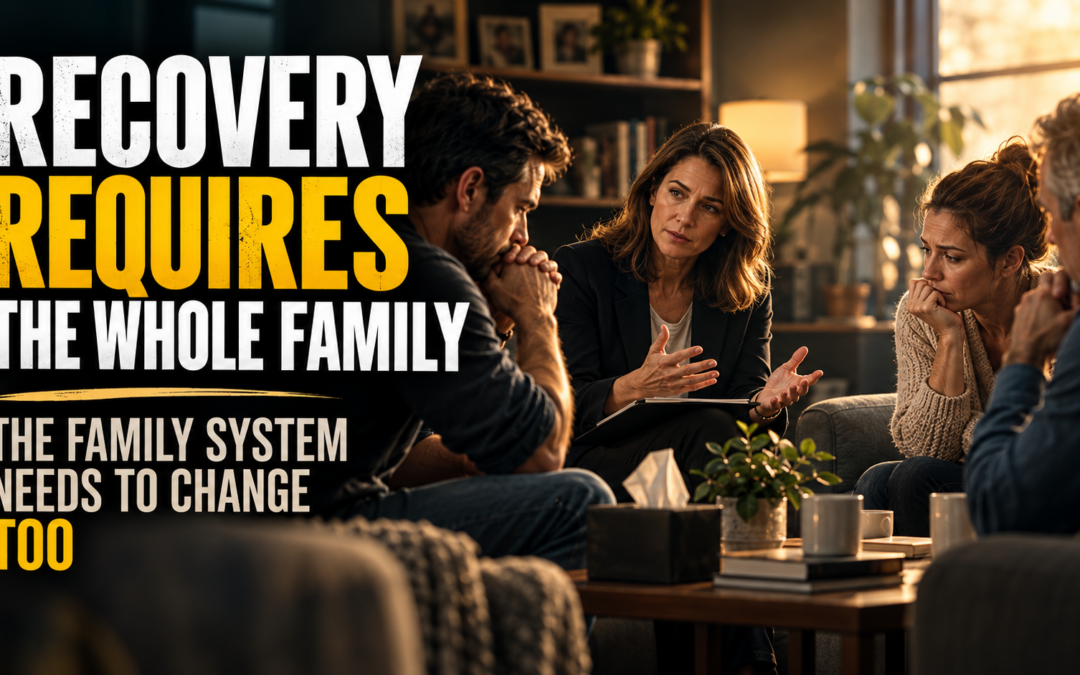
Recovery requires the whole family system to reorganize because a household built around addiction can unintentionally pull a person back toward old patterns. When one person changes and the system does not, tension often rises.
Imagine your loved one returns home from treatment with new coping tools and new boundaries. If the household still runs as if substance use is the center of everything, those new skills have little room to grow.
This is not about blame. A family organizes around addiction out of love and fear, and it can reorganize around recovery with that same care.
What Happens When Only One Person Changes?
When only one person changes, the rest of the family may feel off balance and drift back toward familiar roles. Even healthy change can feel uncomfortable at first.
A caretaker may not know what to do without a crisis to manage. A peacekeeper may struggle when honest talks replace silence. Support helps everyone adjust together.
Can Old Family Patterns Affect Relapse Risk?
Yes, old family patterns can make early recovery harder to sustain, especially when stress, secrecy or enabling return. Relapse is never one person’s fault, yet the home environment matters.
Learning new ways to communicate and set boundaries gives your loved one a steadier place to come home to.
How Does Family Therapy Help a Family Reorganize Around Recovery?
Family therapy helps a family reorganize around recovery by giving everyone a safe, guided space to understand addiction, repair trust and practice healthier patterns. A trained therapist helps each person see their role without shame.
At Grand Falls Center for Recovery, family therapy focuses on healing relationships and addressing how addiction affects every member of the household. When a family organizes around addiction, this guided work helps untangle patterns that no one could see clearly from the inside.
What Does Family Therapy Usually Include?
Family therapy usually includes education, honest conversation and practical skill-building. Each piece helps the family move from crisis mode toward stability.
- Learning how addiction affects the brain, behavior and relationships
- Identifying the roles each person has taken on
- Practicing clear, respectful communication
- Setting healthy boundaries that support recovery
- Rebuilding trust at a pace that feels safe
Why Do Co-occurring Mental Health Conditions Matter for Families?
Co-occurring mental health conditions matter because anxiety, depression or trauma often sit beneath substance use and shape family dynamics too. Treating only the addiction can leave important needs unaddressed.
Grand Falls Recovery offers dual-diagnosis treatment that addresses mental health and substance use together. Understanding these underlying conditions helps family members respond with more patience and compassion.
What Levels of Care Support Families Through Recovery?
The levels of care that support families range from medical detox to long-term aftercare, and each stage offers chances for family involvement. Care can shift as your loved one grows steadier.
- Medical detox helps your loved one stop using safely with 24/7 on-site medical support.
- Residential inpatient treatment provides structured care in a calm setting away from daily stress.
- Partial hospitalization offers intensive daytime care with evenings spent at home.
- Intensive outpatient care provides therapy several days a week while your loved one rebuilds routines.
- Aftercare and alumni support help your family stay connected to recovery over time.
Because a family organizes around addiction gradually, reorganizing also takes time. Residential care can give the household a breathing space, so family members can begin their own healing while their loved one focuses on treatment.
How Do You Know It Is Time for Your Family to Get Support?
The clearest sign it is time to get support is when your family’s daily life feels shaped by someone else’s substance use. You do not need to wait for a crisis.
- If you find yourself constantly managing your loved one’s choices, family therapy can help you step out of that role.
- If secrets and silence have replaced honest conversation, a guided setting can make talking feel safer.
- If your own health, sleep or work has suffered, you deserve care and attention too.
- If your loved one is starting treatment, involving the family early can strengthen the foundation for recovery.
- If you sense your family organizes around addiction more than it organizes around its own needs, a conversation with a caring team can bring clarity.
- If past treatment did not hold, looking at the whole family system may reveal what was missed.
What Families Often Ask
Families often have honest questions before getting involved in treatment, and clear answers can ease the way forward.
Is it our fault that our family organizes around addiction? No. A family organizes around addiction because people are trying to cope with a painful and confusing situation. Recognizing the pattern is a sign of strength, not an admission of blame.
Does our whole family need to take part for our loved one to recover? Family participation is not required, yet it often helps. When the household learns new patterns alongside the person in treatment, recovery has more room to take hold at home.
What if our loved one is not ready for treatment? You can still seek support for yourself and other family members. Learning about addiction and setting healthy boundaries can help even before your loved one is ready to begin.
How long does it take for a family to reorganize? The timeline is different for every family. Change usually happens gradually, and ongoing support through therapy and aftercare helps new habits become part of daily life.
Moving Toward Healing Together
When a family organizes around addiction, everyone carries part of the weight, and everyone deserves a chance to set it down. Recovery is not only about one person stopping substance use. It is about the whole household learning new ways to communicate, rest and trust one another again.
Healing takes time, and it rarely moves in a straight line. With compassionate guidance, families can shift from surviving the next crisis to building a steadier home together.
You do not have to figure this out alone. If your family is ready to take the next step, reach out to Grand Falls Center for Recovery today. Our caring team is here to listen, answer your questions and help your family find support that fits your needs.