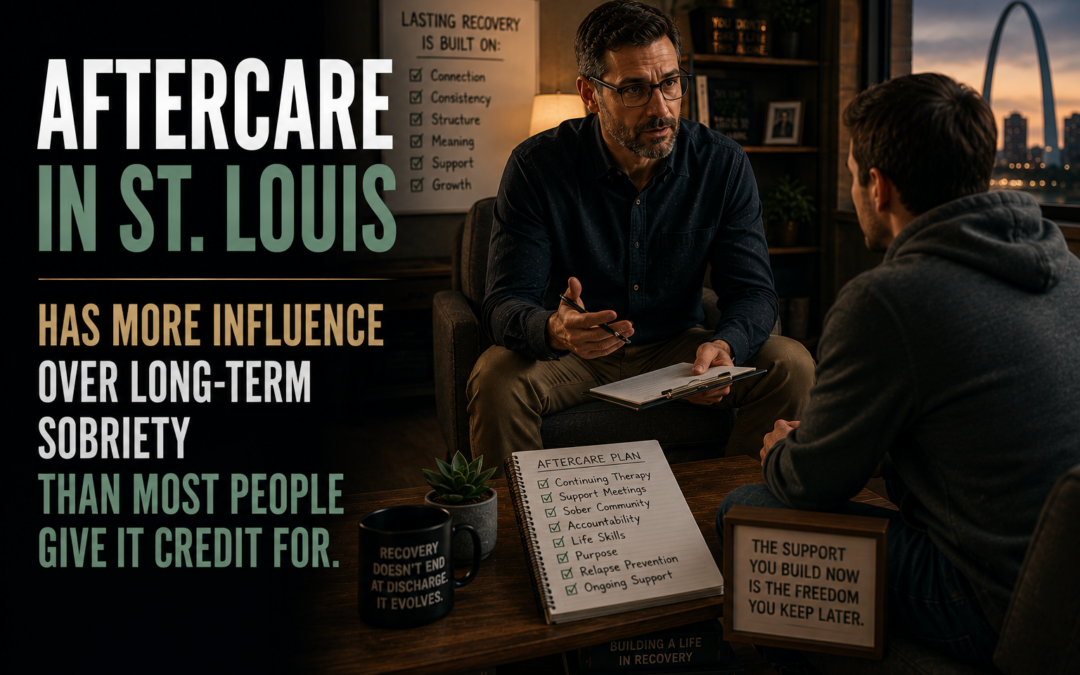
Aftercare in St. Louis plays a far bigger role in long-term sobriety than many people realize, and understanding why can change how you approach recovery. If you or someone you love has finished a treatment program, you may feel a mix of pride, relief, and quiet uncertainty about what comes next.
That uncertainty is completely normal. Finishing treatment is a major milestone, yet the days that follow often bring the real test. Old routines, familiar people, and everyday stress do not simply disappear.
The reassuring truth is that you do not have to face those days alone. Ongoing support exists to help you carry your progress forward. With the right plan in place, recovery becomes something you build on steadily, one day at a time.
What Is Aftercare in St. Louis?
Aftercare in St. Louis is the ongoing support that continues after a person completes a treatment program, designed to help them stay well over time. It is the bridge between structured treatment and everyday life.
Aftercare is not a single service. It is a personalized plan that may include therapy, support groups, and other resources tailored to your needs. The goal is to keep you connected and supported as you return to daily routines.
Why Does Aftercare Follow Treatment?
Aftercare follows treatment because recovery does not end when a program does. The skills you learn in treatment need continued practice and support to take root in real life.
Think of treatment as building a strong foundation. Aftercare is the ongoing work that keeps that foundation steady once you step back into your daily world.
What Might an Aftercare Plan Include?
An aftercare plan often blends several supports that work together over time. Each piece helps you stay grounded during a vulnerable transition.
Common elements include:
- Ongoing individual therapy that continues the work you started
- Support groups that offer connection and accountability
- Relapse prevention planning for real-world situations
- Support for any co-occurring mental health needs
- Help rebuilding routine, purpose, and healthy relationships
Why Does Aftercare in St. Louis Influence Long-Term Sobriety So Strongly?
Aftercare in St. Louis strongly influences long-term sobriety because the period after treatment is often when recovery feels most fragile. Structure fades, daily stress returns, and old triggers resurface all at once.
Treatment happens in a supportive, focused setting. Returning home means facing familiar pressures without that constant structure around you. Aftercare helps fill that gap.
Ongoing support keeps you connected to people who understand your journey. That connection often makes the difference between a hard moment and a genuine setback.
What Makes the Weeks After Treatment So Vulnerable?
The weeks after treatment feel vulnerable because new habits are still forming while old patterns remain familiar. Your recovery skills are real, but they need time and practice to grow strong.
During this stretch, stress, loneliness, or a single trigger can feel overwhelming. Aftercare surrounds you with support exactly when you need it most.
How Does Ongoing Support Protect Progress?
Ongoing support protects progress by keeping recovery active in your daily life instead of leaving it behind in a treatment center. Regular check-ins and connection help you stay focused.
At Grand Falls® Recovery, aftercare helps you apply what you learned to real situations. That steady reinforcement helps healthier habits take hold for the long term.
What Does Aftercare in St. Louis Actually Look Like Day to Day?
Aftercare in St. Louis looks like a steady rhythm of support woven into your everyday life. It is not a return to full-time treatment. Instead, it is a set of tools and connections you lean on as you rebuild.
The exact shape depends on your needs and goals. Your plan grows and adjusts with you over time, offering more support during hard stretches and lighter support as you stabilize.
What Types of Support Are Common?
Common types of aftercare support blend professional guidance with peer connection. Each type meets a different need in your recovery.
Helpful supports often include:
- Continued therapy that keeps you processing challenges as they arise
- Peer support groups where you connect with others in recovery
- Alumni programs that maintain community after treatment ends
- Sober living environments that offer structure and stability
- Ongoing medical or medication support when guided by a clinician
How Does Connection Support Recovery?
Connection supports recovery by reminding you that you are not walking this path alone. Isolation often fuels the pull toward old patterns, while community does the opposite.
Sharing your struggles and wins with people who understand can ease shame and build encouragement. That sense of belonging becomes one of the most protective parts of aftercare.
How Does Aftercare Address Triggers and Everyday Stress?
Aftercare addresses triggers and everyday stress by helping you prepare for them before they arrive. Rather than reacting in the moment, you build a plan and practice healthier responses.
Triggers are a normal part of recovery, not a sign of weakness. What matters most is how you respond to them, and aftercare helps you respond with steadier tools.
What Is Relapse Prevention Planning?
Relapse prevention planning is the process of identifying your personal triggers and building strategies to manage them. It turns vague worry into a clear, practical plan.
You and your care team map out high-risk situations, warning signs, and coping steps. Having that plan ready helps you feel more confident when challenges come.
How Do You Handle a Difficult Moment?
You handle a difficult moment by leaning on the tools and people your aftercare plan provides. A single hard day does not have to become a larger setback.
Reaching out to a therapist, calling a peer, or using a coping skill can help you move through the moment. Aftercare makes sure those resources are within reach when you need them.
How Does Aftercare Fit Into the Full Continuum of Care?
Aftercare fits into the full continuum of care as the final, ongoing stage that follows more intensive treatment. It connects the structured work of earlier care to sustainable daily living.
Recovery often moves through several levels, each offering a different amount of support. Aftercare keeps you connected once the more intensive stages are complete.
What Levels of Care Come Before Aftercare?
The levels of care before aftercare range from immersive residential support to flexible outpatient options. Many people move through several stages as they build stability.
Common levels include:
- Residential treatment offers structured, round-the-clock support in a live-in setting.
- Partial hospitalization provides intensive daytime care with evenings spent at home.
- Intensive outpatient care delivers therapy several days a week while you keep your routine.
- Outpatient care offers ongoing support as you return to everyday life.
Aftercare continues the journey once these stages are complete, keeping support in place for the long haul.
Why Does a Smooth Transition Matter?
A smooth transition matters because sudden drops in support can leave recovery exposed. Moving gradually helps protect the progress you have worked hard to build.
At Grand Falls Recovery, aftercare is planned as part of your overall care, not an afterthought. That coordination helps each step feel manageable rather than overwhelming.
How Do You Know if Aftercare Is the Right Next Step?
The clearest sign that aftercare is right is when you have completed a treatment program and want to protect your progress. You do not have to wait for a struggle to seek continued support.
Consider these prompts as you think about your next step:
- If you have finished treatment and feel uncertain about daily life, aftercare can offer steady support.
- If returning home means facing familiar triggers, an aftercare plan can help you prepare.
- If you feel isolated or disconnected from a supportive community, peer groups can ease that.
- If you want accountability to keep your recovery front and center, ongoing check-ins can help.
- If you have co-occurring mental health needs, continued care can address them alongside recovery.
- If you feel unsure where to begin, a simple conversation can bring clarity without pressure.
Reaching out for that first conversation is often the most meaningful step. A caring team can help you build a plan that fits your life and goals.
Common Questions Before Starting Continued Support
People often have honest questions before beginning this phase of recovery, and clear answers can ease the way forward. These are a few of the most common.
Do I really need ongoing support if treatment went well? Yes, for many people it makes a real difference. Treatment builds a strong foundation, and continued support helps you maintain it once daily stress and old triggers return. Staying connected to care protects the progress you have made.
How long does this phase last? Recovery support varies from person to person, and it can last for months or longer depending on your needs. Your plan adjusts over time, offering more support during hard stretches and lighter support as you stabilize.
What if I have a setback during this phase? A setback is not a failure, and your support plan is built to help you through it. Your plan gives you tools and people to lean on, so a difficult moment can be met with support rather than shame.
Can continued support help with mental health, not just substance use? Yes. Your plan can include continued support for co-occurring conditions like anxiety or depression. Addressing these alongside recovery helps you feel steadier as a whole person.
Moving Toward Lasting Recovery With Hope
Aftercare in St. Louis has more influence over long-term sobriety than most people give it credit for, and recognizing that is a powerful, hopeful step. The support you receive after treatment helps turn early progress into lasting change.
You have already shown real courage by seeking help. Aftercare simply helps you carry that strength forward, surrounding you with tools and connection for the road ahead.
Recovery is a journey, not a single moment, and you do not have to walk it alone. With steady support in place, brighter and more stable days are genuinely within reach.
If you or someone you love is ready to build a plan that supports lasting recovery, reach out to Grand Falls Recovery today. Our caring team is here to listen, answer your questions, and help you take the next step with confidence.