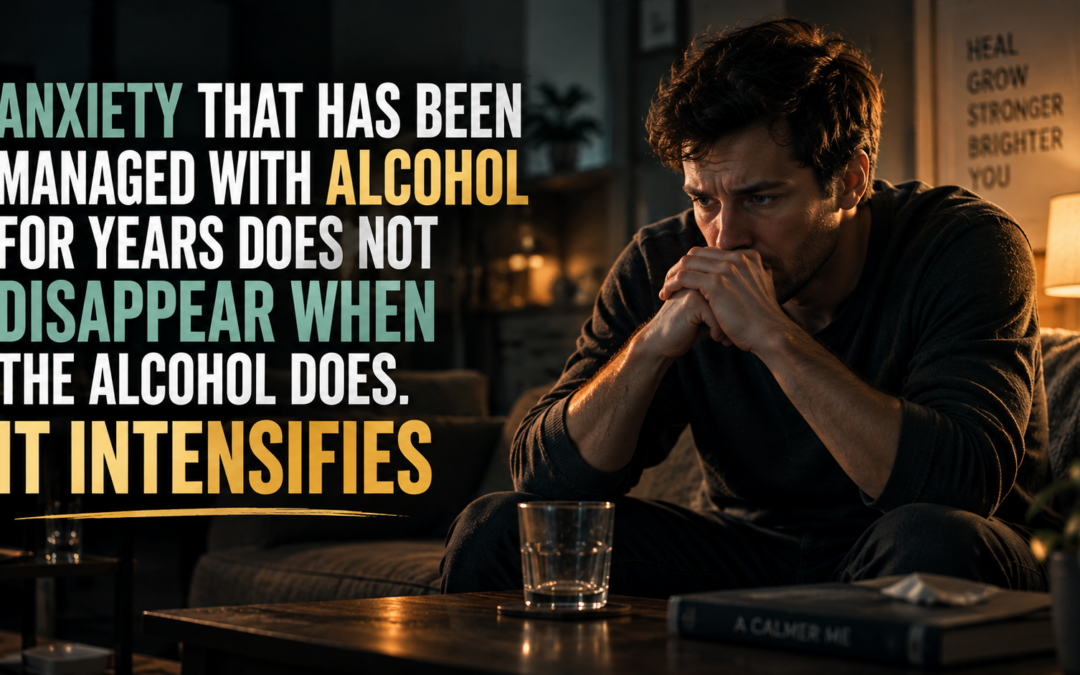
Anxiety managed with alcohol for years does not simply fade when the drinking stops, and for many people it grows louder before it gets better. If you or someone you love has used alcohol to quiet worry, racing thoughts, or restless nights, this experience can feel confusing and even frightening.
You are not imagining it, and you did not do anything wrong. When alcohol has been a coping tool for a long time, removing it can leave the anxiety feeling sharper than ever.
That surge is not a sign of failure. It reflects how the body and mind adapt to alcohol over time. The reassuring truth is that this pattern is common, and it responds to the right kind of care. When treatment addresses both the anxiety and the alcohol together, steadier days become possible.
Why Does Anxiety Managed With Alcohol Get Worse When the Alcohol Stops?
Anxiety managed with alcohol often gets worse when the drinking stops because the body has adapted to alcohol’s calming effect over time. When that effect disappears, the nervous system can swing in the opposite direction.
Alcohol slows activity in the brain, which is why it feels relaxing at first. With regular use, the brain works to counterbalance that slowing. It ramps up its own activity to stay in balance.
When the alcohol is gone, that heightened activity remains. This is what can make anxiety feel far more intense in early recovery than it did before.
What Is the Nervous System Rebound Effect?
The nervous system rebound effect is the surge of overactivity that happens when alcohol leaves a body that has adapted to it. The brain has been pushing against alcohol’s calming pull, and without that pull, it overshoots.
Think of it like holding a spring down for a long time. When you let go, it does not settle gently. It springs upward with force before finally coming to rest.
Your nervous system does something similar. It can feel jittery, tense, and on edge until it slowly recalibrates to functioning without alcohol.
How Long Does This Heightened Anxiety Last?
Heightened anxiety during early recovery varies from person to person, and it often eases gradually over time. Some people feel the sharpest edge in the first days and weeks, while others notice a longer adjustment.
The timeline depends on many factors, including how long alcohol was used and any underlying anxiety. A caring treatment team can help you understand what to expect and support you through it.
Why Does the Anxiety Feel More Intense Than Before?
The anxiety feels more intense because two things surface at once when alcohol stops. The original anxiety returns, and the rebound effect adds a second layer on top of it.
For years, alcohol may have masked the true depth of the worry underneath. Removing it does not create new anxiety. It simply reveals what was there all along, now paired with a stirred-up nervous system.
Was the Anxiety Always There Underneath?
Yes, in many cases the anxiety was present long before alcohol became a way to cope. People often begin drinking to quiet feelings that were already difficult to carry.
Over time, alcohol can become the main tool for managing those feelings. When it is removed, the original anxiety reappears, sometimes stronger because it was never truly addressed.
Why Doesn’t Sobriety Alone Solve the Problem?
Sobriety alone does not solve the problem because stopping the drinking does not treat the anxiety underneath it. Removing the coping tool without addressing the reason for it can leave a person feeling exposed and overwhelmed.
Imagine turning off a loud fan that was covering a persistent noise. The noise was there the whole time. Now that the fan is off, you finally hear it clearly, and it demands attention.
Why Does Treating Only the Alcohol Often Fail?
Treating only the alcohol often fails because it addresses the surface behavior while leaving the anxiety that fueled it untouched. When the underlying worry remains, the pull to drink again frequently returns.
This is one reason some people cycle through recovery more than once. The problem was never a lack of willpower. It was care that reached only half of the picture.
What Happens When Anxiety Goes Untreated?
When anxiety goes untreated, it can quietly drive a person back toward old coping patterns. The discomfort feels unbearable, and alcohol once offered fast relief.
Without new tools and support, that relief can feel like the only option. Treating the anxiety directly gives a person healthier ways to manage what they feel.
Why Do the Two Need to Be Treated Together?
The two need to be treated together because anxiety and alcohol use feed each other in a reinforcing loop. Anxiety leads to drinking, drinking deepens anxiety, and the cycle continues.
Breaking that cycle usually requires care that addresses both sides at once. Treating one while ignoring the other tends to leave the loop in place. You can learn more about the alcohol addiction treatment that considers this fuller picture.
What Does Integrated Dual-Diagnosis Care Actually Look Like?
Integrated dual-diagnosis care means one coordinated team treats your anxiety and alcohol use through a single, connected plan. You are not passed between programs that never communicate.
This approach treats you as a whole person, not two separate problems. At Grand Falls Center for Recovery, care brings therapy, medical support, and daily structure together under one roof.
What Might a Treatment Plan Include?
A treatment plan usually blends several supports that work together over time. No single element carries the whole load.
Common elements include:
- Medically supervised detox to manage alcohol withdrawal safely
- Individual therapy that explores the roots of your anxiety
- Cognitive behavioral therapy to reshape unhelpful thought patterns
- Practical tools for calming the body during anxious moments
- Support for sleep, routine, and steadier daily rhythms
You can explore the anxiety treatment available and how it works alongside recovery from alcohol.
Why Does Medical Support Matter During Detox?
Medical support matters during detox because alcohol withdrawal can be uncomfortable and, in some cases, dangerous. A trained team monitors your symptoms and helps keep you safe.
The rebound anxiety often peaks during this stage. Having compassionate support nearby makes the process steadier and far less isolating.
What Levels of Care Does Grand Falls Recovery Offer?
Grand Falls Recovery offers a range of care levels, from immersive residential support to flexible outpatient options, so treatment can match your needs. This range means you can find help that fits your life rather than a one-size-fits-all program.
Many people move between levels as their stability grows. A thorough assessment helps guide the right starting point with you.
Which Level of Care Might Fit Best?
The level of care that fits best depends on how much daily support and structure your situation requires. There is no single right answer for everyone.
Common options include:
- Medical detox offers supervised support as your body clears alcohol safely.
- Residential inpatient treatment provides structured, round-the-clock care in a stable setting.
- Partial hospitalization delivers intensive daytime care with evenings spent at home.
- Intensive outpatient care offers therapy several days a week while you keep your routine.
- Aftercare and alumni support help you stay steady as you return to everyday life.
How Does Personalized Care Help?
Personalized care helps because your history, symptoms, and needs are unique to you. A plan built around your situation tends to reach what a general approach may miss.
Grand Falls Recovery also uses GeneSight testing to help personalize medication plans when appropriate. This can bring greater precision to treating anxiety that appears alongside alcohol use.
How Do You Know When to Reach Out for Help?
The clearest sign it is time to reach out is when anxiety managed with alcohol has begun affecting your health, relationships, or peace of mind. You do not need to reach a crisis point before asking for support.
Consider these prompts as you think about your next step:
- If you feel anxious most of the day and rely on alcohol to quiet it, coordinated care can address both at once.
- If past attempts to stop drinking brought a wave of intense anxiety, integrated treatment can help you through it safely.
- If sobriety alone has never felt like enough, care that treats the anxiety underneath may reach what was missed.
- If your sleep, mood, or worry has worsened since cutting back, medical support can ease that transition.
- If a loved one has expressed concern, that observation is worth exploring together.
Reaching out for that first conversation is often the hardest and most meaningful step. A caring team can help you sort through your options at your own pace.
Common Questions Before Starting Treatment
People often have honest questions before seeking care, and clear answers can ease the way forward. These are a few of the most common.
Why does my anxiety feel worse now that I stopped drinking? Your nervous system adapted to alcohol’s calming effect over time. When the alcohol is gone, that system can swing into overactivity, which makes anxiety feel sharper. This rebound is common and tends to ease with the right support.
Will the anxiety ever settle down? For many people, it does. As your body recalibrates and you gain new tools through therapy, the intensity often eases over time. Treating the anxiety directly, rather than waiting it out alone, helps a great deal.
Can anxiety and alcohol use really be treated at the same time? Yes. Integrated dual-diagnosis care is built to address both together, and this combined approach often produces steadier progress than treating either alone.
Is detox safe if I have a lot of anxiety? Yes, especially with medical supervision. A trained team monitors your symptoms, helps manage the rebound anxiety, and keeps you safer and more comfortable throughout the process.
Moving Toward Steadier Days With Hope
Anxiety managed with alcohol for years does not vanish when the drinking stops, and understanding why it can intensify is a meaningful, hopeful step. The surge you feel is not a setback. It reflects a nervous system finding its balance and an anxiety that finally has room to be treated.
Your experience is real, and struggling with this does not mean recovery is out of reach. With compassionate, integrated care that treats both the anxiety and the alcohol together, the intensity can ease and calmer days can follow.
You do not have to face this alone, and you do not have to feel completely ready to begin. If you or someone you love is struggling, reach out to Grand Falls Center for Recovery today. Our caring team is here to listen and guide you toward the support that fits your needs.