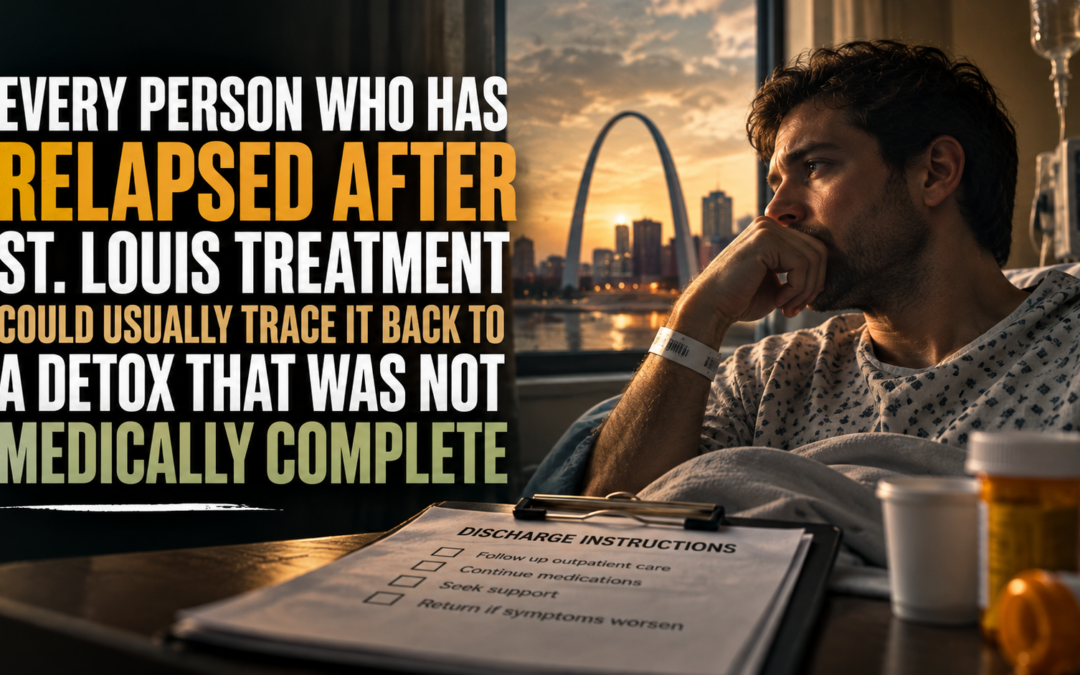
Detox in St. Louis is where recovery begins for many people, and when that first step is not medically complete, it can quietly set the stage for relapse down the road. If you or someone you love has worked hard at recovery only to slip back, that experience can feel crushing and confusing.
You are not weak, and you did not fail. Often the real issue traces back to a drug detox that ended too soon or lacked the medical support to finish the job.
The reassuring truth is that this pattern makes sense once you understand it. When the body is not fully stabilized, cravings and withdrawal can linger long after treatment starts. That leftover strain can overwhelm even the strongest resolve. Understanding why complete detox matters can help you or your loved one build a foundation that actually holds.
What Does a Medically Complete Detox in St. Louis Actually Mean?
A medically complete drug detox in St. Louis means the body has fully cleared a substance while a trained team manages withdrawal safely from start to finish. It is not simply stopping the substance. It is a supervised process that continues until you are truly stabilized.
Detox is the first phase of recovery, not the whole journey. Done well, it prepares your body and mind for the deeper healing that follows.
Why Is “Complete” the Word That Matters?
The word “complete” matters because a detox that stops halfway leaves the body still adjusting and vulnerable. Withdrawal symptoms can continue even after the most intense days pass.
When detox ends too early, that lingering discomfort follows a person into the next stage. Cravings stay strong, and the foundation for recovery feels shaky rather than solid.
What Makes a Detox Incomplete?
A drug detox becomes incomplete when it ends before symptoms are managed or happens without proper medical support. Someone might leave early, try to detox alone, or move on before their body has stabilized.
Common signs of an incomplete detox include lingering cravings, ongoing physical discomfort, and a nervous system still on edge. These leftover struggles quietly raise the risk of relapse.
Why Does an Incomplete Detox Lead to Relapse?
An incomplete drug detox leads to relapse because unmanaged withdrawal creates cravings powerful enough to overwhelm willpower. When the body has not fully stabilized, the pull toward a substance can feel unbearable.
Willpower alone rarely stands a chance against intense physical withdrawal. This is not a character flaw. It reflects real changes in the brain and body that a substance leaves behind.
When detox is rushed or unsupported, those changes have no time to settle. The result is a person entering recovery already fighting an uphill battle.
How Do Lingering Withdrawal Symptoms Fuel Cravings?
Lingering withdrawal symptoms fuel cravings by keeping the body in a state of distress that a substance once relieved. When discomfort continues, the brain remembers what made it stop.
Imagine trying to focus on healing while your body aches, your sleep is broken, and anxiety never fully eases. That constant strain makes the memory of relief feel almost irresistible.
A complete detox quiets those symptoms first. It gives you a steadier starting point instead of a body still crying out for relief.
Why Isn’t Willpower Enough on Its Own?
Willpower is not enough on its own because early recovery is a physical process, not just a mental one. Asking someone to think their way past severe withdrawal is like asking them to ignore a broken bone.
The body needs to heal before the mind can fully engage in recovery. Medical support during detox makes that healing possible, which protects the progress that comes after.
What Is the Difference Between Supervised and Unsupervised Detox?
The difference between supervised and unsupervised drug detox comes down to safety, comfort, and how completely the process is finished. Supervised detox includes trained professionals who monitor and manage symptoms. Unsupervised detox leaves a person to face withdrawal alone.
That gap has real consequences. Some substances cause withdrawal serious enough to require medical attention, and going it alone can be both dangerous and discouraging.
Why Is Unsupervised Detox So Risky?
Unsupervised detox is risky because withdrawal can be unpredictable, uncomfortable, and in some cases medically dangerous. Without support, symptoms can spiral, and the discomfort often becomes too much to bear.
Many people who try to detox alone return to use simply to stop the pain. That is not failure. It is a natural response to suffering without help.
How Does Supervision Make Detox More Complete?
Supervision makes drug detox more complete by ensuring the process continues safely until your body has truly stabilized. A trained team monitors your symptoms and helps ease them along the way.
At Grand Falls Center for Recovery, medical detox happens in a safe, supportive environment with 24/7 on-site medical and support staff. That round-the-clock care helps you move through withdrawal fully, not just partway.
How Does Complete Detox Connect to the Rest of Recovery?
Complete detox connects to the rest of recovery by creating a stable foundation for the treatment that addresses the roots of substance use. Detox handles the physical side. The deeper work of healing comes next.
Substance use often ties to stress, trauma, anxiety, or pain a person has carried for a long time. Detox alone cannot resolve those needs, which is why continued care matters so much.
Why Isn’t Detox Enough by Itself?
Drug detox is not enough by itself because it clears the body without addressing the emotional and behavioral patterns behind substance use. Leaving treatment right after detox often leads a person straight back to old habits.
Think of detox as clearing the ground before building a house. The foundation matters deeply, yet the structure still needs to be built with care and support.
What Levels of Care Come After Detox?
The levels of care after drug detox range from immersive residential support to flexible outpatient options, depending on your needs. Each step keeps you connected to therapy, structure, and community.
Common next steps include:
- Residential inpatient treatment offers structured, round-the-clock care in a stable setting away from daily triggers.
- Partial hospitalization provides intensive daytime care with evenings spent at home.
- Intensive outpatient care delivers therapy several days a week while you rebuild routine.
- Aftercare and alumni support help you stay steady as you return to everyday life.
Many people move from detox directly into residential inpatient treatment, which builds on a complete detox with deeper, ongoing support.
How Do You Know a Detox Program Will Be Medically Complete?
The clearest sign a drug detox program will be medically complete is the presence of round-the-clock medical support and a clear plan for what comes next. You deserve care that finishes the job and points you forward.
Consider these prompts as you think about your next step:
- If a program offers 24/7 medical staff, your withdrawal can be managed safely from start to finish.
- If drug detox connects directly to residential or outpatient care, you are less likely to be left unsupported afterward.
- If past attempts to detox alone ended in returning to use, supervised care can reach what willpower alone could not.
- If a program takes time to stabilize you fully rather than rushing you out, the foundation is more likely to hold.
- If a loved one relapsed soon after a quick detox, a more complete process may make the difference this time.
Reaching out for that first conversation is often the hardest and most meaningful step. A caring team can help you sort through your options at your own pace.
Common Questions Before Starting Drug Detox
People often have honest questions before beginning detox, and clear answers can ease the way forward. These are a few of the most common.
How long does a complete drug detox usually take? Detox often lasts around a week, though the timeline depends on the substance and your health. A complete detox continues until your body has stabilized, not just until the hardest days pass. Your care team can offer a clearer estimate after an assessment.
Why do so many relapses trace back to drug detox? Many relapses trace back to detox because an incomplete process leaves cravings and withdrawal unresolved. When the body has not fully stabilized, that leftover strain can overwhelm even genuine effort later in recovery.
Is medical detox really safer than doing it alone? Yes. Medical detox includes trained staff who monitor your symptoms, keep you safe, and ease discomfort. Some withdrawal can be dangerous, so supervision lowers real risks and helps you finish the process fully.
What happens after drug detox is complete? After a complete detox, most people continue into residential, partial hospitalization, intensive outpatient, or aftercare support. This ongoing care addresses the deeper causes of substance use and helps recovery last.
Moving Toward Lasting Recovery With Hope
A medically complete drug detox in St. Louis is the foundation that makes everything after it more likely to hold, and understanding this can change how you approach recovery. Relapse is not a sign of weakness. It often points to a first step that was never fully finished.
Your effort is real, and struggling before does not mean lasting recovery is out of reach. With safe, supervised care that stabilizes your body fully, you give yourself a far steadier place to begin.
You do not have to face this alone, and you do not have to feel completely ready to start. If you or someone you love is considering detox, reach out to Grand Falls Center for Recovery today. Our caring team is here to listen, answer your questions, and guide you toward a safe start and a foundation built to last.