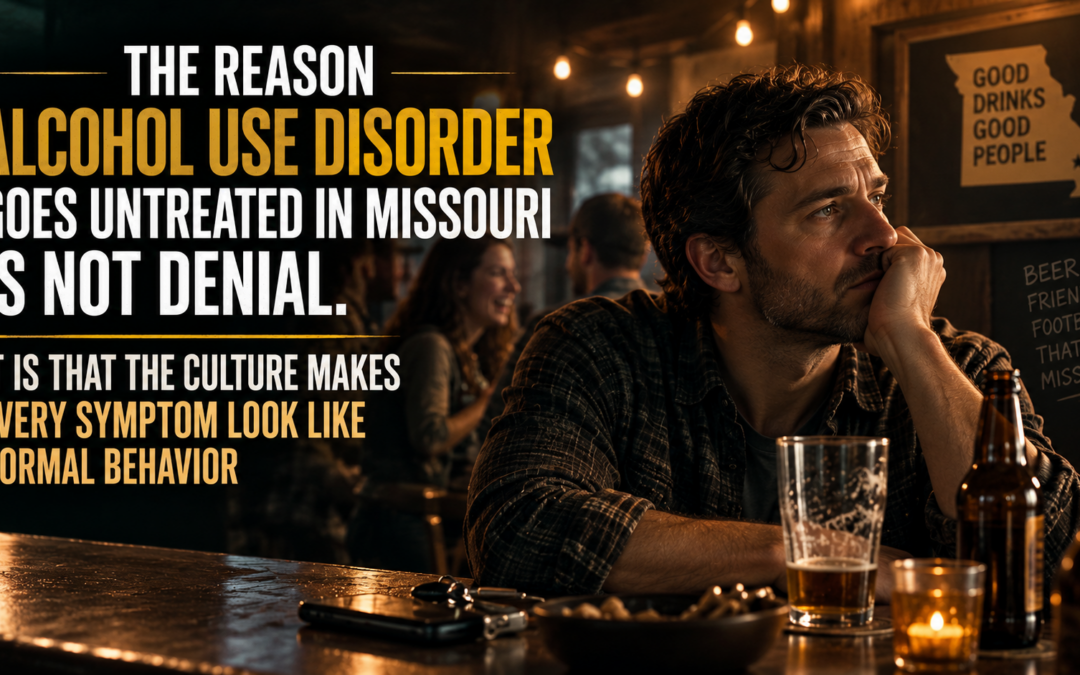
Alcohol use disorder in Missouri often goes untreated not because people are hiding from the truth, but because the culture around them makes every warning sign look like ordinary life. If you or someone you love drinks in ways that quietly worry you, that confusion is understandable and it does not mean you are in denial.
Drinking is woven into so much of daily life here. Tailgates, family gatherings, backyard barbecues, and long weekends all come with a drink in hand, and that makes it hard to see when something has shifted.
The reassuring truth is that recognizing this is not a failure. It is often the first honest step. With the right support, you can tell the difference between cultural drinking and something that needs care, and you can find a path forward that fits your life.
Why Does Missouri Drinking Culture Hide Alcohol Use Disorder?
Missouri drinking culture hides alcohol use disorder because heavy drinking is often treated as normal, expected, and even social. When everyone around you drinks the same way, your own patterns rarely stand out.
Drinking shows up at nearly every gathering, from game days to holidays to a beer after a long shift. In that setting, a rising tolerance or a daily habit can blend right in.
This is not about weak character or a refusal to face reality. It is about an environment where the usual red flags simply look like Tuesday.
How Does “Everybody Drinks Like This” Camouflage the Problem?
The phrase “everybody drinks like this” camouflages the problem by turning warning signs into a shared social norm. When your drinking matches the room, nothing feels out of place.
You might drink more than you planned and feel fine about it, because the person next to you did the same. That comparison quietly resets what “normal” means.
Over time, this shared framing keeps a genuine struggle invisible. The behavior stays hidden inside a crowd doing the same thing.
What Do the Symptoms of Alcohol Use Disorder in Missouri Actually Look Like?
The symptoms of alcohol use disorder in Missouri often look like habits that everyone around you seems to share. That overlap is exactly what makes them so easy to miss.
Alcohol use disorder is a medical condition where a person struggles to control drinking despite the harm it causes. It ranges from mild to severe, and it is far more common than many people realize.
The signs are real, even when they hide behind a culture that treats them as routine.
Which Everyday Habits Might Signal Something Deeper?
Everyday habits that might signal something deeper include drinking more or longer than intended and needing alcohol to relax or cope. These patterns often pass as normal, yet they can point to a real concern.
Consider whether these feel familiar:
- Needing more drinks over time to feel the same effect
- Drinking to unwind, sleep, or manage stress after most days
- Feeling irritable, shaky, or anxious when you do not drink
- Struggling to stop once you start, even when you meant to
- Continuing to drink despite tension at home, work, or with health
Noticing a few of these is not a diagnosis. It is simply information worth paying attention to.
How Does Drinking to Cope Get Reframed as “Unwinding”?
Drinking to cope gets reframed as “unwinding” because relaxing with a drink is celebrated as a well-earned reward. The line between a treat and a need can blur without you noticing.
A beer to decompress after work sounds harmless, and often it is. The concern grows when that drink becomes the only way you know how to settle down.
When alcohol becomes your main tool for handling stress, that is worth a closer look, gently and without shame.
How Do You Tell the Difference Between Cultural Drinking and a Disorder?
The clearest difference between cultural drinking and a disorder is control, harm, and your ability to stop when you want to. Cultural drinking bends around your life, while a disorder starts to bend your life around drinking.
Someone drinking culturally can usually take it or leave it. They enjoy a few drinks socially, then move on without much thought.
A disorder shows up when drinking feels hard to control and keeps happening despite real consequences. The behavior may look identical from the outside, but the internal experience is very different.
What Questions Can Help You See the Line Clearly?
Questions that help you see the line clearly focus on control, consequences, and how you feel without alcohol. Honest answers can reveal what a crowded party cannot.
Ask yourself:
- Have I tried to cut back and found it harder than expected?
- Do I keep drinking even after it has caused problems?
- Do I feel physically or emotionally off when I skip drinking?
- Does alcohol take up more of my time and thoughts than it used to?
- Would I feel uneasy going a week without a drink?
If several answers give you pause, reaching out for a professional assessment can bring clarity and relief.
Why Do People in Missouri Avoid Seeking Treatment?
People in Missouri avoid seeking treatment mostly because the culture makes their symptoms look normal, not because they are refusing help. If your drinking looks like everyone else’s, treatment can feel unnecessary or even dramatic.
Stigma also plays a large role. Many people fear being judged, labeled, or seen differently by their community.
Add in worries about work, family, and cost, and reaching out can feel overwhelming. These barriers are real, and understanding them is part of moving past them.
How Does Normalization Delay Getting Help?
Normalization delays getting help by convincing people that their drinking is simply part of life here. When a symptom looks ordinary, it rarely feels urgent.
You might wait for a dramatic rock-bottom moment before considering care. In reality, you do not need to reach a crisis to deserve support.
The earlier you look honestly at your drinking, the gentler the path forward tends to be.
How Does Integrated Care Help Treat Alcohol Use Disorder in Missouri?
Integrated care helps treat alcohol use disorder in Missouri by addressing both the drinking and the reasons behind it through one coordinated plan. This whole-person approach reaches what willpower alone often cannot.
Many people drink to manage anxiety, depression, or past pain. Treating only the alcohol can leave those roots in place, which is why care that treats both together tends to hold.
At Grand Falls Center for Recovery, treatment brings medical support, therapy, and daily structure together. This connected approach helps recovery feel steadier and more complete.
What Levels of Care Might Fit Your Life?
The levels of care that might fit your life range from medically supervised detox to flexible outpatient support, depending on your needs. There is a fitting path for nearly every situation.
Common options include:
- Medical detox offers supervised, compassionate support as your body clears alcohol safely.
- Residential inpatient treatment provides structured, round-the-clock care in a stable setting.
- Partial hospitalization delivers intensive daytime care with evenings spent at home.
- Intensive outpatient care offers therapy several days a week while you keep your routine.
- Aftercare and alumni support help you stay steady as you return to everyday life.
You can learn more about the alcohol addiction treatment available and how each level works. A thorough assessment helps guide the right starting point with you.
How Do You Know When It Is Time to Reach Out?
The clearest sign it is time to reach out is when drinking has begun affecting your health, relationships, or peace of mind. You do not need to hit a breaking point to ask for support.
Consider these prompts as you think about your next step:
- If you have tried to cut back and found it harder than expected, a caring team can help you understand why.
- If you drink to manage stress, sleep, or difficult feelings, integrated care can address both at once.
- If withdrawal-like symptoms appear when you skip drinking, medically supervised detox can help you stop safely.
- If loved ones have expressed quiet concern, that observation is worth exploring together.
- If you feel unsure where your drinking falls, a simple assessment can bring clarity without pressure.
Reaching out for that first conversation is often the hardest and most meaningful step. A compassionate team can help you sort through your options at your own pace.
Common Questions Before Starting Treatment
People often have honest questions before seeking care, and clear answers can ease the way forward. These are a few of the most common.
Is my drinking really a problem if everyone around me drinks the same way? It might be worth a closer look. What matters most is not how you compare to others, but whether drinking feels hard to control or is causing harm in your life. Those signs deserve attention regardless of what is normal in your circle.
Do I have to hit rock bottom before getting help? No. You can seek support at any point, and reaching out early often makes recovery gentler. Waiting for a crisis is not a requirement for deserving care.
Will stopping drinking be dangerous? For some people, yes, which is why medical support matters. Alcohol withdrawal can be uncomfortable and, in some cases, serious. A supervised detox keeps you safer and more comfortable throughout.
What if my drinking connects to anxiety or depression? That is common, and integrated care is designed for it. Your team looks at how the two connect, then builds a plan that treats the full picture rather than one piece of it.
Moving Toward Clearer, Steadier Days With Hope
Alcohol use disorder in Missouri stays untreated so often because the culture makes real symptoms look like everyday behavior, not because people are unwilling to face the truth. Seeing past that camouflage is a brave and hopeful step, and it opens the door to care that fits your life.
Your experience is valid, and noticing a concern does not mean you have failed. With compassionate, whole-person support, the line between cultural drinking and a disorder becomes clearer, and steadier days become far more reachable.
You do not have to figure this out alone, and you do not have to feel completely ready to begin. If you or someone you love is ready to take that next step, reach out to Grand Falls Center for Recovery today. Our caring team is here to listen, answer your questions, and help you find the support that fits your needs.