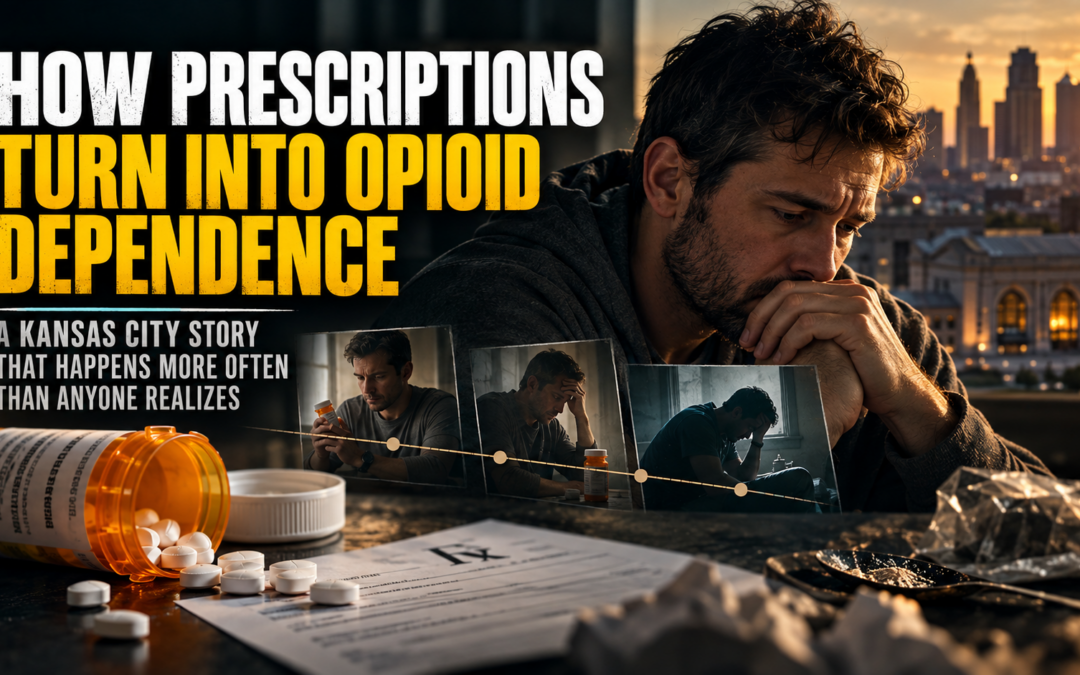
Opioid addiction in Kansas City often begins in a doctor’s office, with a prescription written for real pain after a surgery, an injury or a dental procedure. If you or someone you love started there and ended up somewhere you never expected, you may be carrying confusion, guilt or fear.
You did not set out to become dependent. You followed instructions, trusted your provider and tried to heal.
Somewhere along the way, the medication started doing a different job. It eased stress, softened hard days or simply kept withdrawal away. That shift happened quietly, in a window nobody caught, and it is not a reflection of your character. Help is available, and recovery is possible with the right support.
How Does Opioid Addiction in Kansas City Usually Begin?
Opioid addiction in Kansas City usually begins with a legitimate prescription for pain medication such as oxycodone, hydrocodone or Percocet. These medications can be effective for short-term pain, and most people take them exactly as directed.
The challenge is that opioids change how the brain experiences pain and reward. Over days or weeks, the body adapts, and the same dose may start to feel less effective.
Why Do Prescriptions Lead to Dependence for Some People?
Prescriptions lead to dependence for some people because opioids act on the brain’s reward system, and each person responds differently. Genetics, past trauma, mental health conditions and ongoing stress can all raise the risk.
This means two people can take the same prescription and have very different experiences. One stops easily. The other finds that stopping feels impossible.
Many families facing opioid addiction in Kansas City are surprised to learn how ordinary the starting point was. A routine procedure and a bottle of pills can be enough.
What Is the Window Nobody Caught?
The window nobody caught is the period between using an opioid as prescribed and using it to cope, function or avoid withdrawal. It is often short, quiet and easy to miss, even for doctors and loved ones.
During this window, a person may still look fine from the outside. They go to work, care for their children and keep their appointments.
Inside, the relationship with the medication is changing. For many people living with opioid addiction in Kansas City, this window opened months before anyone named the problem.
What Signs Appear During This Window?
The signs that appear during this window are usually small shifts in how and why the medication is used. Common early signs include:
- Taking a dose earlier than scheduled or adding an extra pill on hard days
- Feeling anxious when the prescription starts running low
- Using the medication for stress, sleep or emotional pain rather than physical pain
- Requesting refills sooner or seeing more than one provider
- Feeling achy, restless or sick between doses
Noticing one of these signs is not a diagnosis. It is a signal worth taking seriously, gently and without shame.
Why Is This Window So Easy to Miss?
This window is easy to miss because a trusted professional prescribed the medication, so continued use feels safe and justified. Physical dependence can also look like lingering pain, which makes the two hard to tell apart.
This is one reason opioid addiction in Kansas City so often goes unnoticed until withdrawal forces the issue. When the prescription ends, the body’s need for the medication suddenly becomes clear.
How Does Opioid Addiction in Kansas City Progress After a Prescription Ends?
Opioid addiction in Kansas City often progresses after a prescription ends because withdrawal and cravings continue long after the refills stop. Without support, some people turn to pills bought outside a pharmacy or to heroin, which may be easier to find and less expensive.
This progression is rarely about chasing a stronger high. It is usually about avoiding the intense discomfort of withdrawal and simply feeling normal again.
Why Does Fentanyl Make This Stage So Dangerous?
Fentanyl makes this stage especially dangerous because it is often pressed into counterfeit pills designed to look like real prescription medication. A person who believes they are taking a familiar pill may be exposed to a far more potent opioid without knowing it.
Fentanyl has changed what opioid addiction in Kansas City looks like for individuals and families. It is one of the clearest reasons to seek professional support early rather than managing withdrawal alone.
What Does Treatment for Opioid Addiction in Kansas City Involve?
Treatment for opioid addiction in Kansas City typically begins with medical detox, then continues with therapy and ongoing support matched to your needs. A thoughtful plan addresses both the physical dependence and the reasons the medication became a way to cope.
At Grand Falls Center for Recovery in Joplin, Missouri, care moves through connected levels so you never have to figure out the next step alone. Many people seeking help for opioid addiction in Kansas City choose to travel for treatment to gain distance from daily stress and familiar triggers.
What Happens During Medical Detox?
Medical detox is a supervised process that helps your body clear opioids safely while a care team manages withdrawal symptoms. Opioid withdrawal can bring muscle aches, sweating, nausea, anxiety and trouble sleeping.
Grand Falls offers medically supervised detox with 24/7 on-site medical and support staff. Detox typically lasts about a week, though your timeline depends on your health and history.
Which Levels of Care Come Next?
The levels of care that come next depend on how much structure and support you need after detox. Options at Grand Falls include:
- Residential inpatient treatment offers round-the-clock care and evidence-based therapy on a calm, secluded campus.
- Partial hospitalization provides intensive daytime treatment with evenings spent at home.
- Intensive outpatient care offers therapy several days a week while you return to work and family.
- Aftercare and alumni support help you stay connected long after formal treatment ends.
Why Does Treating Underlying Conditions Matter?
Treating underlying conditions matters because many people who develop opioid dependence are also living with anxiety, depression or past trauma. If those roots go unaddressed, the pull toward opioids often returns.
Care for opioid addiction in Kansas City works best when it reaches those roots. Dual-diagnosis treatment addresses mental health and substance use together through one coordinated team.
Grand Falls also uses GeneSight testing, a simple cheek swab that shows how your genetics may affect your response to certain medications. This insight helps your care team build a more personalized plan.
When Is It Time to Get Help for Opioid Addiction in Kansas City?
It is time to get help for opioid addiction in Kansas City when opioid use has shifted from managing physical pain to managing your days. You do not need to wait for a crisis to deserve care.
Consider these prompts as you think about your next step:
- If you take more than prescribed or run out early, a confidential assessment can help you understand what is happening.
- If you feel sick or anxious when a dose is late, medical detox can help you stop safely and more comfortably.
- If your prescription ended and you have looked for pills elsewhere, reaching out now can protect your health and safety.
- If your home feels full of stress or triggers, residential care can give you space to focus fully on healing.
- If anxiety, depression or trauma sits alongside your opioid use, integrated care can treat both at once.
- If you are worried about a loved one, family therapy can help you offer support while caring for yourself.
That first conversation is often the hardest step. A caring admissions team can walk you through your options at your own pace.
Common Questions Before Starting Treatment
Can opioid dependence develop even if I took my medication exactly as prescribed? Yes. The body can adapt to opioids over time, even with prescribed use. This is a medical response, not a personal failing, and it is treatable.
Is opioid withdrawal dangerous? Opioid withdrawal can be intensely uncomfortable and lead to dehydration. A major risk comes afterward, because tolerance drops and returning to use can raise overdose risk. Medical detox helps you through withdrawal safely and plans what comes next.
Do I have to stay in Kansas City for treatment? No. Many people treating opioid addiction in Kansas City choose to travel so they can step away from familiar triggers. Grand Falls offers outpatient options and aftercare planning to support your return home.
What if my loved one does not believe they have a problem? That is common, especially when use began with a prescription. Family therapy and a conversation with an admissions team can help you plan a caring, supportive approach.
Moving Forward With Hope
Opioid addiction in Kansas City so often begins with a prescription meant to help, then progresses through a window nobody caught. Recognizing that pattern is not about blame. It is a clear and hopeful first step toward care that fits your needs.
Recovery is possible, and you do not have to take the next step alone. With safe detox, personalized treatment and ongoing support, steadier days can come within reach.
If you or someone you love is struggling, reach out to Grand Falls Center for Recovery today. Our compassionate team is here to listen, answer your questions and help you find the right path forward.