
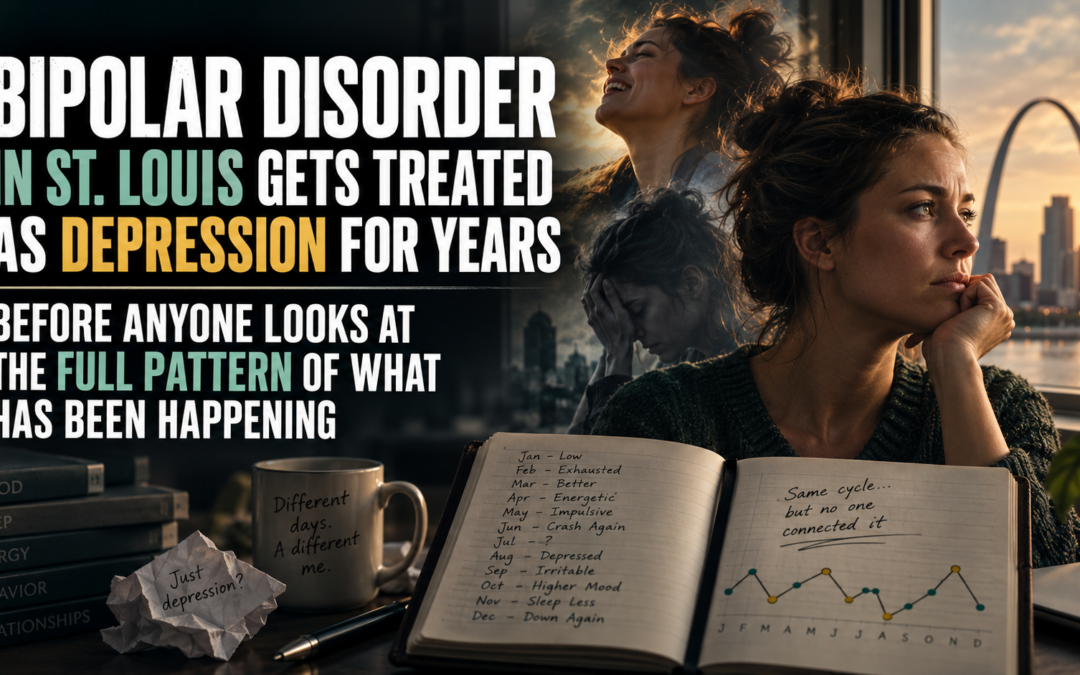
Bipolar disorder in St. Louis is often treated as depression for years before anyone steps back to look at the full pattern of what has been happening. If you or someone you love has cycled through antidepressants without lasting relief, that experience can feel confusing and discouraging.
You are not imagining it, and you did not do anything wrong. Bipolar disorder can be genuinely hard to recognize, especially when the low periods are the ones that send people searching for help.
The reassuring truth is that this pattern is common, and it responds to the right kind of care. When a clinician finally sees the whole picture, treatment can shift in ways that bring real, steadier relief. Understanding why misdiagnosis happens can help you or your loved one find clearer answers and a path forward that fits.
What Is Bipolar Disorder in St. Louis and How Does It Differ From Depression?
Bipolar disorder is a mental health condition marked by shifts between low moods and elevated moods, while depression involves persistent low mood alone. This difference is the heart of why so many people are misdiagnosed for years.
Depression tends to stay in one direction, weighing a person down over time. Bipolar disorder moves between two poles, which is where its name comes from.
What Do the Mood Shifts Look Like?
The mood shifts in bipolar disorder range from depressive lows to elevated states known as mania or hypomania. These highs can feel like boundless energy, racing thoughts, or needing very little sleep.
During a low period, a person may feel exhausted, hopeless, or unable to function. During an elevated period, they may feel unusually productive, confident, or restless. Both are part of the same condition.
Why Do the Low Periods Get Noticed First?
The low periods get noticed first because they cause the most pain and prompt people to seek help. When someone feels crushed by sadness, that is often when they finally reach out.
Elevated periods, by contrast, can feel good or even productive. A person rarely books an appointment because they feel energized, which is exactly how the fuller pattern stays hidden.
Why Does Bipolar Disorder Get Misdiagnosed as Depression for So Long?
Bipolar disorder gets misdiagnosed as depression because people usually seek help during their lowest moments, not their high ones. A clinician sees the depression in front of them and treats what they observe.
This is not a failure on anyone’s part. It reflects how the condition naturally presents itself over time.
How Do Elevated Periods Go Unrecognized?
Elevated periods go unrecognized because they often feel like relief rather than a problem. After a long stretch of low mood, feeling energized and capable seems like recovery, not a symptom.
Hypomania in particular can be subtle. A person may simply seem more upbeat, social, or driven, which rarely raises concern for anyone around them.
Why Do Antidepressants Sometimes Fall Short?
Antidepressants sometimes fall short because they treat depression without addressing the fuller bipolar pattern. When only the low mood is treated, relief can feel incomplete or temporary.
For some people, this is the first real clue. If medication for depression has not brought steady relief, it may be a sign that the whole picture deserves a closer look.
What Does the Full Pattern of Bipolar Disorder Actually Look Like?
The full pattern of bipolar disorder becomes clear only when both the lows and the highs are viewed together over time. A single snapshot rarely tells the whole story, but a longer view often does.
This is why a careful, patient assessment matters so much. Seeing the pattern is what changes the direction of care.
What Signs Point to the Bigger Picture?
Signs that point to the bigger picture include mood changes that come and go rather than staying constant. Recognizing these shifts can help you or a loved one understand what has been happening.
Common signs worth noticing include:
- Periods of unusually high energy, confidence, or activity
- Stretches of needing far less sleep without feeling tired
- Racing thoughts or rapid, pressured speech during certain phases
- Impulsive decisions that feel out of character
- Depression that returns in cycles rather than lingering steadily
Why Does Tracking Mood Over Time Help?
Tracking mood over time helps because bipolar disorder reveals itself through patterns, not single moments. What looks like depression today may look different when placed alongside past months.
A thoughtful clinician often asks about your history, your family, and the way your moods have moved across seasons. These details help bring the full pattern into focus.
How Does Bipolar Disorder Connect to Substance Use?
Bipolar disorder frequently connects to substance use because people may turn to substances to manage the intense highs and lows. When moods feel overwhelming, the search for relief is deeply human.
Many people living with bipolar disorder also face a substance use disorder. This overlap is common, not unusual, and it deserves care that treats both together.
Why Do the Two So Often Appear Together?
The two so often appear together because substances can temporarily quiet difficult moods. A person might drink to slow racing thoughts or use a stimulant to lift a heavy low.
The relief feels real in the moment, even though it tends to deepen the mood swings over time. This is why treating only one side often leaves the other in place.
Why Does Integrated Care Matter Here?
Integrated care matters because bipolar disorder and substance use influence each other, and treating them together produces steadier results. When one team addresses both, nothing important slips through the cracks.
At Grand Falls® Center for Recovery, care can address mental health and substance use as parts of one whole picture. This coordinated approach helps recovery feel more complete and more sustainable.
What Levels of Care Support Bipolar Disorder Treatment?
The levels of care that support bipolar disorder treatment range from immersive residential support to flexible outpatient options, depending on your needs. This range means care can match your situation rather than forcing a single path.
Many people move between levels as their stability grows. A thorough assessment helps guide the right starting point with you.
Which Level of Care Might Fit Best?
The level of care that fits best depends on how much daily support and structure your situation requires. There is no single right answer for everyone.
Common options include:
- Residential inpatient treatment offers structured, round-the-clock support in a stable setting.
- Partial hospitalization provides intensive daytime care with evenings spent at home.
- Intensive outpatient care delivers therapy several days a week while you keep your routine.
- Outpatient and aftercare support help you stay steady as you continue everyday life.
You can learn more about the bipolar disorder treatment available and how it can fit your life.
How Does Personalized Care Help?
Personalized care helps because your history, symptoms, and needs are unique to you. A plan built around your specific pattern tends to reach what a general approach may miss.
Grand Falls Recovery also uses GeneSight testing to help personalize medication plans when appropriate. This can bring greater precision to treating bipolar disorder and any co-occurring concerns.
How Do You Know When to Seek a Closer Look?
The clearest sign it is time to seek a closer look is when depression treatment has not brought lasting relief despite real effort. You do not need to reach a crisis point before asking for answers.
Consider these prompts as you think about your next step:
- If antidepressants have not eased your low mood over time, a fuller assessment may reveal what has been missed.
- If your energy, sleep, and mood seem to shift in cycles, that pattern is worth exploring with a clinician.
- If loved ones have noticed periods that feel out of character, their observations can offer helpful clues.
- If substance use has crept in as a way to manage your moods, integrated care can address both at once.
- If you feel unsure where to begin, a simple conversation can bring clarity without pressure.
Reaching out for that first conversation is often the hardest and most meaningful step. A caring team can help you sort through your options at your own pace.
Common Questions Before Starting Treatment
People often have honest questions before seeking care, and clear answers can ease the way forward. These are a few of the most common.
Can bipolar disorder really be mistaken for depression for years? Yes. Because people usually seek help during low periods, the elevated phases often go unnoticed. This can lead to a depression diagnosis that misses the fuller pattern for a long time.
How is bipolar disorder diagnosed correctly? A correct diagnosis comes from looking at your full mood history over time, not just a single moment. A clinician often asks about past highs and lows, sleep, and family history to see the whole picture.
What if antidepressants have not worked for me? That is worth exploring further, because incomplete relief can be a clue. If medication for depression has not helped steadily, a closer assessment may point toward a different, more accurate diagnosis.
Can bipolar disorder and substance use be treated together? Yes. Integrated programs are built to address both at once, and this combined approach often produces steadier progress than treating them separately.
Moving Toward Clearer Answers With Hope
Bipolar disorder in St. Louis is often treated as depression for years before anyone looks at the full pattern, and recognizing that gap is a meaningful, hopeful step. Seeing the whole picture is not a sign that something is wrong with you. It is the moment care can finally shift in the right direction.
Your experience is real, and steadier days become far more reachable when treatment reflects what has truly been happening. With compassionate, personalized support, the highs and lows can become more manageable.
You do not have to carry this alone, and you do not have to have every answer before reaching out. If you or someone you love has struggled to find lasting relief, reach out to Grand Falls Center for Recovery today. Our caring team is here to listen and guide you toward the support that fits your needs.