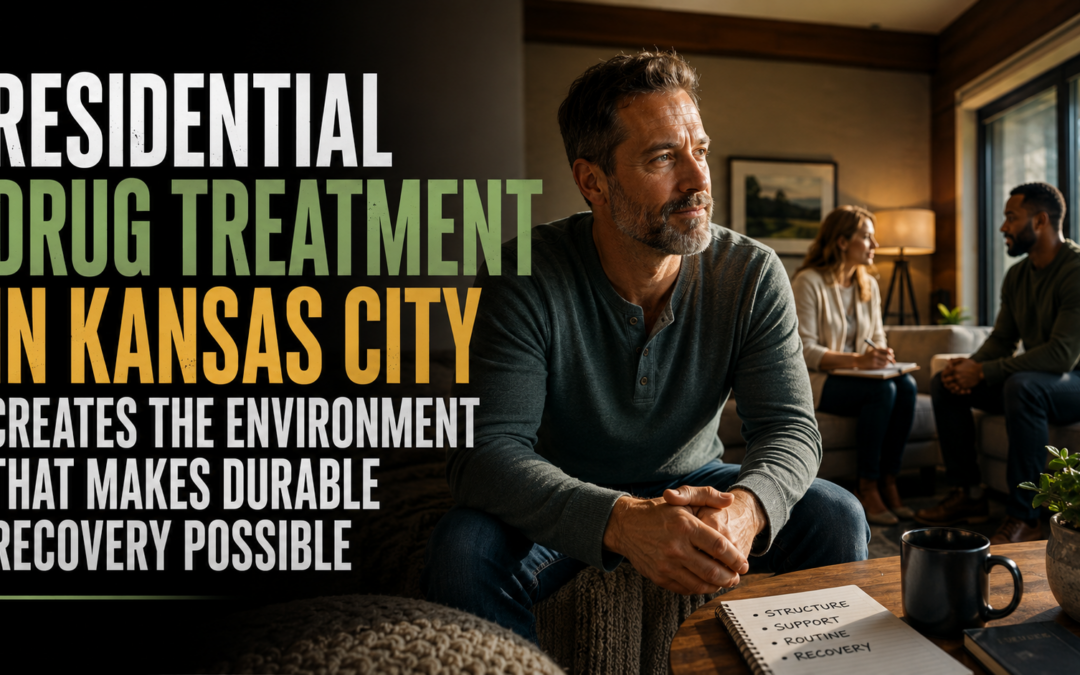
Residential drug treatment in Kansas City offers a supportive, structured environment where lasting recovery has room to take root. If you are exploring treatment for yourself or someone you love, you may feel overwhelmed by the options and unsure where to begin. That feeling is completely understandable.
Trying to heal while surrounded by daily stress, triggers, and old routines can feel impossible. The people, places, and pressures of everyday life often pull a person right back into familiar patterns. That struggle is not a personal failing.
The reassuring truth is that your surroundings matter deeply in recovery. A safe, immersive setting removes many of those daily pressures and replaces them with steady support. With the right environment and a caring team beside you, real and lasting change becomes possible.
What Is Residential Drug Treatment in Kansas City?
Residential drug treatment in Kansas City is a live-in program where you receive round-the-clock care in a structured, supportive setting. You stay at the facility for a period of time while focusing fully on healing.
This level of care removes you from daily triggers and stressors. Instead of juggling recovery alongside work, conflict, or old routines, you get to make healing your only job.
How Is This Different From Other Levels of Care?
Residential care provides the most immersive support of any treatment option, with 24-hour staffing and a live-in setting. Other levels, like outpatient care, let you live at home while attending sessions.
Both approaches have real value. Residential treatment works especially well when your home environment feels unsafe, unstable, or full of triggers that make early recovery harder to hold.
Who Is a Good Fit for Residential Care?
Residential care is a strong fit for people who need a full reset in a safe, structured space away from daily pressures. It often helps those who have tried other options without lasting results.
You may be a good fit if your surroundings feel overwhelming, your substance use is significant, or you simply need time away to focus fully on getting well.
Why Does the Environment Matter So Much in Recovery?
The environment matters because your surroundings shape your stress, your choices, and your ability to focus on healing. A calm, supportive setting makes recovery far more manageable.
Early recovery is fragile. Familiar people, places, and stressors can quietly pull a person back toward old patterns before new habits take hold.
Residential treatment interrupts that cycle. It surrounds you with safety, structure, and support instead of temptation and pressure.
How Do Daily Triggers Affect Early Recovery?
Daily triggers can undermine early recovery by keeping stress high and cravings active. The same environment that fed substance use often makes it harder to step away from it.
Removing those triggers, even for a season, gives your mind and body room to rest. That space lets healthier habits begin to form without constant interference.
Why Does Structure Support Lasting Change?
Structure supports lasting change because a predictable routine reduces stress and builds healthy habits over time. Knowing what to expect each day quiets background anxiety.
In residential drug treatment in Kansas City, consistent schedules for meals, therapy, rest, and connection create a steady rhythm. That rhythm helps recovery feel grounded rather than chaotic.
What Does a Day in Residential Drug Treatment Look Like?
A day in residential drug treatment blends therapy, skill-building, rest, and connection within a supportive daily structure. Each part works together to support your healing.
You are never left to figure things out alone. A caring team guides your day and adjusts your care as your needs change.
What Kinds of Therapy Are Included?
Residential care usually includes a mix of individual and group therapy that addresses the roots of substance use. These sessions help you understand your patterns and build healthier ways to cope.
Common elements of care include:
- Individual therapy that explores the causes behind substance use
- Group sessions that reduce isolation and build connection
- Evidence-based approaches like cognitive behavioral therapy
- Support for any co-occurring mental health needs
- Skill-building for coping and relapse prevention
How Does Community Support Healing?
Community supports healing by reminding you that you are not alone in this journey. Living alongside others who understand your struggle can ease shame and build encouragement.
Shared meals, group sessions, and daily connection create a sense of belonging. That connection often becomes one of the most meaningful parts of recovery.
How Does Residential Drug Treatment in Kansas City Support Durable Recovery?
Residential drug treatment in Kansas City supports durable recovery by pairing an immersive environment with skilled clinical care and a plan for what comes next. It builds a foundation strong enough to last beyond the program itself.
Lasting recovery is not only about stopping substance use. It is about addressing the reasons it began and building new tools for daily life.
Why Does Whole-Person Care Matter?
Whole-person care matters because substance use often connects to stress, trauma, anxiety, or depression. Treating only the behavior leaves those deeper needs unaddressed.
At Grand Falls Recovery, care can address the mind, body, and daily patterns together. This coordinated approach helps recovery feel steadier and more complete.
What Happens After Residential Treatment?
After residential treatment, most people step down to a lower level of care that keeps support in place. This gradual shift protects the progress you have worked hard to build.
Common next steps include partial hospitalization, intensive outpatient care, and ongoing outpatient support. A thoughtful plan helps each stage feel manageable rather than overwhelming.
How Do You Know if Residential Care Is the Right Next Step?
The clearest sign that residential care may be right is when your daily environment makes recovery feel out of reach. You do not need to reach a crisis point before reaching out.
Consider these prompts as you think about your next step:
- If your home environment feels full of triggers, a residential setting can offer the safe reset you need.
- If you have tried outpatient care but results did not last, more immersive support may reach what earlier care missed.
- If substance use has become significant or hard to manage alone, round-the-clock care can provide steady support.
- If daily stress keeps pulling you back into old patterns, stepping away for a season can help new habits take root.
- If you feel unsure where to begin, a simple assessment can bring clarity without pressure.
Reaching out for that first conversation is often the hardest and most meaningful step. A caring team can help you sort through your options at your own pace.
Common Questions Before Starting Treatment
People often have honest questions before beginning residential care, and clear answers can ease the way forward. These are a few of the most common.
How long does residential treatment last? Residential treatment often lasts several weeks to a few months, depending on your needs and progress. Your care team adjusts the timeline as you grow steadier and more confident.
Will I be able to stay in touch with my family? Yes, in most cases. Many programs include family involvement and scheduled communication, because supportive relationships strengthen recovery. Your care team can explain how this works.
Do I need detox before residential care? You may, depending on your situation. If you are still physically dependent on a substance, a medically supervised detox often comes first. An assessment helps determine the safest starting point.
What if I have more than one struggle? That is common, and residential care is designed for it. Your team looks at how substance use, mental health, and daily patterns connect, then builds a plan that supports the full picture.
Moving Toward Healing With Hope
Residential drug treatment in Kansas City creates the environment that makes durable recovery possible, giving you a safe space to heal away from daily pressures. Choosing this kind of care is a brave and hopeful step, not a sign of weakness.
You do not have to feel completely ready to begin. What matters most is reaching out and letting a compassionate team walk beside you.
Recovery is possible with the right support and the right environment in place. Small steps, taken with care, can lead to steadier and brighter days ahead.
If you or someone you love is considering residential drug treatment in Kansas City, reach out to Grand Falls Recovery today. Our caring team is here to listen, answer your questions, and guide you toward a safe start and a clear path forward.