
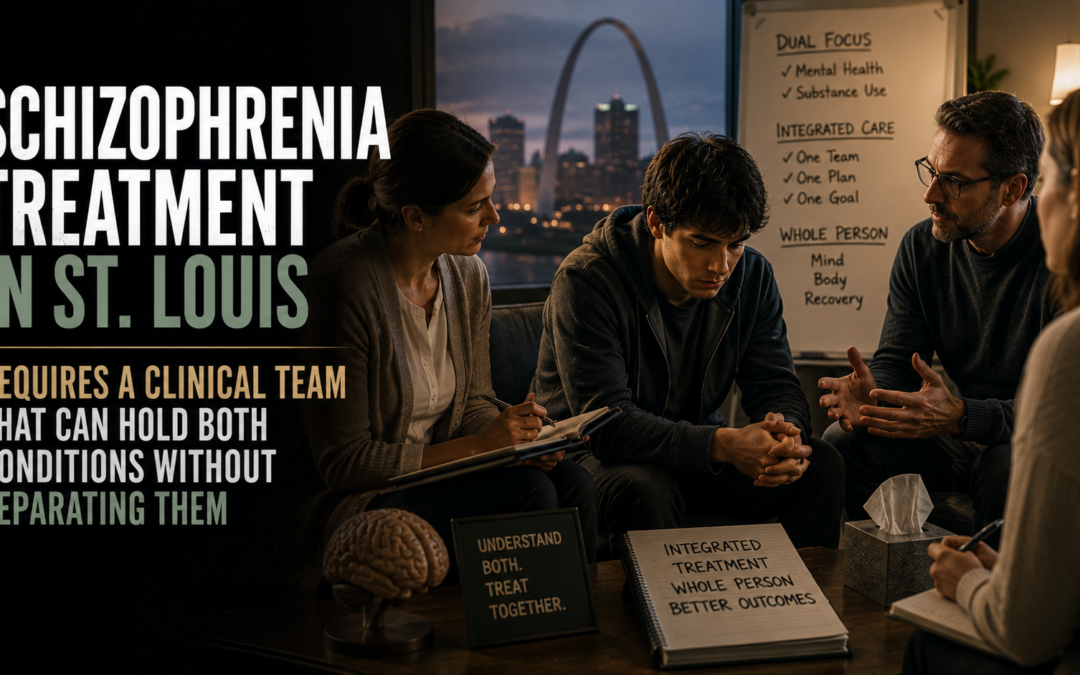
Schizophrenia treatment in St. Louis works best when one clinical team can address both schizophrenia and any co-occurring condition together, without splitting them into separate programs. If you or someone you love is facing this, the fear of being passed between providers is real, and it deserves an honest answer.
For a long time, care was fragmented. A person might receive mental health support in one place and substance use care somewhere else, with neither team fully aware of the other. That gap often left people feeling unseen and stuck.
Care has changed. The strongest programs now recognize that these conditions shape each other, and they build treatment around that reality. Understanding why this matters can help you feel more confident about the next step.
What Does Schizophrenia Treatment in St. Louis Actually Involve?
Schizophrenia treatment in St. Louis involves a coordinated blend of medical care, therapy, daily structure, and ongoing support, all delivered by one connected team. It is not a single service. It is a long-term partnership built around the whole person.
Schizophrenia is a mental health condition that affects thinking, perception, and daily functioning. Treatment aims to reduce symptoms, build stability, and support a fuller, more grounded life.
The goal is not perfection. It is steady progress, supported by people who understand the condition and stay with you over time.
What Does a Treatment Plan Usually Include?
A treatment plan usually combines medication support, therapy, and practical help with daily routine. Each piece reinforces the others to create a steadier foundation.
Common elements of care include:
- Medication support guided by a clinical team
- Individual therapy that helps you understand and respond to symptoms
- Skill-building for coping, communication, and self-care
- Support for building consistent daily structure
- Connection with others who understand the experience
Who Is Involved in This Care?
The people involved in this care often include psychiatric providers, therapists, and support staff working from one shared plan. This coordination keeps everyone aligned.
When your team shares information, nothing important slips between providers. That connection is a large part of what makes treatment effective.
Why Do Co-occurring Conditions Need to Be Treated Together?
Co-occurring conditions need to be treated together because schizophrenia and substance use often influence each other in ways that make treating one alone incomplete. When care is split, progress in one area can be undone by the other.
Many people living with schizophrenia also face a substance use disorder. This combination is common, not unusual, and it calls for a team built to hold both at once.
Treating these conditions separately often leaves a person caught between two systems. Integrated care closes that gap and treats the full picture.
How Do Schizophrenia and Substance Use Interact?
Schizophrenia and substance use interact in a reinforcing loop, where each can intensify the other over time. A person might use a substance to quiet distressing symptoms, and that substance can then make symptoms harder to manage.
This loop can strengthen itself if only one condition receives attention. Breaking it usually requires support that addresses both sides at the same time.
Why Does Separating the Two Cause Problems?
Separating the two causes problems because it forces a person to manage two disconnected plans that may even work against each other. One provider might not know what the other is recommending.
Imagine following two maps that point in different directions. You end up confused and worn down. A single, unified plan removes that strain and points everyone the same way.
What Does Integrated Schizophrenia Treatment Look Like?
Integrated schizophrenia treatment means one coordinated team addresses your mental health and any substance use through a single, connected plan. You are not sent between programs that never communicate.
This model brings medical care, therapy, and daily support under one roof. The people helping you share information and adjust your plan as you progress.
That coordination matters most when more than one condition is present. When your team sees the whole picture, they can respond with real precision.
How Does One Team Hold Both Conditions?
One team holds both conditions by treating them as connected parts of the same person, not as separate cases. Your providers plan together, so your care stays consistent.
This approach reduces the confusion that comes from managing multiple providers. It also helps you feel understood as a whole person rather than a set of symptoms.
Why Does Daily Structure Matter So Much?
Daily structure matters because a predictable routine helps steady the mind and reduce the stress that can worsen symptoms. Consistent sleep, meals, and medication timing all support stability.
At Grand Falls® Recovery, care teams weave structure into the treatment day. This gentle rhythm makes symptoms easier to manage and helps recovery feel more grounded.
What Levels of Care Are Available?
The levels of care available range from immersive residential support to flexible outpatient options, depending on your needs. Many people move between levels as their stability grows.
The right fit reflects your health history, home environment, and current needs. A thorough assessment helps guide that decision with you.
Which Level of Care Might Fit Best?
The level of care that fits best depends on how much daily support and structure your situation requires. There is no single right answer for everyone.
Common options include:
- Residential treatment offers structured, round-the-clock support in a stable setting.
- Partial hospitalization provides intensive daytime care with evenings spent at home.
- Intensive outpatient care delivers therapy several days a week while you keep your routine.
- Outpatient care offers ongoing support as you return to everyday life.
How Do People Move Between Levels?
People move between levels as they build stability, often stepping down to lighter support over time. Someone might begin with more structured care and gradually shift to outpatient support.
This flexibility means care can grow with you. You stay connected to a consistent approach, even as your needs change.
How Do You Know When It Is Time to Seek Help?
The clearest sign it is time to seek help is when symptoms, daily functioning, or substance use become harder to manage on your own. You do not need to wait for a crisis to reach out.
Consider connecting with a care team if any of these feel familiar:
- Symptoms have grown more frequent, intense, or harder to ignore.
- Sleep, meals, or medication routines have become difficult to maintain.
- Substance use has increased alongside changes in mood or thinking.
- Daily tasks feel more overwhelming than they used to.
- You or a loved one has stopped taking medication as prescribed.
- A family member has expressed concern about recent changes.
If several of these resonate, a conversation with a care team can bring clarity and relief. Reaching out early is a caring, proactive step for yourself or someone you love.
Common Questions Before Starting Treatment
People often have honest questions before beginning care, and clear answers can ease the way forward. These are a few of the most common.
Can schizophrenia and substance use really be treated at the same time? Yes. Integrated programs are built to address both conditions together, and this combined approach tends to produce steadier progress than treating them separately. One team holds both at once.
Will treatment mean stepping away from daily life? Not always. Levels of care range from residential support to flexible outpatient options. The right fit depends on your needs, and many people receive care while staying connected to their routine.
What if past treatment focused on only one condition? That is common, and it is not too late for a different approach. Integrated care can address what earlier treatment may have missed, treating the full picture rather than one piece of it.
How do we get started? You start with an assessment. A conversation with a care team helps identify the conditions present and the right level of care, so you can move forward with a clear plan.
Moving Toward Support With Hope
Schizophrenia treatment in St. Louis is most effective when one clinical team can hold both conditions together, without separating them into disconnected programs. Seeing your situation clearly is a meaningful and hopeful step, not a sign that something is wrong with you.
Recovery and stability become far more reachable when every part of your care works from the same plan. With coordinated, compassionate support, symptoms can ease and steadier days can follow.
You do not have to navigate this alone, and you do not have to piece together care from separate places. The right team can walk beside you through it all.
If you or someone you love is living with schizophrenia and a co-occurring condition, reach out to Grand Falls Recovery today. Our compassionate team is here to listen and guide you toward integrated care that supports every part of your recovery.