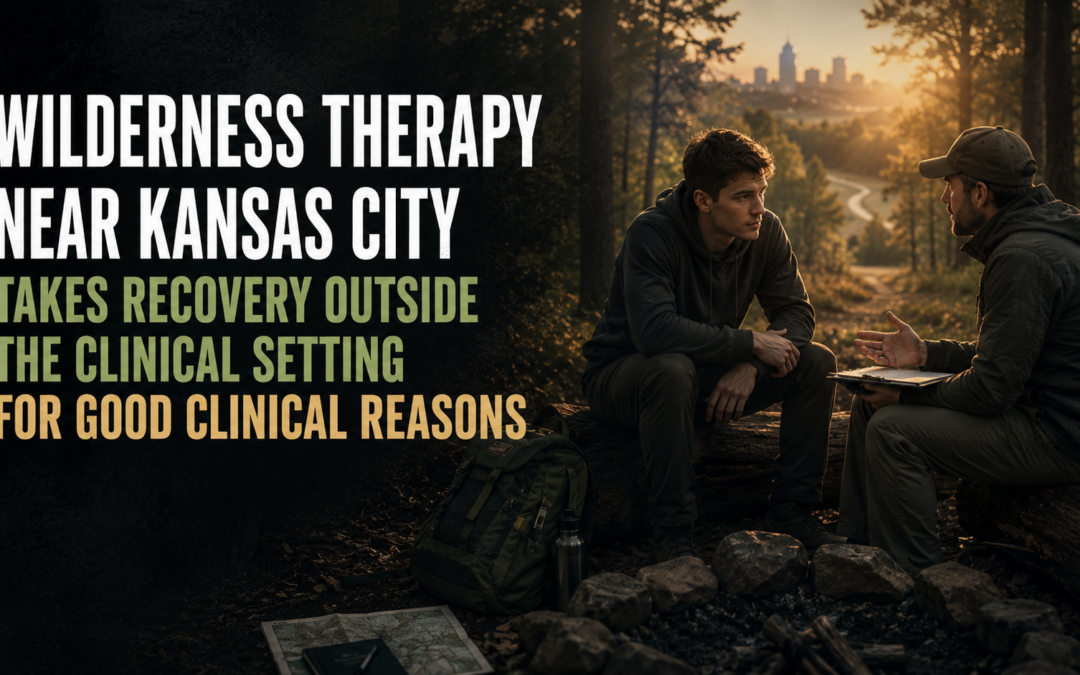
Wilderness therapy near Kansas City moves part of the healing process outdoors, and it does so for real clinical reasons, not simply for a change of scenery. If you or someone you love is exploring treatment options, the idea of therapy outside a traditional office might feel surprising at first.
Sitting in a room and talking does not work for everyone, and that is okay. Some people process pain more easily while moving, doing, and connecting with the natural world around them.
The hopeful truth is that outdoor, experiential care is grounded in solid clinical thinking. When paired with skilled support, it can reach places that a typical session sometimes cannot.
What Is Wilderness Therapy Near Kansas City?
Wilderness therapy near Kansas City is a form of experiential treatment that uses outdoor activities and nature-based experiences to support mental health and addiction recovery. It combines proven clinical methods with the calming, grounding power of the outdoors.
This is not a survival challenge or a boot camp. It is guided, intentional care led by trained professionals who understand both therapy and the outdoor setting.
The goal is to help you engage with your healing in a fresh, active way. Movement, reflection, and connection replace the four walls of a standard office.
How Is This Different From Talk Therapy?
Wilderness therapy differs from talk therapy by adding action and experience to the process, rather than relying on conversation alone. You learn about yourself through doing, not just discussing.
Traditional therapy remains valuable and effective. Wilderness therapy simply offers another path for people who feel more open, calm, or reflective when they are outside and engaged.
Who Is Wilderness Therapy For?
Wilderness therapy is for people who feel stuck in traditional settings or who process emotions more easily through movement and experience. It can help those facing substance use, anxiety, depression, trauma, or a mix of these.
You do not need to be an outdoors expert to benefit. What matters is a willingness to try something different and engage at your own pace.
What Signs Suggest It Might Help?
Signs that wilderness therapy might help include feeling shut down in an office or struggling to open up through talk alone. Many people find that nature lowers their guard.
Wilderness therapy may be a good fit if you:
- Feel restless, distracted, or closed off during traditional sessions
- Process feelings better while active than while sitting still
- Have tried talk therapy and want to add another approach
- Feel calmer, clearer, or more grounded when you are outdoors
- Want to build confidence through real, hands-on experiences
Who Might Need a Different Approach First?
People facing severe withdrawal or urgent medical needs usually need stabilization before adding experiential care. Safety always comes first.
A thorough assessment helps clarify the right starting point. Your care team looks at your health, history, and needs to guide the decision with you.
Why Does Wilderness Therapy Near Kansas City Produce Clinical Breakthroughs?
Wilderness therapy near Kansas City produces breakthroughs because the outdoor setting lowers stress, reduces defensiveness, and helps people access emotions they often keep guarded. Nature has a way of quieting the noise that fills daily life.
When the pressure of a clinical room fades, many people feel safer opening up. Real insight often follows that sense of ease.
Experiential learning also makes lessons stick. Overcoming a physical challenge or working through a task can teach resilience in a way words alone cannot.
How Does Nature Affect the Mind and Body?
Nature affects the mind and body by calming the nervous system and easing the constant alertness that stress and trauma create. Time outdoors can slow a racing mind.
This calm creates space for reflection. When your body feels safe, your mind becomes more willing to explore difficult feelings.
Why Does Doing Something Reach People Talking Cannot?
Doing something reaches people because action turns abstract ideas into real, felt experiences. You do not just talk about facing fear. You practice it.
Completing a task, working with a group, or navigating a challenge builds genuine confidence. That earned success often carries over into everyday recovery.
How Does Wilderness Therapy Complement Traditional Treatment?
Wilderness therapy complements traditional treatment by working alongside proven clinical methods, not replacing them. It adds an experiential layer to the therapy, medical care, and support you already receive.
The strongest programs blend both approaches. Insights gained outdoors get explored further in individual and group sessions, so nothing is lost.
This combination treats the whole person. You gain the structure of clinical care and the openness that nature-based experiences can bring.
What Does an Integrated Plan Look Like?
An integrated plan weaves wilderness therapy into a broader treatment approach that addresses mind, body, and daily life. Each piece supports the others.
A blended plan often includes:
- Individual therapy that explores the roots of substance use or emotional pain
- Group sessions that build connection and reduce isolation
- Evidence-based approaches like cognitive behavioral therapy
- Experiential, outdoor work that reinforces new skills
- Support for any co-occurring mental health needs
Why Does Combining Approaches Work So Well?
Combining approaches works well because different methods reach different parts of a person. Talk therapy builds understanding, while experiential work builds confidence and resilience.
At Grand Falls® Recovery, care teams understand how these methods connect. Blending them helps recovery feel more complete and more grounded.
What Levels of Care Are Available?
The levels of care available range from immersive residential support to flexible outpatient options, and wilderness therapy can enrich many of them. Many people move between levels as their stability grows.
The right fit reflects your health history, home environment, and current needs. A thorough assessment helps guide that decision with you.
Which Level of Care Might Fit Best?
The level of care that fits best depends on how much daily support and structure your situation requires. There is no single right answer for everyone.
Common options include:
- Residential treatment offers structured, round-the-clock support in a stable setting.
- Partial hospitalization provides intensive daytime care with evenings spent at home.
- Intensive outpatient care delivers therapy several days a week while you keep your routine.
- Outpatient care offers ongoing support as you return to everyday life.
How Does Experiential Care Fit Into These Levels?
Experiential care fits into these levels by adding hands-on, nature-based work to the clinical support you already receive. It enhances treatment rather than standing apart from it.
Your care team helps decide how and when outdoor work makes sense for you. The plan grows and adjusts as your needs change over time.
How Do You Know When to Seek Help?
The clearest sign it is time to seek help is when substance use or mental health struggles begin affecting your daily life, relationships, or peace of mind. You do not need to reach a crisis point before reaching out.
Consider these prompts as you think about your next step:
- If talk therapy alone has not felt like enough, an experiential approach may reach what it missed.
- If you feel more open and grounded outdoors, wilderness therapy could support your healing.
- If substance use rises with stress or difficult emotions, integrated care can address the root.
- If you feel stuck in old patterns, a fresh approach may help you move forward.
- If you feel unsure where to begin, a simple assessment can bring clarity without pressure.
Reaching out for that first conversation is often the hardest and most meaningful step. A caring team can help you sort through your options at your own pace.
Common Questions Before Starting Treatment
People often have honest questions before beginning care, and clear answers can ease the way forward. These are a few of the most common.
Do I need to be physically fit or an outdoors person? No. Wilderness therapy meets you at your own level and adjusts activities to fit your abilities. The focus is on growth and reflection, not physical performance.
Is wilderness therapy a replacement for real treatment? No. It is one part of a broader, evidence-based plan that includes therapy, medical support, and other proven methods. It complements clinical care rather than replacing it.
Will this actually help with addiction? For many people, yes. Experiential work can build confidence, ease stress, and help you access emotions that fuel substance use. It often works best as part of a fuller treatment plan.
What if I have more than one struggle? That is common, and integrated care is designed for it. Your team looks at how substance use, trauma, or mental health connect, then builds a plan that supports the full picture.
Moving Toward Healing With Hope
Wilderness therapy near Kansas City takes recovery outside the clinical setting for good clinical reasons, offering a fresh, grounding path when traditional approaches feel out of reach. Understanding why nature and experience can spark real change is a meaningful, hopeful step.
Your healing does not have to look one certain way. With compassionate, integrated support, you can explore the approach that fits you best and move toward steadier days.
You do not have to figure this out alone. The right team can walk beside you, blending proven care with experiences that help recovery feel possible.
If you or someone you love is ready to explore this kind of care, reach out to Grand Falls Recovery today. Our compassionate team is here to listen, answer your questions, and guide you toward the support that fits your needs.