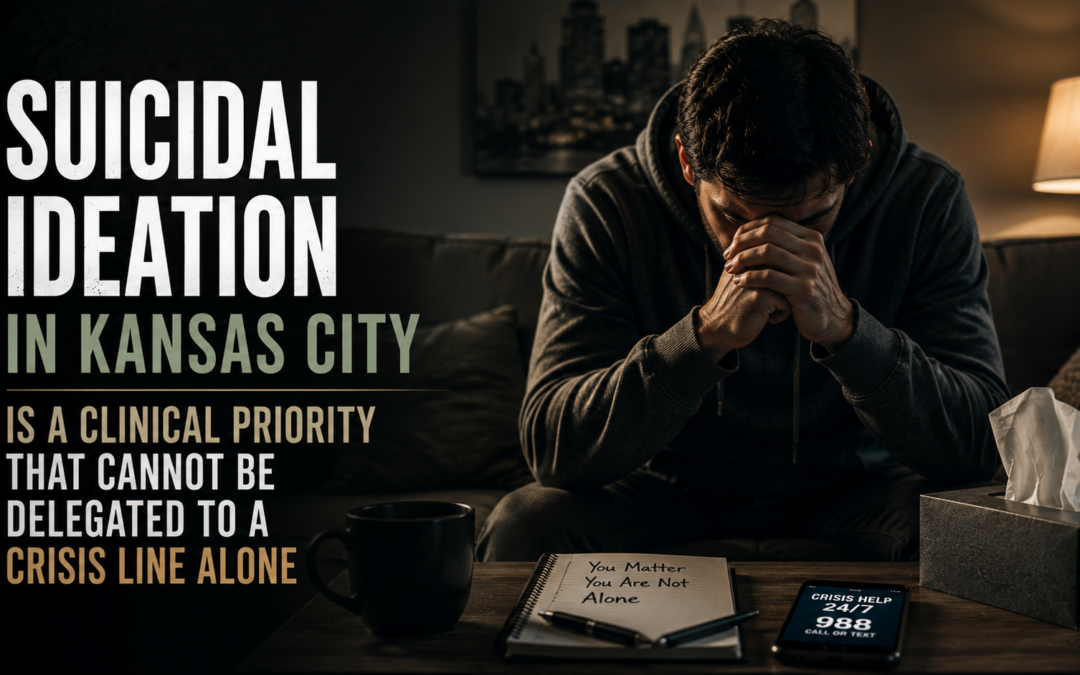
Suicidal ideation in Kansas City is a clinical priority that deserves ongoing, integrated care, not a single phone number handed over in a hard moment. If you or someone you love is having these thoughts, that experience matters, and it deserves more than a temporary fix.
Crisis lines save lives, and they have an important place. Still, a phone call in the middle of the night cannot replace a treatment team that understands your whole story.
You are not a problem to be managed from a distance. You are a person who deserves steady, skilled support that stays with you over time.
What Does It Mean to Treat Suicidal Ideation in Kansas City as a Clinical Priority?
Treating suicidal ideation in Kansas City as a clinical priority means responding with structured, ongoing care rather than a one-time referral. It places these thoughts at the center of a treatment plan, not on the edge of it.
Suicidal ideation refers to thoughts about ending your life, and those thoughts can range from fleeting to persistent. Clinicians view them as important information, not as something to quietly watch from afar.
When a care team treats this as a priority, they build support around it. That support may include therapy, medical care, and a safety plan you help create.
Why Is a Crisis Line Not Enough on Its Own?
A crisis line is not enough on its own because it offers immediate stabilization, not long-term treatment. It can help you through a dangerous moment, and that role is genuinely valuable.
What it cannot do is explore the roots of your pain over time. It cannot adjust your medication, track your progress, or address the conditions feeding these thoughts.
Think of a crisis line as an emergency room for a moment of danger. It stabilizes the situation. The deeper healing happens later, with a team that knows you.
Why Does Suicidal Ideation Require Ongoing Clinical Care?
Suicidal ideation requires ongoing clinical care because the thoughts usually stem from deeper struggles that take time to address. A single conversation cannot resolve what months or years of pain created.
These thoughts often connect to depression, trauma, anxiety, or substance use. Treating only the moment leaves the underlying cause untouched.
Ongoing care gives you a steady place to process what you feel. It also lets a team notice patterns and respond before a hard moment turns into a crisis.
What Conditions Often Underlie These Thoughts?
Several conditions often sit beneath suicidal ideation, and identifying them helps guide effective care. Understanding the roots makes treatment more precise.
Common underlying factors include:
- Depression that has lasted for weeks or longer
- Unresolved trauma that keeps resurfacing
- Anxiety that feels constant and overwhelming
- Substance use that deepens emotional pain
- A sense of isolation or feeling like a burden to others
How Does Ongoing Care Address the Root, Not Just the Moment?
Ongoing care addresses the root by giving you time, tools, and a relationship with people who understand your history. Healing rarely happens in a single step.
Over weeks of consistent support, your care team learns what triggers your pain. They help you build coping skills and adjust your plan as your needs change. That steadiness is something no single call can provide.
Why Should Treatment Go Deeper Instead of Pulling Back?
Treatment should go deeper because suicidal ideation is a signal to increase support, not reduce it. These thoughts show that a person needs more connection and care, not less.
Some people fear that admitting these thoughts will lead to being cut off or pushed away. The opposite should be true. Honesty is an invitation for a team to lean in.
Pulling back leaves a person alone with the very thoughts that feel most dangerous. Going deeper surrounds them with skilled, compassionate support.
What Does “Going Deeper” Actually Look Like?
Going deeper looks like intensifying care through more frequent sessions, added support, and a coordinated plan. It responds to increased risk with increased presence.
Deeper care might include:
- More frequent individual therapy sessions
- A safety plan you build with your care team
- Support for any co-occurring mental health or substance use needs
- Regular check-ins that keep you connected to your team
- A step up to a higher level of care when needed
How Does Honesty Help Your Care Team?
Honesty helps your care team respond with the right level of support at the right time. When they know what you are experiencing, they can act with precision.
Sharing these thoughts is not a loss of control. It is a way of inviting people who are trained to help into the hardest part of your experience. That openness often brings relief rather than fear.
How Does Integrated Care Support People With Suicidal Ideation?
Integrated care supports people with suicidal ideation by treating mental health, substance use, and safety together through one coordinated team. Nothing important slips between separate providers.
Many people facing these thoughts also live with depression, trauma, or substance use at the same time. Treating these together tends to work better than addressing them one at a time.
This coordinated approach means the people helping you share information. Your therapist, medical team, and support staff all work from the same plan.
Why Do Co-occurring Conditions Matter Here?
Co-occurring conditions matter because they often intensify suicidal thoughts when left untreated. Depression and substance use, for example, can feed each other in a difficult loop.
Addressing both at once helps break that cycle. When the underlying pain eases, these thoughts often begin to loosen their grip too.
What Levels of Care Might Be Involved?
Levels of care range from outpatient therapy to more structured programs, depending on your safety and needs. The right fit reflects how intense and frequent your thoughts are.
Options often include:
- Outpatient therapy that offers regular sessions while you continue daily life
- Intensive outpatient programs that provide more frequent support
- Partial hospitalization that delivers structured care during the day
- Residential care that surrounds you with steady, round-the-clock support
At Grand Falls Recovery, your care team helps identify which level fits your situation. The goal is support that feels protective and genuinely steady.
How Do You Know When to Reach Out for More Than a Crisis Line?
The clearest sign it is time to reach out for ongoing care is when suicidal thoughts appear at all, whether mild or overwhelming. You do not need to wait until things feel unbearable.
Consider connecting with a care team if any of these feel familiar:
- You have had recurring thoughts about not wanting to be alive.
- These thoughts are becoming more frequent or more detailed over time.
- You feel increasingly isolated or convinced you are a burden.
- Crisis calls have helped in the moment but the pain keeps returning.
- Substance use has increased as a way to quiet difficult feelings.
- A loved one has expressed concern about changes in your mood or words.
If several of these resonate, ongoing clinical support can bring real relief. Reaching out early is a strong, caring choice for yourself or someone you love.
Common Questions Before Starting Treatment
People often have honest questions before seeking care for these thoughts, and clear answers can ease the way forward. These are a few of the most common.
Will I be hospitalized just for talking about these thoughts? No. Most conversations about suicidal thoughts lead to outpatient or structured support, not hospitalization. Higher levels of care are reserved for moments of immediate danger, and your team works with you throughout.
Isn’t a crisis line all I really need? A crisis line is a valuable resource, but it is meant for immediate moments, not ongoing healing. Lasting relief usually comes from treatment that addresses the deeper causes over time.
Will my care team judge me? No. Trained professionals treat these thoughts as symptoms deserving care, not as reasons for judgment. Their focus is understanding your pain and helping you find steadier ground.
Can these thoughts really get better? Many people find that these thoughts ease with the right support in place. Treatment addresses the pain underneath, which often helps the thoughts loosen their hold.
Moving Toward Deeper Support With Hope
Suicidal ideation in Kansas City deserves a full, ongoing clinical response, not a single phone number offered in a difficult moment. Crisis lines matter, and they can help you through a dangerous night. Lasting healing, though, comes from a team that stays with you.
You deserve care that leans in when things feel hardest, not care that pulls away. These thoughts do not define you, and they do not have to be the end of your story.
Recovery is possible with the right people beside you. You do not have to carry this alone, and help is closer than it may feel right now.
If you or someone you love is struggling, reach out to Grand Falls Recovery today. Our compassionate team is here to listen, support your safety, and guide you toward the deeper care you deserve.