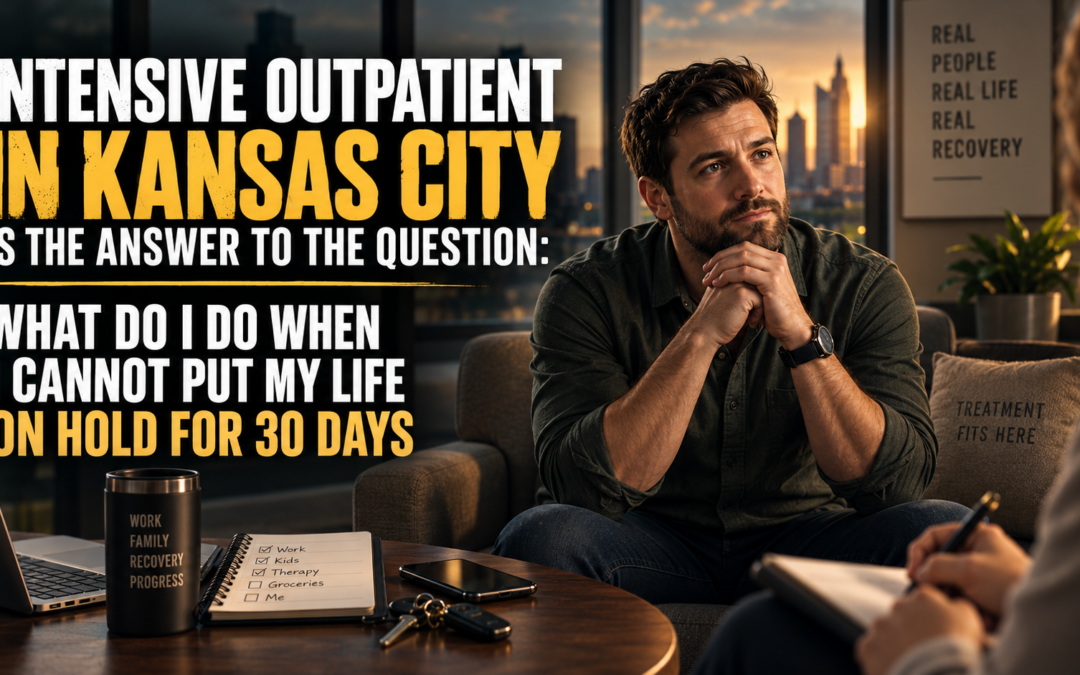
Intensive outpatient in Kansas City offers real clinical care while letting you keep working, parenting, and living your daily life. If you have wanted help but felt trapped by the thought of stepping away for a month, you are not making excuses. You are facing a real question that deserves a real answer.
That question is more common than you might think. Many people delay treatment because their responsibilities cannot simply pause. Jobs, children, and bills do not wait.
The reassuring truth is that meaningful recovery does not always require leaving everything behind. With the right level of care, you can heal while staying connected to the people and routines that matter most.
What Is Intensive Outpatient in Kansas City?
Intensive outpatient in Kansas City is a structured treatment program that provides therapy several days a week without requiring you to live at a facility. It sits between the round-the-clock support of residential care and the lighter touch of standard outpatient therapy.
You attend sessions for a few hours at a time, then return home afterward. This lets you receive real clinical care while keeping your daily life intact.
How Many Hours Does It Usually Involve?
Intensive outpatient usually involves around 9 to 15 hours of treatment per week, spread across three to five days. Sessions often happen in the morning or evening to fit around work or school.
This schedule gives you consistent support without asking you to pause your responsibilities. Many programs adjust hours over time as you grow steadier.
What Happens During a Typical Session?
A typical session blends group therapy, individual counseling, and skill-building focused on recovery. You explore the roots of substance use while learning practical tools for daily life.
Group work also connects you with others who understand what you are facing. That shared experience can ease the isolation that so often comes with addiction.
Who Is Intensive Outpatient in Kansas City Right For?
Intensive outpatient in Kansas City is a strong fit for people who need real clinical structure but can safely live at home. It works well for those with stable, supportive surroundings and no immediate need for medical detox.
You do not have to be in crisis to benefit from this level of care. What matters most is whether you can stay safe outside of treatment hours.
Which Signs Suggest It Might Fit?
Signs that this level of care might fit include a stable home, a supportive network, and a substance use pattern that does not require constant supervision. You may also be stepping down from a higher level of care.
Intensive outpatient often works well when you:
- Have completed detox or residential treatment and want continued support
- Live in a safe environment free from constant triggers
- Need to keep working, studying, or caring for family
- Feel motivated to engage in structured therapy
- Have mild to moderate substance use concerns rather than severe medical needs
Who Might Need a Different Level of Care?
People facing severe withdrawal, unsafe living situations, or intense co-occurring conditions may need more support first. Residential care or a partial hospitalization program can offer that added structure.
A thorough assessment helps clarify the right starting point. Your care team looks at your health, history, and home life to guide the decision with you.
How Does Intensive Outpatient Compare to Residential Treatment?
Intensive outpatient differs from residential treatment mainly in where you live and how much time you spend in care. Residential treatment provides round-the-clock support in a live-in setting, while intensive outpatient lets you return home each day.
Residential care removes you from daily triggers and offers the most immersive support. It works well when your home feels unsafe or full of stressors that make early recovery harder to hold.
Intensive outpatient keeps you connected to your everyday world. This can be helpful when you have responsibilities you cannot pause and a home environment that supports recovery.
Why Does the 30-Day Fear Hold People Back?
The fear of stepping away for 30 days holds many people back because it feels like choosing between recovery and their entire life. That pressure can make getting help feel impossible.
You may worry about losing your job, leaving your children, or falling behind on responsibilities. Those concerns are valid, and they deserve honest answers rather than dismissal.
Intensive outpatient exists partly to address this exact fear. It offers a way to get serious help without walking away from everything you care about.
How Does Intensive Outpatient in Kansas City Support Daily Responsibilities?
Intensive outpatient in Kansas City supports daily responsibilities by fitting treatment around your existing schedule instead of replacing it. This lets you keep working, parenting, or studying while you heal.
Staying connected to your routine is not just convenient. It can actually strengthen your recovery.
Why Does Keeping Your Routine Matter?
Keeping your routine matters because it lets you practice recovery skills in real life, right where challenges happen. You learn a coping tool in session, then apply it that same day.
This real-world practice helps new habits take root. Instead of returning to old patterns after treatment ends, you build steadier ones as you go.
How Does Scheduling Stay Flexible?
Scheduling stays flexible through morning and evening sessions that work around a job or family. Grand Falls® Recovery’s intensive outpatient program is designed to bridge the gap between higher levels of care and everyday life.
Your care team also adjusts the plan as your needs change. As you grow stronger, hours often decrease, giving you more room to stand on your own.
What Does Treatment Include in an Intensive Outpatient Program?
Treatment in an intensive outpatient program combines therapy, skill-building, and connection to a caring community. These pieces work together to address both the roots and the patterns of substance use.
This blend helps recovery feel sustainable rather than separate from your life. You gain support and accountability while staying grounded in your everyday environment.
What Elements Support Lasting Progress?
Elements that support lasting progress include individual therapy, group work, and practical planning for real-world situations. Each one plays a role in steadying your recovery.
A strong program often includes:
- Individual therapy that explores the causes behind substance use
- Group sessions that build support and reduce isolation
- Evidence-based approaches like cognitive behavioral therapy
- Relapse prevention planning for daily life
- Support for any co-occurring mental health needs
How Does It Fit Into a Full Continuum of Care?
Intensive outpatient fits into a full continuum of care as one flexible step among several. At Grand Falls Center for Recovery, it works alongside detox, residential treatment, partial hospitalization, and aftercare.
This means care can grow with you. You might step down into intensive outpatient after residential treatment, or begin here if it matches your needs from the start.
How Do You Know if Intensive Outpatient Is the Right Next Step?
The clearest sign that this level of care may fit is when you need structured support but cannot safely step away from your life for weeks. You do not have to wait for a crisis to consider it.
Consider these prompts as you think about your next step:
- If you want real clinical support but cannot step away from work or family, this level of care was built for you.
- If you have finished detox or residential care and want continued structure, an intensive outpatient program can keep you steady.
- If your home environment feels stable and supportive of recovery, returning home each day can work in your favor.
- If standard outpatient therapy has not felt like enough, more frequent sessions may reach what was missing.
- If a loved one has encouraged you to seek steady, ongoing support, that observation is worth exploring together.
Reaching out for that first conversation is often the hardest and most meaningful step. A caring team can help you sort through your options at your own pace.
Common Questions Before Starting Treatment
People often have honest questions before beginning care, and clear answers can ease the way forward. These are a few of the most common.
Can I keep working during treatment? Yes. Intensive outpatient is designed to fit around your schedule, with sessions often offered in the morning or evening. Many people continue working, studying, or caring for family throughout treatment.
How long does it usually last? It often lasts several weeks to a few months, depending on your needs and progress. Your care team adjusts the timeline as you grow steadier and more confident.
Do I need detox before starting? You may, depending on your situation. If you are still physically dependent on a substance, a medically supervised detox often comes first. An assessment helps determine the safest starting point.
Is it as effective as staying in a facility? For the right person, yes. This level of care works well when your home is stable and you do not need constant supervision. It offers real clinical care while letting you practice recovery in daily life.
Moving Toward Recovery With Hope
Intensive outpatient in Kansas City answers the question so many people quietly carry: what do I do when I cannot put my life on hold for 30 days. It gives you a way to heal without stepping away from everything you value.
You do not have to choose between getting help and living your life. With the right support, you can work toward recovery and keep moving forward at the same time.
Recovery is possible, and small steady steps can lead to lasting change. You deserve care that meets you where you are and walks beside you.
If you or someone you love is ready to explore this level of care, reach out to Grand Falls Center for Recovery today. Our compassionate team is here to listen, answer your questions, and help you find the support that fits your life.