Medication-assisted treatment in Kansas City is a proven, evidence-based path to recovery, not a shortcut around it or a substitute for real change. If you or someone you love has heard that this kind of care is somehow less than “true” sobriety, that message may have left you confused or hesitant to reach out.
You are not alone in that worry, and you did not do anything wrong by considering it. Stigma around this approach runs deep, and it keeps many people from a form of care that could genuinely help them.
The reassuring truth is that this treatment is grounded in medical science and paired with therapy. It does not do the recovery work for you. It clears away the physical noise so you can actually do that work without white-knuckling every single day.
What Is Medication-Assisted Treatment in Kansas City?
Medication-assisted treatment in Kansas City is a whole-person approach that combines FDA-approved medications with counseling and behavioral therapy to treat substance use disorders. It addresses both the physical and the emotional sides of recovery at the same time.
The medications ease cravings and withdrawal, while therapy helps you understand and change the patterns underneath. Together, they form one coordinated plan rather than two separate efforts.
This approach is most often used for opioid and alcohol use disorders. It reflects decades of clinical research, not a passing trend.
How Does It Actually Work?
Medication-assisted treatment works by using medication to steady the body so the mind can focus on healing. When cravings and withdrawal quiet down, you have more room to engage in therapy and rebuild your life.
Think of it like setting a broken bone before physical therapy. The medication stabilizes the situation. The deeper recovery work still belongs to you, supported by a caring team.
Which Medications Are Commonly Used?
The medications commonly used include buprenorphine, naltrexone, and others chosen to fit your specific needs. Each works in a different way, and a clinician helps match the right one to your situation.
Common options include:
- Buprenorphine, which eases opioid cravings and withdrawal without producing the same high
- Naltrexone, which blocks the effects of opioids or reduces the reward from alcohol
- Other approved medications selected based on your history and health
Why Do People Believe Medication-Assisted Treatment in Kansas City Is Not Real Sobriety?
People believe this because a persistent myth says using any medication means you are “still using.” This idea is common, and it is simply not accurate.
Recovery is not measured by whether you take a prescribed medication. It is measured by reclaiming your health, your relationships, and your daily life.
The stigma often comes from misunderstanding how these medications function. They are not a way to stay high. They are a way to stabilize the brain so healing can begin.
Where Does This Stigma Come From?
The stigma comes from confusing prescribed, monitored medication with substance misuse. The two could not be more different.
Substance misuse creates chaos, harm, and loss of control. Medication-assisted treatment does the opposite. It restores stability under the guidance of trained professionals who adjust your care over time.
Why Is This Myth So Harmful?
This myth is harmful because it keeps people from a treatment that can genuinely support their recovery. Shame and judgment often push someone away from the very help they need.
No one would tell a person with diabetes to skip their medication and rely on willpower alone. People in recovery deserve that same compassion and access to proven care.
Why Is White-Knuckling Sobriety So Hard to Sustain?
White-knuckling sobriety is hard to sustain because it asks a person to fight intense cravings and withdrawal with willpower alone. That constant battle drains energy that could go toward real healing.
For many people, the physical pull of a substance is overwhelming in early recovery. Trying to muscle through it can feel exhausting and, at times, impossible.
This is not a matter of being weak. It reflects real changes in the brain and body that a substance leaves behind.
What Does White-Knuckling Actually Feel Like?
White-knuckling feels like surviving each day on sheer grit, always bracing against the next craving. There is little room left to focus on the deeper work of recovery.
You may spend so much energy simply resisting that you have nothing left for therapy, relationships, or rest. That level of strain is difficult to maintain over time.
How Does Medication Ease That Struggle?
Medication eases that struggle by lowering the intensity of cravings and calming withdrawal. When the physical noise quiets, you can finally think clearly and engage in healing.
This does not remove the effort recovery requires. It simply makes that effort possible, letting you build new habits without a constant internal fight.
How Does Medication-Assisted Treatment Fit Into Whole-Person Care?
Medication-assisted treatment fits into whole-person care by working alongside therapy, medical support, and treatment for any co-occurring mental health conditions. Medication alone is only one piece of the picture.
Substance use often connects to anxiety, depression, or trauma. Treating only the physical dependence can leave those deeper needs unaddressed.
At Grand Falls® Center for Recovery, care can address substance use and mental health together through integrated, dual-diagnosis treatment. This coordinated approach helps recovery feel steadier and more complete.
Why Does Combining Medication With Therapy Matter?
Combining medication with therapy matters because medication steadies the body while therapy heals the mind. One supports the other.
Medication can quiet cravings, but it cannot teach coping skills or process past pain. Therapy fills that role. Together, they treat the whole person rather than a single symptom.
How Does Detox Connect to Medication-Assisted Treatment?
Detox often serves as the first step, with medication-assisted treatment supporting the stability that follows. A medically supervised detox helps your body clear a substance safely.
From there, ongoing medication can help prevent the return of intense cravings. This connection between detox and continued care is a large part of what makes recovery hold.
What Levels of Care Include Medication-Assisted Treatment?
The levels of care that include medication-assisted treatment range from medically supervised detox to flexible outpatient options, depending on your needs. This range means care can match your life rather than forcing a single path.
Many people move between levels as their stability grows. A thorough assessment helps guide the right starting point with you.
Which Level of Care Might Fit Best?
The level of care that fits best depends on how much daily support and structure your situation requires. There is no single right answer for everyone.
Common options include:
- Medical detox offers supervised support as your body clears a substance safely.
- Residential inpatient treatment provides structured, round-the-clock care in a stable setting.
- Partial hospitalization delivers intensive daytime care with evenings spent at home.
- Intensive outpatient care offers therapy several days a week while you keep your routine.
- Aftercare and alumni support help you stay steady as you return to everyday life.
You can learn more about the addiction treatment available and how medication-assisted care fits within it.
How Does Personalized Care Help?
Personalized care helps because your history, health, and needs are unique to you. A plan built around your situation tends to reach what a general approach may miss.
Grand Falls Recovery also uses GeneSight testing to help personalize medication plans when appropriate. This can bring greater precision to treating substance use alongside any co-occurring anxiety or depression.
How Do You Know if Medication-Assisted Treatment Is the Right Next Step?
The clearest sign that this approach may fit is when cravings and withdrawal have made recovery feel impossible on willpower alone. You do not need to reach a crisis point before reaching out.
Consider these prompts as you think about your next step:
- If cravings have overpowered past attempts to stay sober, medication-assisted care may reach what willpower alone could not.
- If withdrawal symptoms have made stopping feel unbearable, this approach can ease that transition safely.
- If you have relapsed before despite genuine effort, added medical support may help recovery hold.
- If anxiety, depression, or trauma sits alongside your substance use, integrated care can treat both at once.
- If stigma has kept you from considering this option, learning the facts may open a path you had dismissed.
- If a loved one has expressed concern, that observation is worth exploring together.
Reaching out for that first conversation is often the hardest and most meaningful step. A caring team can help you sort through your options at your own pace.
Common Questions About Medication-Assisted Treatment
People often have honest questions before starting this kind of care, and clear answers can ease the way forward. These are a few of the most common.
Does medication-assisted treatment just replace one drug with another? No. Prescribed, monitored medication works very differently from substance misuse. It stabilizes the brain, eases cravings, and restores control rather than creating chaos or a high. This is a clinical treatment, not a substitution.
How long will I need to stay on medication? The timeline is different for everyone and depends on your needs and progress. Some people use medication for months, others longer. Your care team reviews your plan regularly and adjusts it with you over time.
Is this the same as not really being in recovery? No. Recovery is about reclaiming your health, relationships, and daily life, not about avoiding all medication. Many people in strong, lasting recovery use medication-assisted treatment as part of their care.
Can medication-assisted treatment help if I also struggle with my mental health? Yes. Integrated dual-diagnosis care is built to address substance use and mental health together. Treating both at once often produces steadier progress than treating either alone.
Moving Toward Recovery With Hope
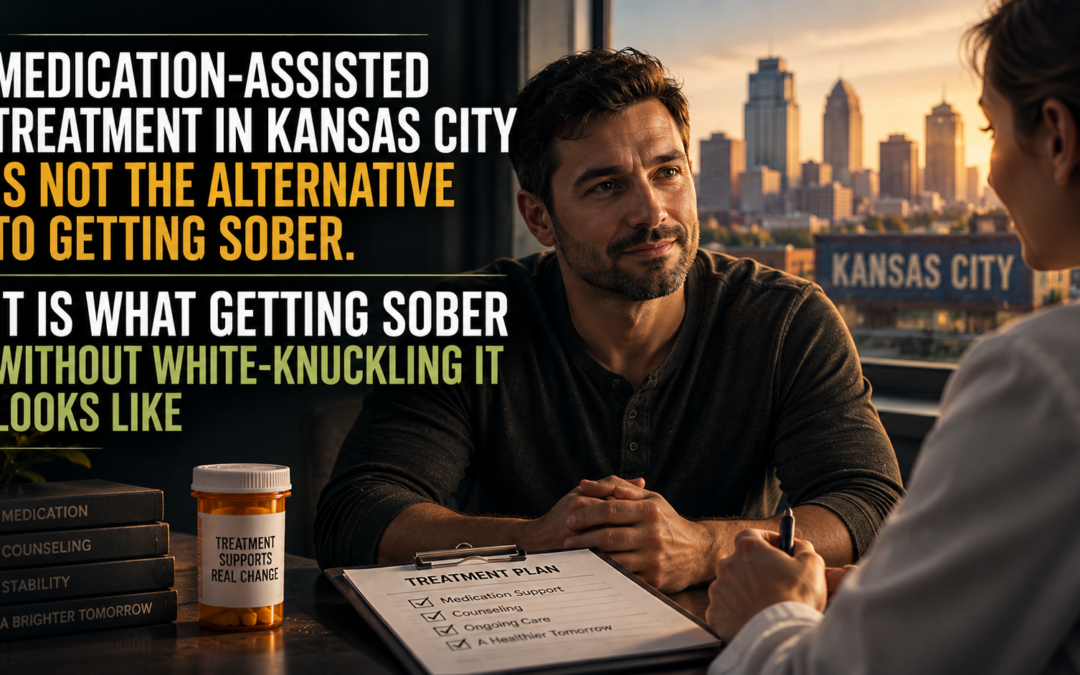
Medication-assisted treatment in Kansas City is not the alternative to getting sober. It is what getting sober can look like without fighting every craving through sheer willpower. This proven, whole-person approach clears away the physical noise so you can focus on real, lasting healing.
Your recovery is valid, and choosing evidence-based care is a sign of strength, not weakness. With compassionate support that treats your body and mind together, steadier days become far more reachable.
You do not have to white-knuckle your way through this, and you do not have to face it alone. Help is available, and reaching out is a brave first step.
If you or someone you love is ready to explore this kind of care, reach out to Grand Falls Center for Recovery today. Our compassionate team is here to listen, answer your questions, and guide you toward the support that fits your life.