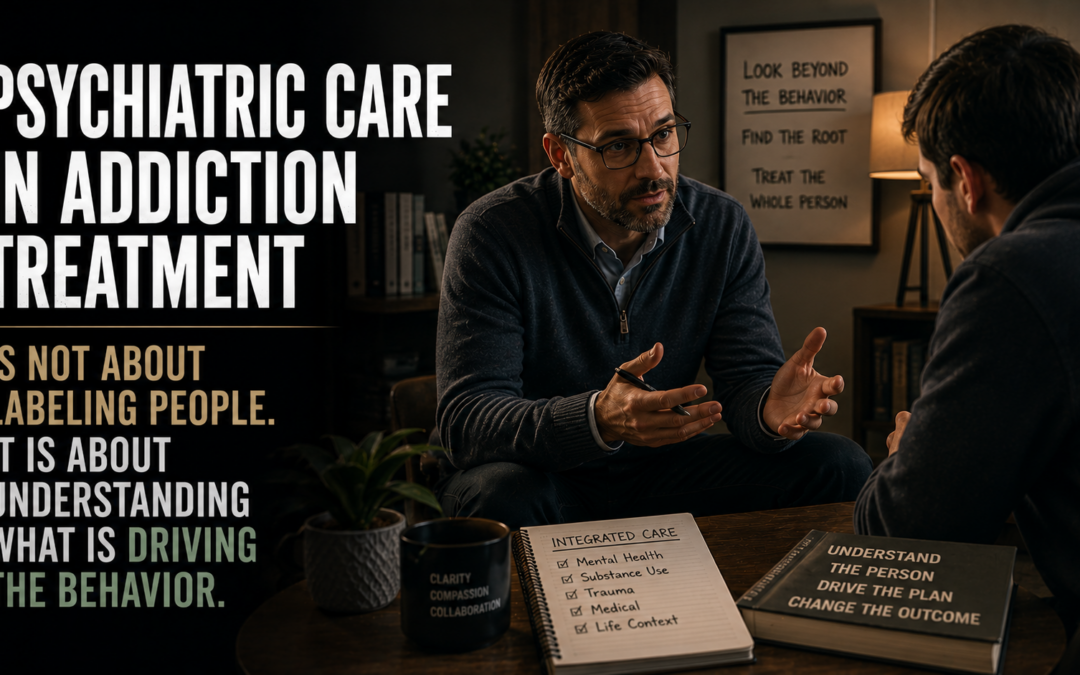
Psychiatric care in addiction treatment is not about placing a label on you, it is about understanding what drives the behavior underneath. If you have ever worried that seeking help means being reduced to a diagnosis, that fear is understandable, and it deserves an honest answer.
Many people avoid this kind of support because they picture judgment or a permanent label. They imagine being defined by a single word rather than seen as a whole person. Those worries make sense, and they hold real weight.
The truth is far more hopeful. Good psychiatric care looks beneath the surface to understand your story, your struggles, and what you need to heal. It exists to help you, not to categorize you.
What Does Psychiatric Care in Addiction Treatment Actually Mean?
Psychiatric care in addiction treatment means using medical and mental health expertise to understand the emotional and psychological roots of substance use. It looks at the whole person, not just the substance.
This care is provided by trained professionals who study how the mind, mood, and behavior connect. Their goal is to understand why substance use developed, not to judge the person living with it.
That understanding shapes everything that follows. When a team knows what is driving the behavior, they can build support that actually fits.
Who Provides This Kind of Care?
Psychiatric care is provided by clinicians trained in both mental health and substance use, including psychiatric providers and therapists. They work together to see the full picture.
At Grand Falls Recovery, this care is woven into a broader treatment plan. Your team shares information so nothing important slips through the cracks.
How Is This Different From Just Getting a Diagnosis?
A diagnosis is one small tool, while psychiatric care is a much larger process of understanding and support. A label alone tells only part of the story.
Real care uses that information to guide treatment, not to define you. It answers the question, “What do you need?” rather than simply, “What are you?”
Why Does Psychiatric Care in Addiction Treatment Focus on Understanding Behavior, Not Labeling?
Psychiatric care in addiction treatment focuses on understanding behavior because substance use is usually a signal of deeper pain, not a character flaw. Labeling stops the conversation. Understanding opens it.
Substance use often develops as a way to cope with stress, trauma, anxiety, or depression. Treating only the visible behavior leaves the real cause untouched.
When care focuses on the “why,” healing becomes possible. You are met with curiosity and compassion, not a verdict.
Why Does Labeling Cause Harm?
Labeling causes harm because it can create shame, which often pushes people further from the help they need. A label can feel like a cage rather than a doorway.
Terms that reduce a person to their struggle tend to discourage honesty. When you feel judged, you are less likely to share what is really happening.
What Does “Understanding the Behavior” Look Like in Practice?
Understanding the behavior looks like asking gentle questions about your history, your feelings, and the patterns behind substance use. It treats you as a person with a story worth hearing.
A clinician might explore when substance use began, what it helps you cope with, and what else you are carrying. These details reveal the roots that treatment can address.
How Does Psychiatric Care Shape a Treatment Plan?
Psychiatric care shapes a treatment plan by identifying the conditions and experiences driving substance use, then guiding care toward them. It turns understanding into action.
Once your team sees what is underneath, they can match you with the right therapies and support. This makes treatment more precise and more likely to last.
Think of it like a map before a journey. Knowing where you are starting helps everyone choose the clearest path forward.
What Might a Treatment Plan Include?
A treatment plan usually combines several supports that work together over time. No single element carries the whole load.
Common elements include:
- Individual therapy that explores the roots of substance use
- Support for co-occurring conditions like depression, anxiety, or trauma
- Medication support when appropriate and guided by a clinician
- Group sessions that build connection and reduce isolation
- Skill-building for coping and relapse prevention
Why Do Co-occurring Conditions Matter So Much?
Co-occurring conditions matter because mental health and substance use often feed each other in a reinforcing loop. Treating one while ignoring the other tends to leave that loop intact.
Many people living with a substance use disorder also face a mental health condition. Addressing both together, rather than separately, gives recovery a steadier foundation.
Who Benefits From Psychiatric Care in Addiction Treatment?
Psychiatric care in addiction treatment benefits anyone whose substance use is tied to emotional pain, mental health concerns, or difficult life experiences. That describes a great many people, not a rare few.
You do not need a formal diagnosis to benefit. If substance use connects to how you feel, think, or cope, this care may help you.
Families benefit too. When a loved one receives care that treats the whole person, the path forward often becomes clearer for everyone.
What Signs Suggest This Care Could Help?
Signs that psychiatric care could help include substance use that rises with stress, anxiety, or low mood. These patterns often point to deeper needs.
You may benefit if:
- Substance use tends to increase when your emotions feel overwhelming
- Past treatment focused only on stopping the behavior and results did not last
- You live with anxiety, depression, or the weight of unresolved trauma
- You feel caught in a cycle you cannot seem to break alone
- A loved one has noticed changes in both your mood and your substance use
What Levels of Care Are Available?
The levels of care available range from immersive residential support to flexible outpatient options, depending on your needs. Psychiatric care can be part of each one.
Many people move between levels as their stability grows. You might begin with more structure and step down to lighter support over time.
Which Level of Care Might Fit Best?
The level of care that fits best depends on how much daily support and structure your situation requires. A thorough assessment helps guide that decision with you.
Common options include:
- Residential treatment offers structured, round-the-clock support in a stable setting.
- Partial hospitalization provides intensive daytime care with evenings spent at home.
- Intensive outpatient care delivers therapy several days a week while you keep your routine.
- Outpatient care offers ongoing support as you return to everyday life.
At Grand Falls Recovery, care teams help match each person with the level that fits. The goal is support that feels manageable and genuinely helpful.
How Does Psychiatric Care Stay Involved Across Levels?
Psychiatric care stays involved by following you through each stage of treatment, adjusting as your needs change. It is not a one-time appointment.
Your team continues to understand and respond to what drives the behavior. That steady presence helps care stay accurate and personal over time.
How Do You Know When to Seek Help?
The clearest sign it is time to seek help is when substance use is affecting your health, relationships, or peace of mind. You do not need to reach a crisis point before reaching out.
Consider these prompts as you think about your next step:
- If substance use rises with stress or low mood, psychiatric care can help address the root, not just the surface.
- If past treatment only targeted the behavior, a whole-person approach may reach what earlier care missed.
- If you live with anxiety, depression, or trauma alongside substance use, integrated care can treat both together.
- If you feel unsure where to begin, a simple assessment can bring clarity without pressure.
- If a loved one has expressed concern, that observation is worth taking seriously and exploring.
Reaching out for that first conversation is often the hardest and most meaningful step. A caring team can help you sort through the options at your own pace.
Common Questions Before Starting Treatment
People often have honest questions before beginning care, and clear answers can ease the way forward. These are a few of the most common.
Will psychiatric care just slap a label on me? No. Psychiatric care uses understanding to guide treatment, not to define you. Any diagnosis is simply a tool that helps your team support you more effectively.
Do I have to take medication? No. Medication is one option among many, used only when appropriate and guided by a clinician. Your preferences and goals remain central to the plan you build together.
Can mental health and substance use really be treated at the same time? Yes. Integrated programs are built to address both together, and this combined approach often produces steadier progress than treating them separately.
What if I have more than one struggle? That is common, and this care is designed for it. Your team looks at how your challenges connect, then builds a plan that supports the full picture.
Moving Toward Understanding With Hope
Psychiatric care in addiction treatment is not about labeling you, it is about understanding what drives the behavior so you can heal at the root. Seeing your situation clearly is a meaningful and hopeful step, not a sign that something is wrong with you.
Recovery becomes far more reachable when care treats the whole person, not just a single symptom. With compassionate, coordinated support, the patterns that once felt stuck can begin to loosen.
You are more than any struggle you carry, and you deserve care that sees all of you. You do not have to face this alone, and help is closer than it may feel right now.
If you or someone you love is ready to take that next step, reach out to Grand Falls Recovery today. Our compassionate team is here to listen, understand your story, and guide you toward the support that fits your needs.